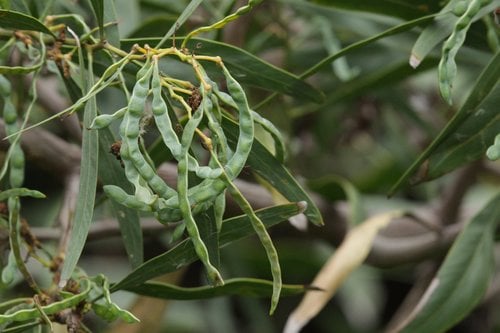
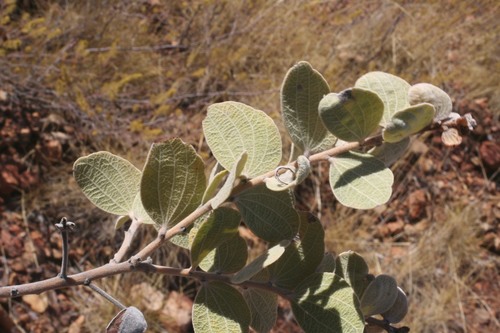
Lonchocarpus sericeus
(Poir.) Kunth ex DC.
Lancepod, Chaperno
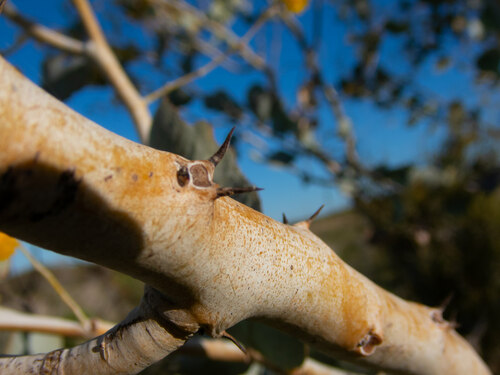
iNaturalist· cc-by-nc
(c) Luan H.P. Nogueira, some rights reserved (CC BY-NC), uploaded by Luan H.P. Nogueira
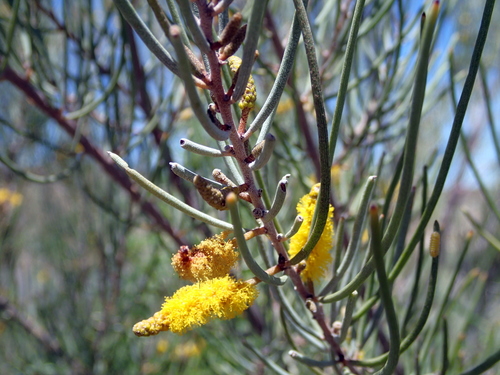
iNaturalist· cc-by
(c) Alan Manson, some rights reserved (CC BY)
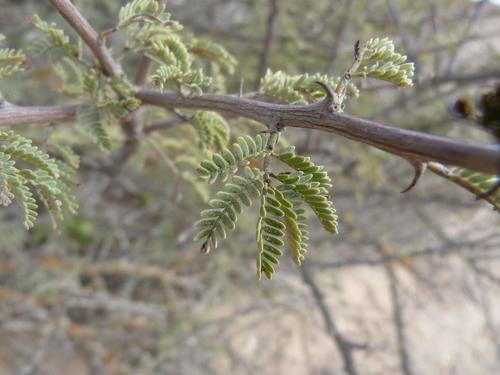
iNaturalist· cc-by-nc
(c) Riana Fourie, some rights reserved (CC BY-NC), uploaded by Riana Fourie
Description
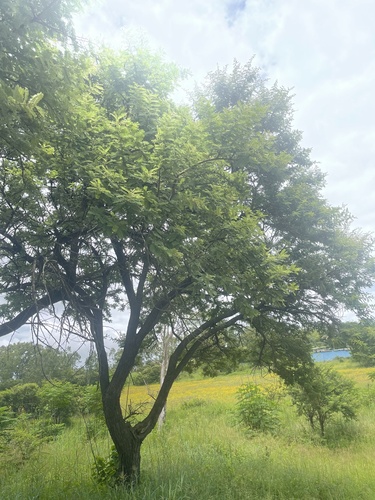
A tree. It grows 10 m tall. The young twigs are brown and downy. The leaves have leaflets along the stalk. There are 5-11 leaflets and they are 10 cm long by 6 cm wide. The flowers are purple. They are on long stalks. The fruit are woody pods with one to many seeds.
Edible Uses
The leaves are eaten.
Medicinal Uses
The bark is laxative.
Distribution
It is a tropical plant. It grows in dry zones. It is often along streams and in swampy areas. It can be in mangroves.
Where It Grows
Africa, Asia, Belize, Burkina Faso, Central Africa, Central America, Costa Rica, El Salvador, Gabon, Greater Antilles, Guatemala, Guinea, Guinée, Guinea-Bissau, Honduras, Indochina, Mexico, Nicaragua, Nigeria, North America, Panama, Sao Tome and Principe, SE Asia, Senegal, Sierra Leone, South America, Trinidad, Venezuela, Vietnam, West Africa,
Cultivation
A plant of the lowland moist tropics. Prefers a sunny position. Plants grow quickly when young and establish well. This species has a symbiotic relationship with certain soil bacteria, these bacteria form nodules on the roots and fix atmospheric nitrogen. Some of this nitrogen is utilized by the growing plant but some can also be used by other plants growing nearby.
Propagation
Seed - best sown in a sunny position in a nursery seedbed as soon as it is ripe. The seed usually sprouts within a few days, germination rates are normally high. Like many species within the family Fabaceae, once they have been dried for storage the seeds of this species may benefit from scarification before sowing in order to speed up and improve germination. This can usually be done by pouring a small amount of nearly boiling water on the seeds (being careful not to cook them!) and then soaking them for 12 - 24 hours in warm water. By this time they should have imbibed moisture and swollen - if they have not, then carefully make a nick in the seedcoat (being careful not to damage the embryo) and soak for a further 12 hours before sowing.
Other Uses
An aqueous extract of the seeds produced 70% mortality in third stage mosquito larvae of Aedes aegypti. The wood is moderately heavy, hard, medium textured. With good mechanical properties, it is moderately durable. The wood lasts well under water. It is used for internal purposes in construction, for making furniture and ornamental objects. The wood is used for fuel and charcoal. We have no more information on the wood of this species. However, we have a general description of the wood for members of this genus, which is as follows:- The heartwood is yellowish-brown to dark reddish-brown, striped with rather fine uniform parenchyma laminations of a lighter colour; it is sharply demarcated from the thick band of yellowish sapwood. The texture is moderately coarse; the grain straight to irregular or interlocked; lustre is low to medium; there is no distinctive odour or taste. Durability varies considerably with the species. Seasoning also varies with species, the drying rate can be rather slow to rather rapid. It is reported to dry satisfactorily without excessive distortion or shrinkage if dried slowly. In spite of its hardness, the wood is not particularly difficult to work; smooth planing, however, is difficult because of interlocked grain. It is used for purposes such as heavy construction, flooring, furniture components etc. Durable species have been suggested for railroad crossties.
Synonyms
Also Known As
Bombata, Bontoko, Buchomale, Bu pendipinde, Cabelouro, Canaine, Costa-de-lagarto, Empantanca, Envira-piaca, Guabito, Linguana, N'compaca, Njassi, Po-di-languana, Seize, Shunin biri, Sucupira, Tienqua, Yaka
References (6)
- Bhat, R. B., Etejere, E. O. & Oladipo, V. T., 1990, Ethnobotanical Studies from Central Nigeria. Economic Botany, Vol. 44, No. 3, pp. 382-390
- Condit, R., et al, 2011, Trees of Panama and Costa Rica. Princeton Field Guides. p 226
- Ezeagu, I. E. et al, 2002, Seed protein and nitrogen-to-protein conversion factors for some uncultivated tropical plant seeds. Food Chemistry 78:105-109
- Grandtner, M. M., 2008, World Dictionary of Trees. Wood and Forest Science Department. Laval University, Quebec, Qc Canada. (Internet database http://www.wdt.qc.ca)
- Grandtner, M. M. & Chevrette, J., 2013, Dictionary of Trees, Volume 2: South America: Nomenclature, Taxonomy and Ecology. Academic Press p 359
Show all 6 references Hide references
- INFOODSUpdatedFGU-list.xls