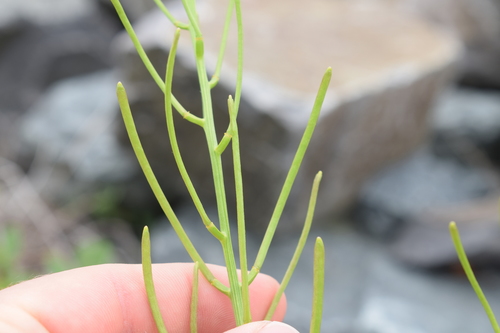
Brassica oleracea var. botrytis
L.
Cauliflower
gbif· cc0
Peter de Lange
gbif· cc-by-nc
Joseph Knight
gbif· cc-by-nc
Joseph Knight
Summary
Source: WikipediaBrassica oleracea, also known as wild cabbage in its uncultivated form, is a plant of the family Brassicaceae. The species originated from feral populations of related plants in the Eastern Mediterranean, where it was most likely first cultivated. It has many common cultivars that are used as culinary vegetables, including cabbage, broccoli, cauliflower, romanesco, kale, Brussels sprout, collard, Savoy cabbage, kohlrabi, and gai lan.
Description
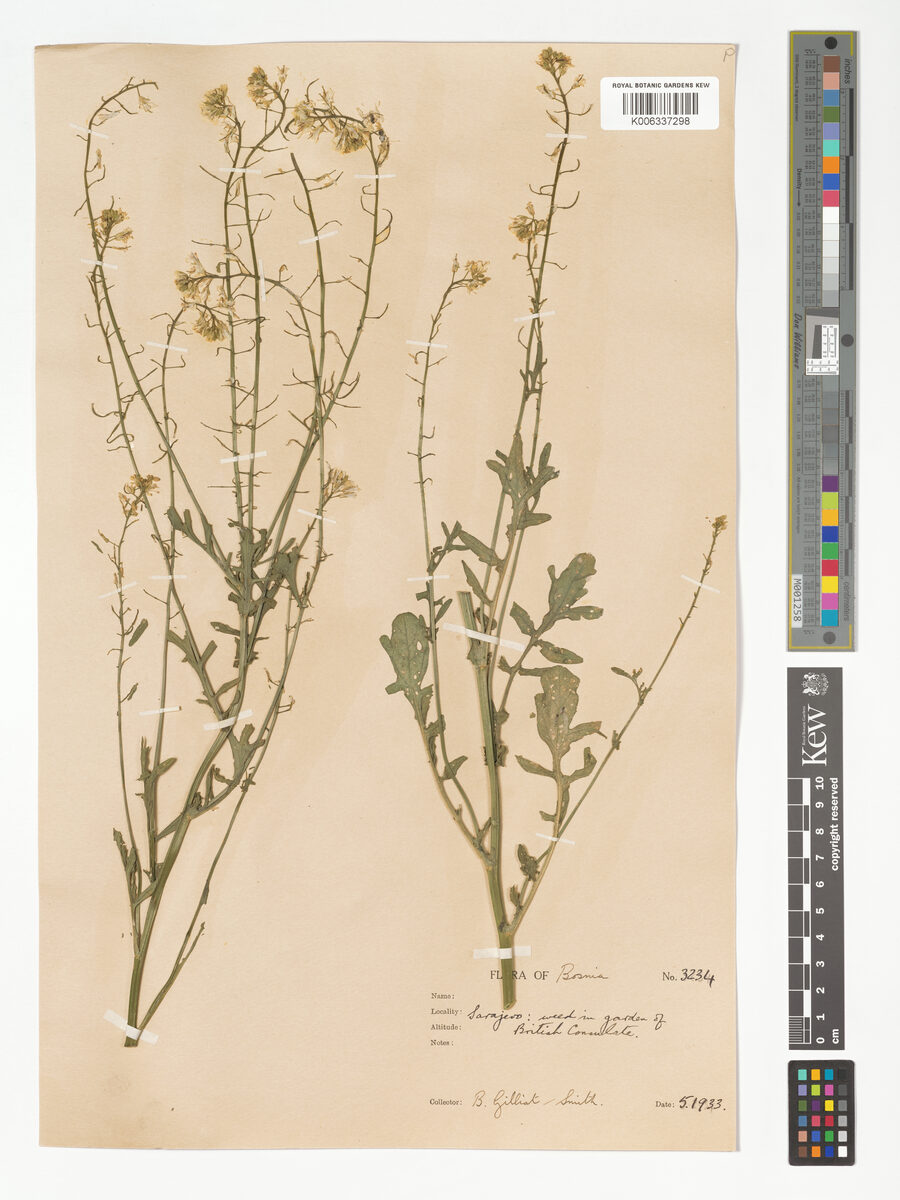
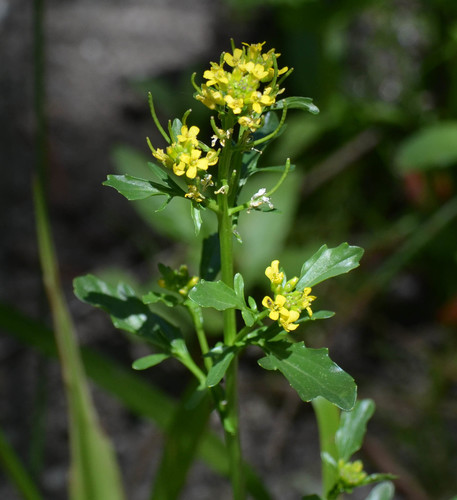
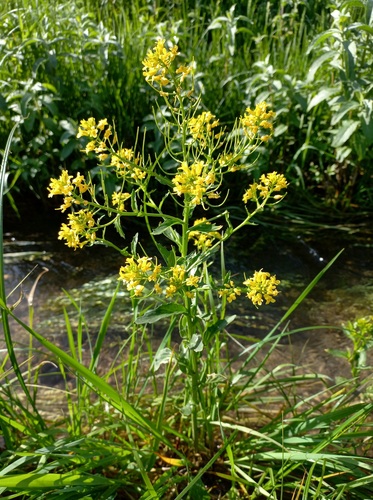
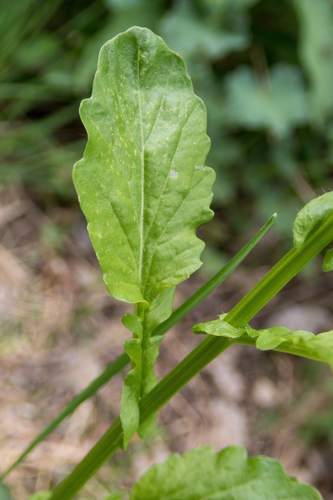
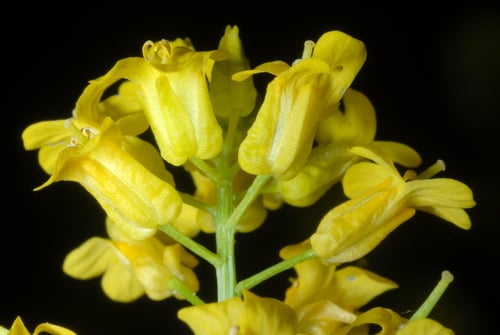
A herb. It is a cabbage family plant which develops a thick white edible flower in the centre. These can be yellow or purple. It has broad leaves around a thick stalk. The leaves clasp the stem. The leaves are oval and fleshy. The flowers are yellow.
Edible Uses
The thick flower head is cooked and eaten. The leaves are edible, and the flower stalk and midveins of larger leaves are used in cauliflower soup. The seed sprouts are also eaten.
Traditional Uses
The thick white flower is cooked and eaten. The leaves are edible. The flower stalk and midveins of larger leaves are used in cauliflower soup. The seed sprouts are eaten.
Distribution
It is a temperate plant. It mostly grows in the highlands in the tropics but has been grown from sea level to 2600 m altitude. In PNG it is best above 1,100 m above sea level. It is frost resistant. The best temperature is 14-21°C. In Nepal it grows up to 1800 m altitude. It suits hardiness zones 8-11.
Where It Grows
Africa, Andorra, Asia, Australia, Austria, Balkans, Bangladesh, Britain, Cambodia, Canada, Caucasus, Central America, China, Cook Islands, Costa Rica, Cuba, East Africa, East Timor, Egypt, Ethiopia, Europe, Fiji, Finland, France, Georgia, Germany, Ghana, Himalayas, India, Indochina, Indonesia, Italy, Japan, Kenya, Korea, Laos, Macedonia, Madagascar, Malawi, Malaysia, Mediterranean, Middle East, Myanmar, Nepal, Netherlands, New Caledonia, North Africa, North America, Northeastern India, Pacific, Pakistan, Papua New Guinea, PNG, Philippines, Poland, Scandinavia, SE Asia, Sikkim, Singapore, Slovenia, South Africa, Southern Africa, Spain, Sri Lanka, St. Vincent and Grenadines, Switzerland, Syria, Tasmania, Thailand, Timor-Leste, Tonga, Tuvalu, Uruguay, USA, Vanuatu, Vietnam, West Africa, West Indies, Zambia, Zimbabwe,
Cultivation
They are normally grown from seeds and transplanted. Because plants cross pollinate and seed production requires low temperatures seed collecting is neither easy nor very successful.
Other Information
It is a commercially cultivated vegetable. In Papua New Guinea, mainly only grown by a few people for sale to Europeans.
Notes
There are about 30 Brassica species and many cultivated varieties.
Nutrition
| Part | Moisture | kJ | kcal | Protein | Vit A | Vit C | Iron | Zinc |
|---|---|---|---|---|---|---|---|---|
| Flower - raw | 90.7 | 117 | 28 | 2 | 2 | 46.4 | 0.9 | 0.4 |
| Flower - boiled | 90.7 | 96 | 23 | 3 | 2 | 44.3 | 0.3 | 0.2 |
| Flower + stalk - raw | 92.7 | 50 | 12 | 1.9 | 30 | 60 | 0.5 | 0.3 |
| Flowers + stalk | 94.5 | 40 | 10 | 1.6 | 30 | 20 | 0.4 | 0.2 |
| Leaves | — | — | — | — | — | — | — | — |
| Seed Sprouts | — | — | — | — | — | — | — | — |
Synonyms
Also Known As
Bloemkoolblad, Blumkol, Coliflor, Cvetača, Hua ye cai, Fulkopi, Kalam dok, Kalampii dook, Kaule, Kol bunga, Koli flawa, Kori, Kubis bunga, Monla-paw, Pan-kobi, Pan-mon-la, Parbawr, Phkaa spei, Phool ghoni, Phul-kopi, Sofilera, Thaba-paw, Ye ts'oi fa
References (50)
- Ali, A. M. S., 2005, Homegardens in Smallholder Farming Systems: Examples from Bangladesh. Human Ecology, Vol. 33, No. 2 pp. 245-270
- Anderson, E. F., 1993, Plants and people of the Golden Triangle. Dioscorides Press. p 204
- Ara, R. I. T., 2015, Leafy Vegetables in Bangladesh. Photon eBooks. p 93
- Bianchini, F., Corbetta, F., and Pistoia, M., 1975, Fruits of the Earth. Cassell. p 64
- Brouk, B., 1975, Plants Consumed by Man. Academic Press, London. p 97
Show all 50 references Hide references
- Bussman, R. W., et al, 2016, A comparative ethnobotany of Khevsureti, Samtskhe-Javakheti, Tusheti, Svaneti, and Racha-Lechkhumi, Republic of Georgia (Sakartvelo), Caucasus. Journal of Ethnobiology and Ethnomedicine (2016) 12:4
- Bussman, R. W., et al, 2021, Unity in diversity—food plants and fungi of Sakartvelo (Republic of Georgia), Caucasus. Journal of Ethnobiology and Ethnomedicine (2021) 17:72 p 7
- Cheifetz, A., (ed), 1999, 500 popular vegetables, herbs, fruits and nuts for Australian Gardeners. Random House p 44
- Chin, H. F., 1999, Malaysian Vegetables in Colour. Tropical Press. p 68
- Cundall, P., (ed.), 2004, Gardening Australia: flora: the gardener's bible. ABC Books. p 255
- D'Ambrosio, U., & Puri, R. K., 2016, Foodways in transition: food plants, diet and local perceptions of change in a Costa Rican Ngäbe community. Journal of Ethnobiology and Ethnomedicine (2016) 12:3 p 22
- Facciola, S., 1998, Cornucopia 2: a Source Book of Edible Plants. Kampong Publications, p 54
- Flora of China. www.eFloras.org
- Foo, J.T.S.(ed), 1996, A Guide to Common Vegetables. Singapore Science Foundation. p 43
- French, B.R., 1986, Food Plants of Papua New Guinea, A Compendium. Asia Pacific Science Foundation p 116
- Grubben, G. J. H. and Denton, O. A. (eds), 2004, Plant Resources of Tropical Africa 2. Vegetables. PROTA, Wageningen, Netherlands. p 141
- Hadfield, J., 2001, The A-Z of Vegetable Gardening in South Africa. Struik p 101
- Hu, Shiu-ying, 2005, Food Plants of China. The Chinese University Press. p 410
- Jardin, C., 1970, List of Foods Used In Africa, FAO Nutrition Information Document Series No 2.p 61
- Kapelle, M., et al, 2000, Useful plants within a Campesino Community in a Costa Rican Montane Cloud Forest. Mountain Research and Development, 20(2): 162-171.
- Kays, S. J., and Dias, J. C. S., 1995, Common Names of Commercially Cultivated Vegetables of the World in 15 languages. Economic Botany, Vol. 49, No. 2, pp. 115-152
- Khodram,S. D., et al, 2019, Local knowledge of edible flowers used in Mizoram. Indian Journal of Traditional Knowledge Vol 18(40 pp 715-723
- Kiple, K.F. & Ornelas, K.C., (eds), 2000, The Cambridge World History of Food. CUP p 1747
- Kumar, A., et al, 2012, Ethnobotanical Edible Plant Biodiversity of Lepcha Tribes. Indian Forester, 138 (9):798-803
- Lazarides, M. & Hince, B., 1993, Handbook of Economic Plants of Australia, CSIRO. p 38
- Liu, Yi-tao, & Long, Chun-Lin, 2002, Studies on Edible Flowers Consumed by Ethnic Groups in Yunnan. Acta Botanica Yunnanica. 24(1):41-56
- Macmillan, H.F. (Revised Barlow, H.S., et al), 1991, Tropical Planting and Gardening. Sixth edition. Malayan Nature Society. Kuala Lumpur. p 362
- Manandhar, N.P., 2002, Plants and People of Nepal. Timber Press. Portland, Oregon. p 121
- Miguel, E., et al, 1989, A checklist of the cultivated plants of Cuba. Kulturpflanze 37. 1989, 211-357
- Molla, A., Ethiopian Plant Names. http://www.ethiopic.com/aplants.htm
- Purseglove, J.W., 1968, Tropical Crops Dicotyledons, Longmans. p 94
- Rashid, H. E., 1977, Geography of Bangladesh. Westview. p 275
- Schneider, E., 2001, Vegetables from Amaranth to Zucchini: The essential reference. HarperCollins. p 153
- Sharma, B.B., 2005, Growing fruits and vegetables. Publications Division. Ministry of Information and broadcasting. India. p 161
- Siemonsma, J. S. and Piluek, K. (Eds), 1994, Plant Resources of South-East Asia No. 8 Vegetables. Prosea Foundation, Bogor, Indonesia, p 111
- Small, E., 2009, Top 100 Food Plants. The world's most important culinary crops. NRC Research Press. p 166
- Sp. pl. 2:667. 1753
- Terra, G.J.A., 1973, Tropical Vegetables. Communication 54e Royal Tropical Institute, Amsterdam, p 31
- Thaman, R.R., 1976, The Tongan Agricultural System, University of the South Pacific, Suva, Fiji. p 383
- Thaman, R. R, 2016, The flora of Tuvalu. Atoll Research Bulletin No. 611. Smithsonian Institute p 74
- Tindall, H.D., & Williams, J.T., 1977, Tropical Vegetables and their Genetic Resources, International Board for Plant Genetic Resources, Rome, p 87
- Tindall, H.D., 1983, Vegetables in the tropics. Macmillan p. 118
- Tjeertes, P., 2004. Brassica oleracea L. (cauliflower and broccoli) [Internet] Record from Protabase. Grubben, G.J.H. & Denton, O.A. (Editors). PROTA (Plant Resources of Tropical Africa), Wageningen, Netherlands. < http://database.prota.org/search.htm>. Accessed 14 October 2009.
- Tronickova, E. & Krejcova, Z., 1987, Ortaggi, Instituto Geografico de Agostini, Cecoslovacchia. p 30
- USDA, ARS, National Genetic Resources Program. Germplasm Resources Information Network - (GRIN). [Online Database] National Germplasm Resources Laboratory, Beltsville, Maryland. Available: www.ars-grin.gov/cgi-bin/npgs/html/econ.pl (10 April 2000)
- van Wyk, B., 2005, Food Plants of the World. An illustrated guide. Timber press. p 101
- Vorstenbosch, T., et al, 2017, Famine food of vegetal origin consumed in the Netherlands during World War II. Journal of Ethnobiology and Ethnomedicine (2017) 13:63
- Walter, A. & Lebot, V., 2007, Gardens of Oceania. ACIAR Monograph No. 122. p 235
- Wiersema, J. H. & Leon, B., 2013, World Economic Plants. A Standard Reference CRC Press. 2nd Ed. p 114
- Zhou Taiyan, Lu Lianli, Yang Guang, Ihsan A. Al-Shehbaz, BRASSICACEAE (CRUCIFERAE), Flora of China.