Grewia falcistipula
K. Schum.
Heart-leaved raisin-bush
iNaturalist· cc-by-nc
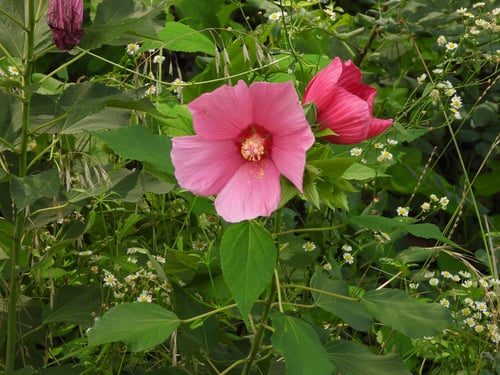
(c) Peter Erb, some rights reserved (CC BY-NC), uploaded by Peter Erb
iNaturalist· cc-by-nc
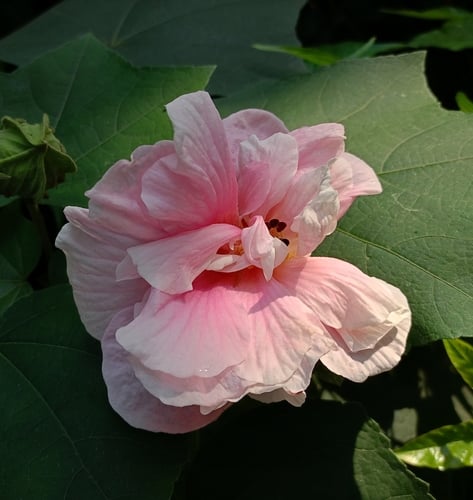
(c) Peter Erb, some rights reserved (CC BY-NC)
Description
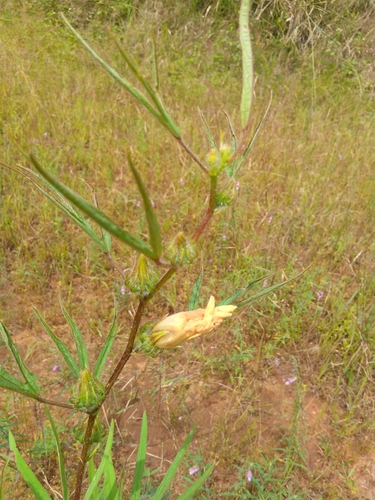
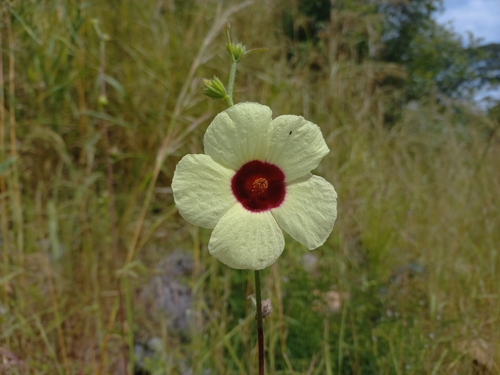
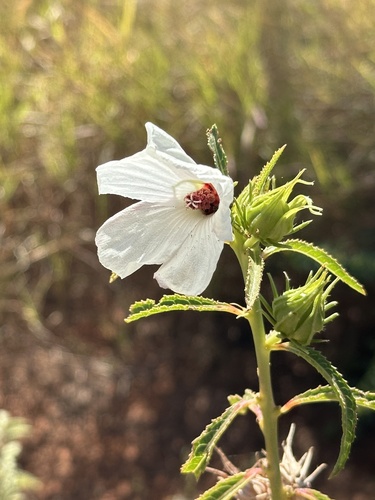
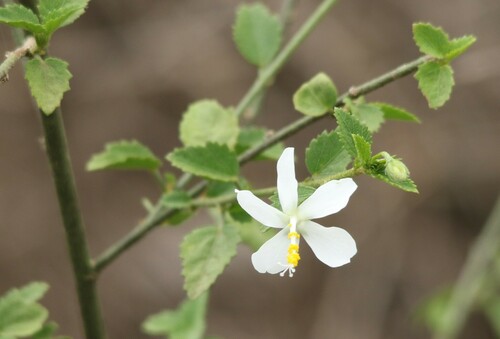
A shrub. It grows 1-2 m tall. It has several branches spreading from the base. The leaf blade is 2-8 cm long by 2-4 cm wide. They are broadly oval. They taper to the tip and have teeth around the edge. The flowers are in the axils of leaves. The petals are yellow. The fruit are orange. They are 1.5 cm across. The fruit are edible.
Edible Uses
The fruit and root are edible.
Medicinal Uses
Grewia species are valued in many cultures for their medicinal virtues. The main medicinal action appears to come from the mucilage that is found in the leaves, stems and roots, which has been shown to have soothing and healing properties. Taken internally it is often used as a remedy for diarrhoea and dysentery, for example, whilst externally it is applied to wounds, cuts, ulcers, irritations etc. The plant can be taken as a simple infusion or decoction, or it can be applied topically as a poultice of the plant, or the mucilage can be extracted from the plant, if required, by maceration and then decoction. We have no specific records for this species, but it is likely to have been used as a traditional medicine.
Distribution
It is a tropical plant. It grows on Kalahari sands. It grows between 400-1,400 m above sea level. It grows in areas with an annual rainfall of about 200 mm. It can grow in arid places.
Where It Grows
Often on Kalahari sand formations; Baikiaea plurijuga woodland or accompanying plants such as Pterocarpus angolensis, Diplorhynchus condylocarpon, Burkea africana.; at elevations from 380 - 1,400 metres.
Cultivation
Grows best in deep, sandy soils.
Propagation
Seed - we have no specific information for this species but seed of this genus is generally best sown as soon as it is ripe. Stored seed has a hard seedcoat and may benefit from scarification before sowing in order to speed up and improve germination. This can usually be done by pouring a small amount of nearly boiling water on the seeds (being careful not to cook them!), allowing the mix to cool somewhat and then leaving it in a warm place to soak for 12 - 24 hours. Sow the seeds in situ or in a nursery seedbed or trays - do not allow the compost to become dry. Germination and early growth are usually quite quick. Cuttings - best taken with a heel.
Also Known As
Fundukayina, Maka, Mulomo-lomo, Namulolo, Nomaka, Omwila, Shimaka
References (10)
- Flora Zambesiaca. http://apps.kew.org/efloras
- Fowler, D. G., 2007, Zambian Plants: Their Vernacular Names and Uses. Kew. p 45
- Leger, S., 1997, A Description of Today's Use of Plants in West Bushmanland (Namibia). German Development Service. PO Box 220035, 14061 Berlin, Germany. http://www.sigridleger.de/book/
- Mannheimer, C. A. & Curtis. B.A. (eds), 2009, Le Roux and Muller's Field Guide to the Trees and Shrubs of Namibia. Windhoek: Macmillan Education Namibia. p 318
- Peters, C. R., O'Brien, E. M., and Drummond, R.B., 1992, Edible Wild plants of Sub-saharan Africa. Kew. p 191
Show all 10 references Hide references
- Rodin, 1985,
- Royal Botanic Gardens, Kew (1999). Survey of Economic Plants for Arid and Semi-Arid Lands (SEPASAL) database. Published on the Internet; http://www.rbgkew.org.uk/ceb/sepasal/internet [Accessed 11th June 2011]
- Ruiters-Welcome, A. K., 2019, Food plants of southern Africa. Ph.D. thesis. Univ. of Johannesburg p 75
- Welcome, A. K. & Van Wyk, B.-E., 2019, An inventory and analysis of the food plants of southern Africa. South African Journal of Botany 122 (2019) 136–179
- World Checklist of Useful Plant Species 2020. Royal Botanic Gardens, Kew