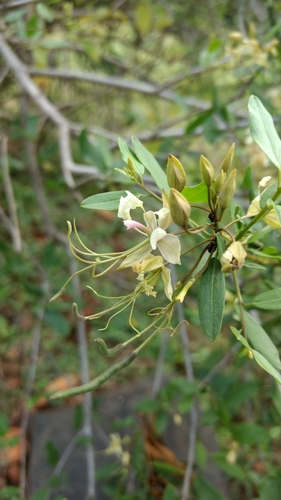
Thilachium thomasii
Gilg.
gbif· cc-by
Meise Botanic Garden
gbif· cc-by
The New York Botanical Garden
gbif· cc-by
Royal Botanic Gardens, Kew
Description
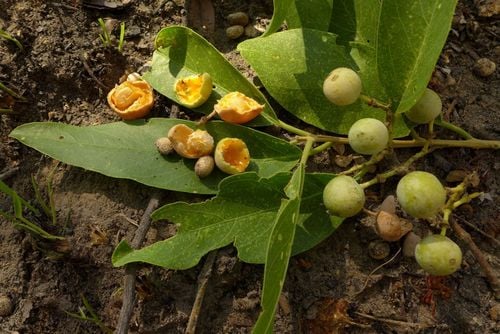
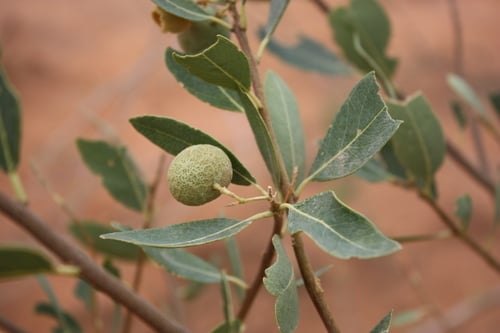
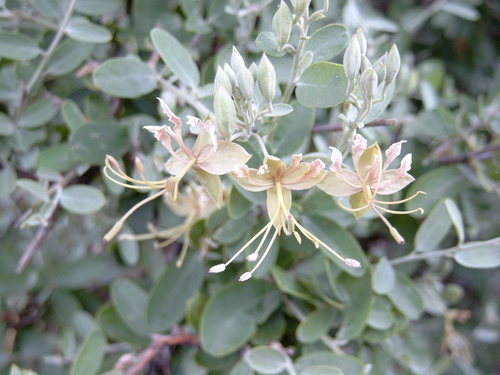
A shrub or climber. It can grow 5 m tall. It has large tuberous roots. It loses its leaves during the year. The leaves are simple and 3-9 cm long by 2-7 cm wide. They vary in shaped. There are 1-10 flowers in a loose group. The fruit are narrowly oval and 3-6 cm long. They have 6-8 ribs.
Edible Uses
The roots are used to make porridge. The roots, tubers, and fruit are edible.
Traditional Uses
The roots are used to make porridge.
This uses section is brief — help expand it
Known Hazards
It is used as a famine food.
Distribution
It is a tropical plant. It grows in woodland and along water courses. It grows between sea level and 1,000 m above sea level. It can grow in arid places.
Where It Grows
Africa, East Africa, Kenya, Somalia,
Other Information
It is a famine food.
Synonyms
Also Known As
Dika, Kitungulu, Medudu, Mutunguru, Ohia, Qadu, Quqube
References (5)
- East African Herbarium records, 1981,
- Mutie, F. M., et al, 2023, Important Medicinal and Food Taxa (Orders and Families) in Kenya, Based on Three Quantitative Approaches. Plants 2023, 12, 1145
- Peters, C. R., O'Brien, E. M., and Drummond, R.B., 1992, Edible Wild plants of Sub-saharan Africa. Kew. p 79
- Royal Botanic Gardens, Kew (1999). Survey of Economic Plants for Arid and Semi-Arid Lands (SEPASAL) database. Published on the Internet; http://www.rbgkew.org.uk/ceb/sepasal/internet [Accessed 7th April 2011]
- World Checklist of Useful Plant Species 2020. Royal Botanic Gardens, Kew