Heliotropium hereroense
Schinz
Omumbwanda
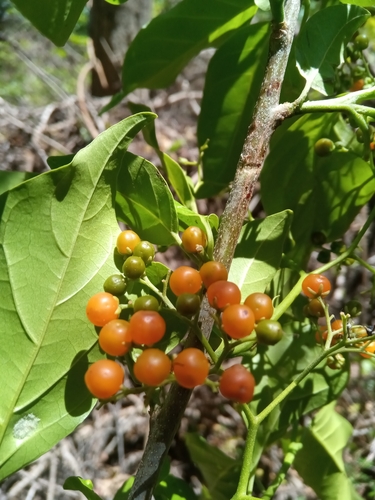
iNaturalist· cc-by-nc
(c) Troos van der Merwe, some rights reserved (CC BY-NC)
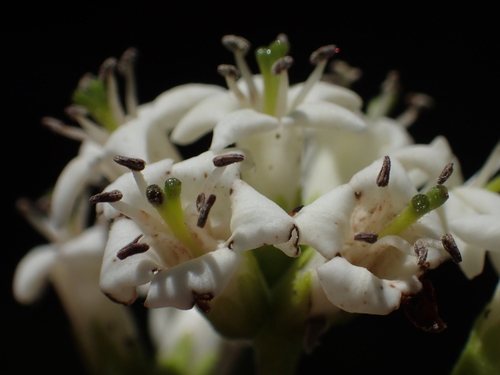
iNaturalist· cc-by-nc
(c) Troos van der Merwe, some rights reserved (CC BY-NC)
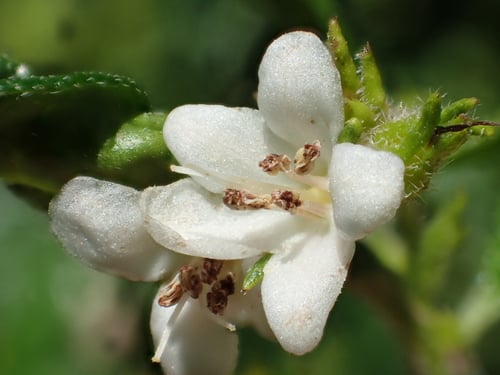
iNaturalist· cc-by-nc
(c) Troos van der Merwe, some rights reserved (CC BY-NC)
Description
A herb or small shrub. It grows up to 1 m high. It has a taproot. It keeps growing from year to year. The leaves are narrowly sword shaped. They are in rings. The flowers are very small and yellow.
Edible Uses
The fruit are eaten raw.
Traditional Uses
The fruit are eaten raw.
This uses section is brief — help expand it
Distribution
It is a subtropical plant. It grows in hot arid places and where there is a marked dry season. The dry season can be 6-11 months. It is often in well-drained stony soils. In southern Africa it grows between 170-1,850 m above sea level. It is rare in Swaziland. It can grow in arid places.
Where It Grows
Africa, Eswatini, Namibia, South Africa, Southern Africa, Swaziland,
Synonyms
References (6)
- Malan & Owen-Smith, 1974,
- Peters, C. R., O'Brien, E. M., and Drummond, R.B., 1992, Edible Wild plants of Sub-saharan Africa. Kew. p 71
- Royal Botanic Gardens, Kew (1999). Survey of Economic Plants for Arid and Semi-Arid Lands (SEPASAL) database. Published on the Internet; http://www.rbgkew.org.uk/ceb/sepasal/internet [Accessed 4th April 2011]
- Ruiters-Welcome, A. K., 2019, Food plants of southern Africa. Ph.D. thesis. Univ. of Johannesburg p 38
- Swaziland's Flora Database http://www.sntc.org.sz/flora
Show all 6 references Hide references
- Welcome, A. K. & Van Wyk, B.-E., 2019, An inventory and analysis of the food plants of southern Africa. South African Journal of Botany 122 (2019) 136–179