Sacoglottis guianensis
Benth.
Sand dukuria, Guianas sacoglottis
iNaturalist· cc-by-nc
(c) Léna Sardini, some rights reserved (CC BY-NC)
iNaturalist· cc-by-nc
(c) Léna Sardini, some rights reserved (CC BY-NC)
iNaturalist· cc-by-nc
(c) Léna Sardini, some rights reserved (CC BY-NC)
Description
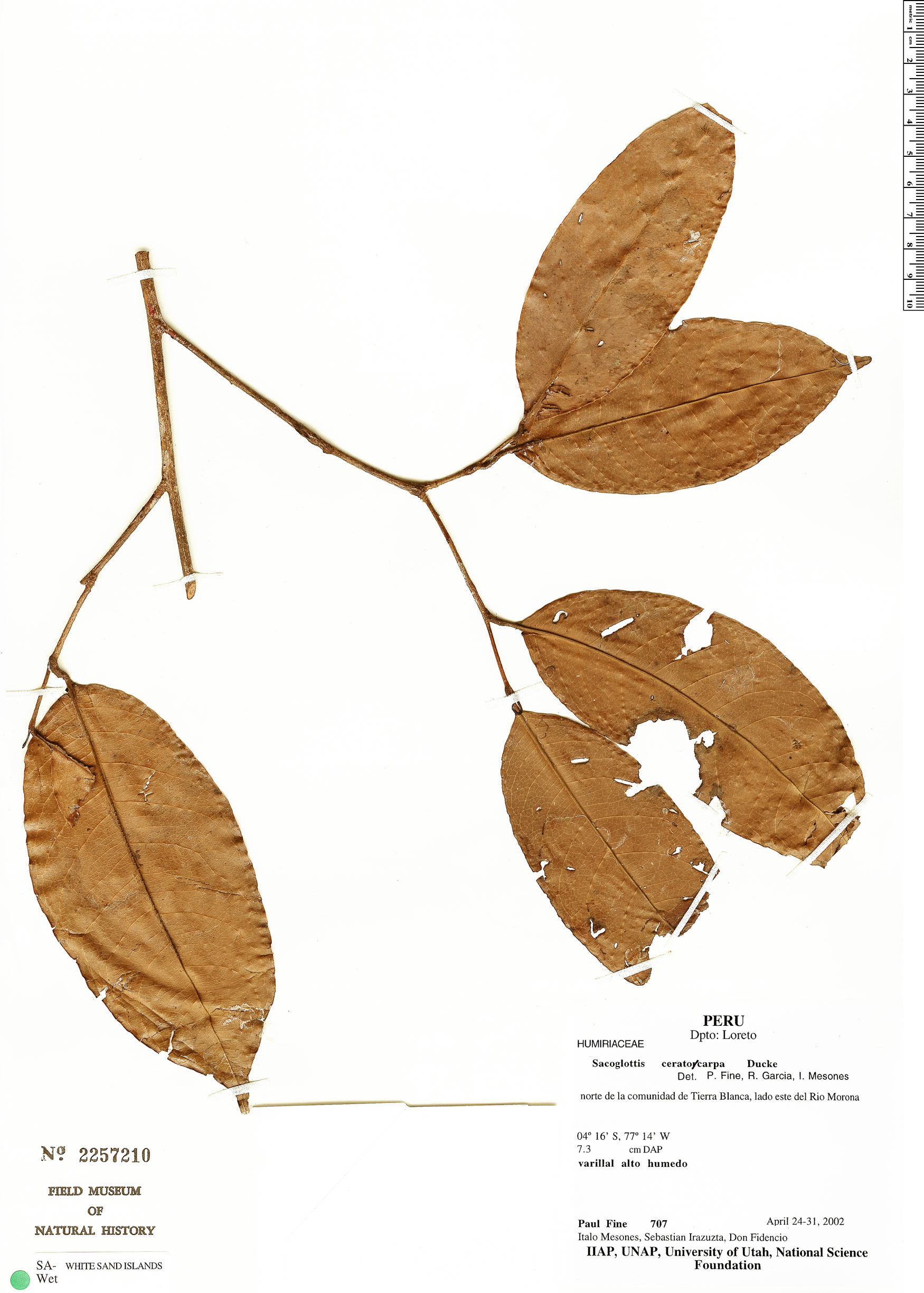
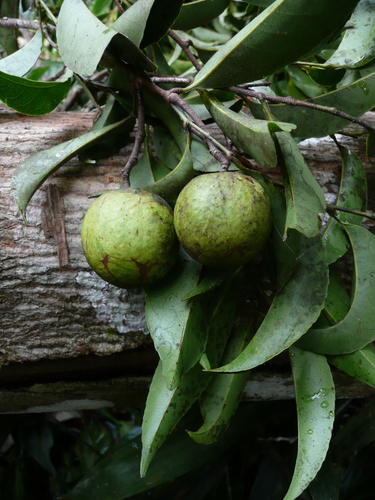
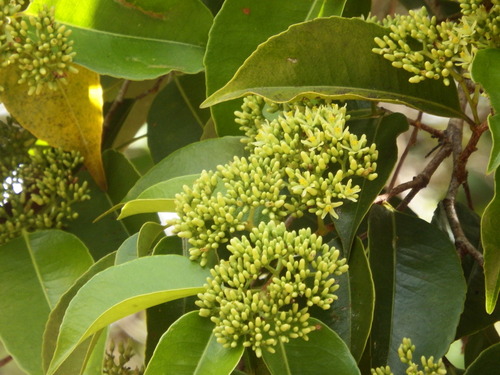
A tree. it grows 15-20 m high. The crown is oblong. The trunk is upright and 40-70 cm across. The leaves are simple and papery. They are 5-15 cm long by 3-6 cm wide. The flowers are in the axils of the leaves near the ends of branches. They are green. The fruit is oval and fleshy with a stone inside. It is 3.5 cm across. It is yellow and has a sweet pulp when ripe. The leaves vary a lot.
Edible Uses
Fruit - raw. The pulp has a sweet flavour when ripe. Very good eating. The fruit is a yellowish-brown, ellipsoid drupe that can be 40mm long and 30mm wide.
Traditional Uses
The fruit can be eaten fresh.
This uses section is brief — help expand it
Medicinal Uses
The plant (part not specified) is said to be antirheumatic and a treatment for gout.
Distribution
A tropical plant. It grows in all regions of the Amazon in Brazil.
Where It Grows
Amazon, Bolivia, Brazil, Colombia, Ecuador, Guiana, Guianas, Guyana, Peru, South America, Suriname, Venezuela,
Cultivation
Plants are grown from seed. Ripe fruit are collected and the fruit allowed to soften in a plastic bag to make it easier to removed the seeds. Seeds only remain viable for a short time. Fresh seed should be planted and they germinate in 3-4 months. Seedlings can be transplanted into the field in 6-7 months.
Propagation
Seed - best sown as soon as it is ripe in a partially shaded position in a nursery seedbed. A germination rate of over 50% can be expected, with the seed sprouting within 90 - 120 days. When the seedlings are 4 - 5cm tall, pot them up into individual containers and they should be ready to plant out 6 - 7 months later. The seed has a short viability in storage.
Other Uses
The bark contains 4% tannins. A red dye can be obtained from the bark. It turns a shiny black when ammonia is used as a mordant. It is used traditionally to paint bowls black. The wood is moderately heavy, of medium hardness, with good mechanical properties and very durable, even when exposed to the elements. It can be used in general constructions and for external purposes such as railway sleepers, poles and bridges.
Production
In Guyana flowering is May to July and fruiting September to November.
Other Information
Fruit are sold in local markets.
Synonyms
Also Known As
Aceituno rojo, Achua, Bofo-oedoe, Bofroe-oedoe, Dukuria, Fierrito, Ichi-torrado, Ichua, Jua, Kotore, Macucu-murici, Moroy, Nabarukwaha, Nanarukaha arao, Peru-yek, Pararu, Puire, Uachua, Uchi-torrado, Uchua, Uxirana, Vaxiva, Yapopari, Zwarte bast bofroe-oedoe
References (8)
- Lorenzi, H., 2002, Brazilian Trees. A Guide to the Identification and Cultivation of Brazilian Native Trees. Vol. 02 Nova Odessa, SP, Instituto Plantarum p 127
- Kermath, B. M., et al, 2014, Food Plants in the Americas: A survey of the domesticated, cultivated and wild plants used for Human food in North, Central and South America and the Caribbean. On line draft. p 773
- Grandtner, M. M. & Chevrette, J., 2013, Dictionary of Trees, Volume 2: South America: Nomenclature, Taxonomy and Ecology. Academic Press p 580
- Martin, F. W., et al, 1987, Perennial Edible Fruits of the Tropics. USDA Handbook 642 p 96
- Paz, F. S., et al, 2021, Edible Fruit Plant Species in the Amazon Forest Rely Mostly on Bees and Beetles as Pollinators. Journal of Economic Entomology, XX(XX), 2021, 1–13
Show all 8 references Hide references
- Peres, M. K., 2011, Diasporos do Cerrado Atrativos para Fauna: Chave Interativa Caracterizacao Visual e Relacoes Ecologicas. Masters thesis. Universidade de Brasilia.
- Polak, A. M., 1992, Major Timber Trees of Guyana. A Field Guide. Tropenbos Series 2. Wageningen. p 165
- Roa, J. A. G. & Boada, D. S. G., 2018, Fundación para el Fortalecimiento de la Fruticultura y Plantas Alimenticias no Convencionales en Colombia.