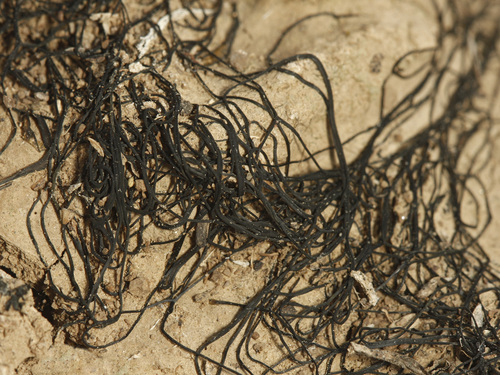
Aphanizomenon flos-aquae
Ralfs ex Bornet & Flahault
Klamath blue-green algae, Super blue-green algae
iNaturalist· cc-by-nc
(c) Білецький Богдан, some rights reserved (CC BY-NC)
iNaturalist· cc-by-nc
(c) Sergey Lednev, some rights reserved (CC BY-NC)
iNaturalist· cc-by-nc
(c) Sergey Lednev, some rights reserved (CC BY-NC)
Summary
Source: WikipediaAphanizomenon flos-aquae is a colonial species of cyanobacteria with both toxic and non-toxic strains found in brackish and freshwater environments globally, including the Baltic Sea and the Great Lakes.
Description
A freshwater microalga in the family Nostocaceae, Aphanizomenon flos-aquae is harvested from the mineral-rich waters of Upper Klamath Lake in Oregon and is rich in vitamin B12.
Edible Uses
Eaten as a food supplement, sprinkled on other foods as a condiment, or mixed with juice as a drink. Typically freeze-dried and marketed in powder, capsule, or liquid form.
Traditional Uses
It is eaten as a food supplement. It is sprinkled on other foods as a condiment or mixed with jucie as a drink.
This uses section is brief — help expand it
Known Hazards
Aphanizomenon flos-aquae (AFA) includes both toxic and non-toxic strains found in various global freshwater sources, with different varieties producing diverse compounds. The toxicity of A. flos-aquae has been reported in: China (2003), where a cell culture of A. flos-aquae was used to produce saxitoxin, in turn used for animal testing. Canada (2005), where microcystin synthase genes (McyE highly (> 95%) similar to the version in Microcystis aeruginosa is detected in supplement products. Germany (2006), where two lakes contains two strains of A. flos-aquae that produce cylindrospermopsin in culture. Germany (2012), where 18 samples of improperly harvested AFA used in supplement products were shown to be cross-contaminated with microcystin. 10 of the 18 samples exceeded the safe concentration limit of 1 μg/g, with the authors stating that the "distribution and commercial sale of AFA products, whether pure or mixed formulations, for human consumption appear highly questionable." The McyE gene was detected, but it was not sequenced, so its origin cannot be confirmed. Some Aphanizomenon flos-aquae varieties are known to produce toxic chemicals that are only released when cells die. Once released (lysed), and ingested, these toxins can damage liver and nerve tissues in mammals. In areas where water quality is not closely monitored, the World Health Organization has assessed toxic algae as a health risk, citing the production of anatoxin-a, saxitoxins, and cylindrospermopsin. Dogs have been reported to have become ill or have fatal reactions after swimming in rivers and lakes containing toxic A. flos-aquae. The FDA recognizes wild-harvested AFA as safe for consumption as food or in dietary supplements.
Distribution
It is harvested from the mineral rich waters of Upper Klamath Lake, Oregon.
Where It Grows
Asia, Japan, North America, USA,
Other Information
It is freeze dried and marketed in powder, capsule or liquid form. It is rich in Vitamin B 12.
References (2)
- Facciola, S., 1998, Cornucopia 2: a Source Book of Edible Plants. Kampong Publications, p 262
- Miyamoto, E., et al, 2006, Purification and Characterization of a Corrinoid-Compound in an Edible Cyanobacterium Aphanizomenon flos-aquae as a Nutritional Supplementary Food. Journal of Agricultural and Food Composition. 54:9604-9607