Maytenus boaria
Molina
Mayten tree
iNaturalist· cc-by-nc
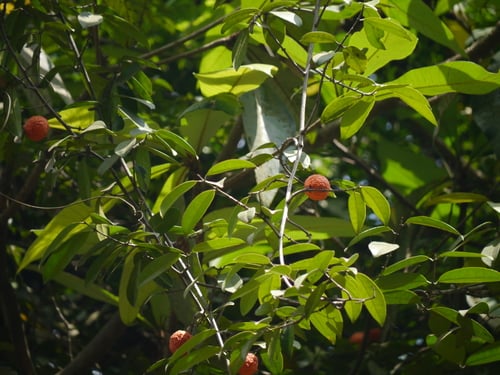
(c) reinderw, some rights reserved (CC BY-NC), uploaded by reinderw
iNaturalist· cc-by
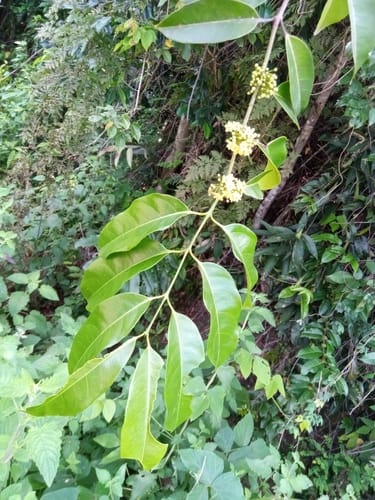
(c) Murray NZ, some rights reserved (CC BY), uploaded by Murray NZ
iNaturalist· cc-by
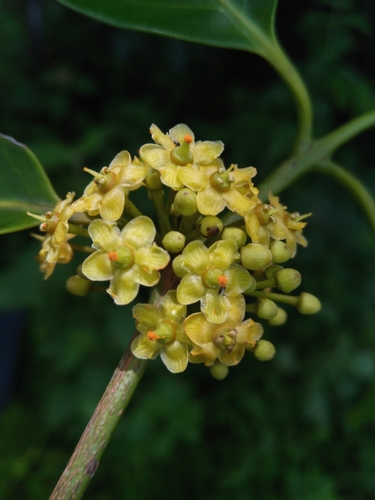
(c) Murray NZ, some rights reserved (CC BY), uploaded by Murray NZ
Summary
Source: WikipediaMaytenus boaria, commonly known as Maitén, is an evergreen tree in the family Celastraceae. It is native to southern South America (Chile, Argentina, Bolivia and southern Brazil). In Chile, it occurs approximately from 30 to 50°S. It can reach dimensions up to 20 m (66 ft) high and 80 cm (31 in) diameter, with a straight trunk.
Description
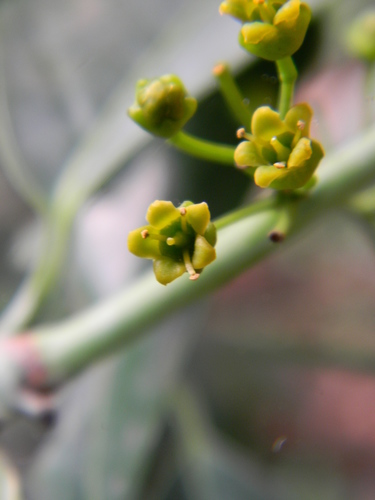
An evergreen tree. It grows 10 m high and spreads 4 m wide. The stem is erect and slender. The branches hang down. The crown is spreading. The leaves are narrowly oval and taper towards the tip. They are shiny green and have teeth along the edge. The flowers are small. The fruit are tiny orange berries.
Edible Uses
An edible oil extracted from the seeds is used for cooking.
Traditional Uses
The seeds produce a cooking oil. The leaves are eaten cooked.
This uses section is brief — help expand it
Medicinal Uses
No medicinal uses are known for this plant.
Distribution
It is a temperate plant. It does best in rich, moist, well-drained soils. It needs an open sunny position. It is tender to frost and drought. In Chile it grows from 30-50° S. In Argentina it grows from sea level to 4,000m above sea level. Arboretum Tasmania.
Where It Grows
Argentina, Australia, Bolivia, Brazil, Chile*, Europe, New Zealand, North America, South America, Spain, Tasmania, USA,
Cultivation
Succeeds in most soils in a sunny position and also in semi-shade. The soil should be well-drained but must not be allowed to dry out. Requires a position sheltered from strong cold winds. Tolerates temperatures down to about to about -10°c. This species has a very wide natural range, so far all the introductions have come from Chile but provenances in Argentina might provide even hardier trees that could succeed in colder areas of the country. Plants succeed outdoors in S. England and have produced self-sown seedlings at Lanarth in Cornwall. Large mature trees are growing in woodland conditions at Hilliers Arboretum in Hampshire. The flowers are usually either male or female, though both sexes are found on the same plant. Occasional hermaphrodite flowers are produced. Cattle are very strongly attracted to the leaves of this plant and will not touch other forage when this species is available. A slow growing tree.
Propagation
Sow seed in spring in a greenhouse. Prick seedlings out into individual pots when large enough to handle and grow on under glass for at least their first winter. Plant out into permanent positions in late spring or early summer after the last expected frosts. Half-ripe wood cuttings can be taken in July/August in a frame. The plant can also be divided by separating suckers in autumn or spring.
Other Uses
An oil is obtained from the seed. No other uses are known.
Notes
There are about 200 Maytenus species. They grow in the tropics and subtropics. It has anticancer properties.
Synonyms
Also Known As
Boaria, Maiten
References (10)
- Cordero, S. E., Abello, L. A., & Galvez, F. L., 2017, Plantas silvestres comestibles y medicinales de Chile y otras partes del mundo. CORMA p 87
- Facciola, S., 1998, Cornucopia 2: a Source Book of Edible Plants. Kampong Publications, p 75
- Kermath, B. M., et al, 2014, Food Plants in the Americas: A survey of the domesticated, cultivated and wild plants used for Human food in North, Central and South America and the Caribbean. On line draft. p 528
- Kintzios, S. E., 2006, Terrestrial Plant-Derived Anticancer Agents and Plant Species Used in Anticancer research. Critical Reviews in Plant Sciences. 25: pp 79-113
- Leon-Lobos, P., et al, 2022, Patterns of Traditional and Modern Uses of Wild Edible Native Plants of Chile: Challenges and Future Perspectives. Plants (Basel) v 11 (6) Table S1
Show all 10 references Hide references
- Mello, A. J. M., 2015, Cultural landscapes of the Araucaria Forests in the northern plateau of Santa Catarina, Brazil. Journal of Ethnobiology and Ethnomedicine 11:51
- Rapoport, E. H. & Ladio, A. H., 1999, Plantas comestibles. Bosque Volume 20 No. 2. ISSN 0314-8799
- Rapoport, E., H., et al, 2003, Plantas Nativas Comestibles de la Patagonia Andina Argentino/Chilena Parte 1, Department de Ecologi Centro Regional Universitario Briloche p 48
- Ryan, S., 2008, Dicksonia. Rare Plants Manual. Hyland House. p 41
- Sag. stor. nat. Chili 177. 1782