Bidens bigelovii
A. Gray
Bigelow's beggarticks
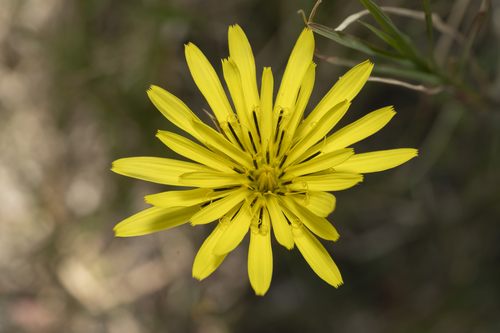
iNaturalist· cc-by
(c) CK2AZ, some rights reserved (CC BY), uploaded by CK2AZ
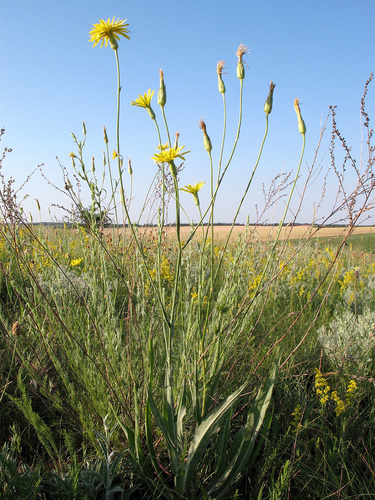
iNaturalist· cc-by
(c) CK2AZ, some rights reserved (CC BY), uploaded by CK2AZ
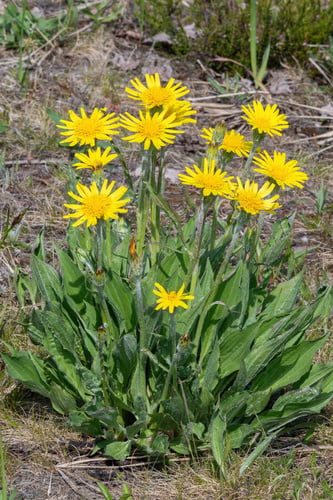
iNaturalist· cc-by-nc
(c) Eduardo, some rights reserved (CC BY-NC), uploaded by Eduardo
Summary
Source: WikipediaBidens bigelovii, commonly called Bigelow's beggarticks, is an annual herbaceous flowering plant in the Asteraceae family. It is native to the southwestern and south-central United States (Arizona, New Mexico, Texas, Oklahoma, Colorado) and as far south as Oaxaca, Mexico.
Description
A herb. It keeps growing from year to year. The leaves are thin. The leaves are divided 3 or more times.
This description is brief — help expand it
Edible Uses
Edible Parts: Edible Uses: Tea A tea is made from the flowering tips. Edible Uses & Rating: Leaves and young shoots are edible raw or cooked, and flowers can be steeped as tea. Seeds (cypselae) should not be eaten due to barbed awns that pose choking hazards [2-3]. Edibility rating: 3/5) — good leafy vegetable, unsafe seeds. Taste, Processing & Kitchen Notes: Fresh leaves are similar to lettuce but with a salty, fishy, resinous accent that becomes milder after brief boiling. Texture is soft, pleasant, neither fibrous nor slimy. Cooked leaves are excellent as potherbs or teas, pairing well with rice, fish, and beans. Flower and leaf tea is reddish-brown, aromatic, and captures the appealing flavor components—one of the better native herbal teas of the Southwest [2-3]. The cypselae can be used only after toasting, pounding, boiling, and filtering to make a beverage that tastes fruit-like, faintly marine, and unique—but ingesting unprocessed cypselae is dangerous [2-3]. Seasonality (Phenology): Leaves: mid-summer to autumn. Flowers: July–October. Seeds: autumn, often sticking to clothes after field contact. Traditional / Indigenous Use Summary: Native peoples and early settlers in Texas brewed flower tea for relaxation and mild stomach upset. Leaves used as food and herbal tonic.
Traditional Uses
The flowers are used for tea.
This uses section is brief — help expand it
Medicinal Uses
None known
Distribution
It is a temperate plant.
Where It Grows
Mexico, North America, USA,
Cultivation
Identification & Habit: Annual herb 20–90 cm tall. Stems slender, branching; leaves alternate or opposite, compound or 2–3-pinnately incised. Flower heads radiate or discoid, clustered on long stalks; rays white (<7 mm) and disks yellow. Involucres narrowly bell-shaped (2–4 mm); receptacles chaffy. Fruits cypselae, linear-fusiform, 4-angled, with 2–3 awns; outer cypselae 6–9 mm, inner 10–15 mm. Blooms July–October. Bark or woody tissue absent; annual life cycle. Growing Conditions: Prefers moist canyon soils, drainage lines, and shaded seeps. Thrives in loams or silts with steady moisture and full to partial sun. USDA Zones 5–10. Habitat & Range: Native to Arizona, New Mexico, Texas, and northern Mexico; moist low–mid elevation canyons. Size & Landscape Performance: Compact annual (20–90 cm × 30 cm). Suitable for pollinator gardens, riparian restoration, or ephemeral wetland cover. Growing Conditions: Prefers moist canyon soils, drainage lines, and shaded seeps. Thrives in loams or silts with steady moisture and full to partial sun. USDA Zones 5–10. Habitat & Range: Native to Arizona, New Mexico, Texas, and northern Mexico; moist low–mid elevation canyons. Size & Landscape Performance: Compact annual (20–90 cm × 30 cm). Suitable for pollinator gardens, riparian restoration, or ephemeral wetland cover. Readily grown from seed. Maintain moist but well-drained soil. Dies back after fruiting; self-sows lightly. Pests & Problems: Generally free of pests; aphids or leaf miners may occur. Look-Alikes & Confusion Risks: Similar to B. cernua and B. leptocephala; identification requires checking ray flower length (<7 mm) and narrow involucres. Cultivar/Selection Notes: No named cultivars; occasionally included in native riparian seed mixes.
Propagation
Seed - we have no information for this species but suggest sowing the seed in a greenhouse in the spring. Surface-sow or only just cover the seed and do not allow the compost to dry out. When they are large enough to handle, prick the seedlings out into individual pots and grow them on in the greenhouse for at least their first winter. Plant them out into their permanent positions in late spring or early summer, after the last expected frosts. Division in spring.
Other Uses
Suitable for pollinator gardens, riparian restoration, or ephemeral wetland cover. Ecology & Wildlife: Provides nectar for small bees, hoverflies, and butterflies. Seeds feed finches and rodents. Important late-season floral resource. Special Uses
Notes
There are about 200 Bidens species. Most are in North America.
Also Known As
Bigelow’s Beggartick (Bidens bigelovii A. Gray)
References (5)
- Beckstrom-Sternberg, Stephen M., and James A. Duke. "The Foodplant Database." http://probe.nalusda.gov:8300/cgi-bin/browse/foodplantdb.(ACEDB version 4.0 - data version July 1994)
- Bircher, A. G. & Bircher, W. H., 2000, Encyclopedia of Fruit Trees and Edible Flowering Plants in Egypt and the Subtropics. AUC Press. p 59
- Kermath, B. M., et al, 2014, Food Plants in the Americas: A survey of the domesticated, cultivated and wild plants used for Human food in North, Central and South America and the Caribbean. On line draft. p 132
- J. Torrey in W. H. Emory, Rep. U.S. Mex. bound. 2(1):91. 1858 ("1859")
- Lim, T. K., Edible Medicinal and Non-Medicinal Plants Volume 7 Flowers