Volvariella bombycina
(Schaeff.) Singer
Silky Agaric, Silky volvaria
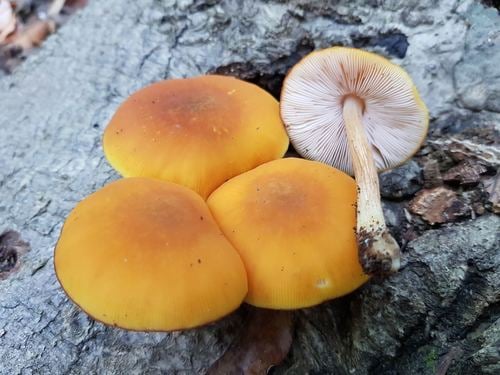
iNaturalist· cc-by
(c) Katja Schulz, some rights reserved (CC BY)
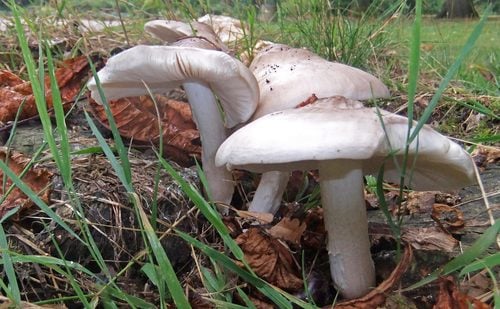
iNaturalist· cc-by-nc
(c) Edita Jakubauskaitė, some rights reserved (CC BY-NC)
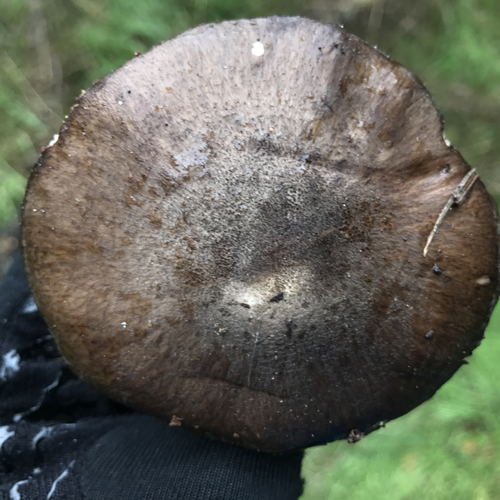
iNaturalist· cc-by-nc
(c) Edita Jakubauskaitė, some rights reserved (CC BY-NC)
Summary
Source: WikipediaVolvariella bombycina, commonly known as the silky volvariella, tree silksheath, silky sheath, silky rosegill, silver-silk straw mushroom, or tree mushroom, is a species of fungus in the family Pluteaceae. The fruit body (mushroom) begins developing in a thin, egg-like sac. This ruptures and the stem expands quickly, leaving the sac at the base of the stem as a volva. The cap, which can attain a diameter of up to 20 centimetres (8 inches), is white to slightly yellowish and covered with silky hairs. On the underside of the cap are closely spaced gills, free from attachment to the stem, and initially white before turning pink as the spores mature. It is an uncommon but widespread species, having been reported from Eurasia, the Americas, and Australia. The mushroom grows singly or in clusters, often appearing in old knotholes and wounds in elms and maples. It is edible and contains compounds with antibacterial properties.
Description
A mushroom.
This description is brief — help expand it
Edible Uses
The fruit bodies are edible, and usually considered of good quality. They have been called "excellent", "tasty" with a "modest and pleasant flavor", and "worth eating if found in large enough quantities".
Distribution
It is a tropical plant.
Where It Grows
Africa, Asia, Central Africa, Central America, China, Congo, Costa Rica, East Africa, Hong Kong, Tanzania,
Dangerous Lookalikes
This plant can be confused with the following toxic species. Always verify identification carefully before consuming any wild plant.
Death Cap
Amanita phalloides
Archenzo
Silky Agaric
Volvariella bombycina
(c) Katja Schulz, some rights reserved (CC BY)
Death Cap: White/olive-green spore print, greenish-yellow/olive cap, white volva, ring on stem, grows under oak trees.
Silky Agaric: Pink spore print, dark brown/grey cap, prominent volva, typically cultivated not wild-harvested.
Also Known As
Sigai xiaobaojiaogu
References (5)
- Boa, E. R., 2004, Wild edible fungi and their importance to people. FAO Non Wood Forest Products Booklet 17
- Cheung, P. C.-K., 1997, The evaluation of some lesser known edible mushroom mycelia produced in submerged culture from soy milk waste. Food Chemistry 60 (1): 61-65
- Hall, I. R., et al, 2003, Edible and Poisonous Mushrooms of the World. Timber Press. p 314
- Kaufmann, B. et al, 1999, The Great Encyclopedia of Mushrooms. Konemann. p 121
- Thatoi, H. & Singdevsachan, S. K., 2014, Diversity, nutritional composition and medicinal potential of Indian mushrooms: A review. Afr. J. Biotechnol. Vol. 13(4), pp. 523-545