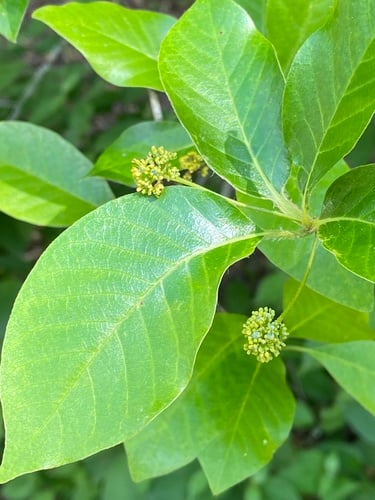
Alangium villosum subsp. vitiense
Blume (Wang.), (A. Gray) Bloemb.
Musk tree
gbif· cc-by
The New York Botanical Garden
gbif· cc-by
The New York Botanical Garden
gbif· cc-by
Royal Botanic Gardens, Kew
Summary
Source: WikipediaAlangium villosum is a species of flowering plant in the family Cornaceae, native to Java.
Description
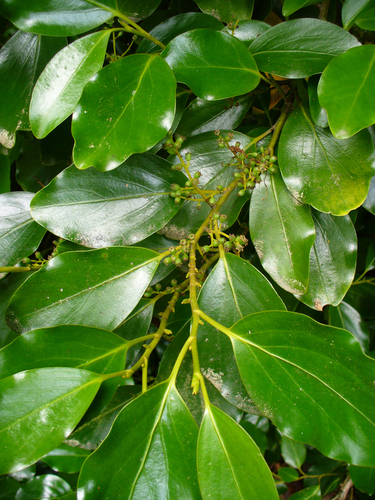
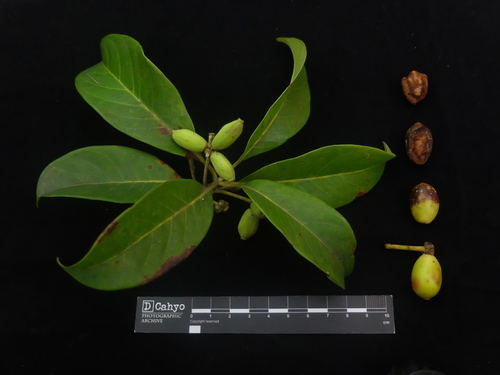
A small tree. The leaves are entire. The leaves are oval to sword shaped and 4-19 cm long by 2-8 cm wide.
This description is brief — help expand it
Edible Uses
The fruit are eaten.
Distribution
A tropical plant.
Where It Grows
Australia, Fiji, Pacific, Vanuatu,
Notes
There are 17-20 Alangium species. Also put in the family Alangiaceae.
Synonyms
Alangium vitiense (A. Gray) Baill. ex HarmsKarangolum vitiense (A. Gray) KuntzeMarlea vitiensis (A. Gray) Benth.Rhytidandra vitiensis A. GrayStylidium vitiense (A. Gray) F. Muell.
Also Known As
Kaunisau
References (5)
- Bircher, A. G. & Bircher, W. H., 2000, Encyclopedia of Fruit Trees and Edible Flowering Plants in Egypt and the Subtropics. AUC Press. p 17
- Gillaumin, 1954,
- Hedrick, U.P., 1919, (Ed.), Sturtevant's edible plants of the world. p 404
- Maiden, J. H., 1889, The Useful Native Plants of Australia (including Tasmania). The Technology Museum of NSW, Sydney. p 39 (As Marlea vitiensis)
- Walter, A. & Sam C., 2002, Fruits of Oceania. ACIAR Monograph No. 85. Canberra. p 283