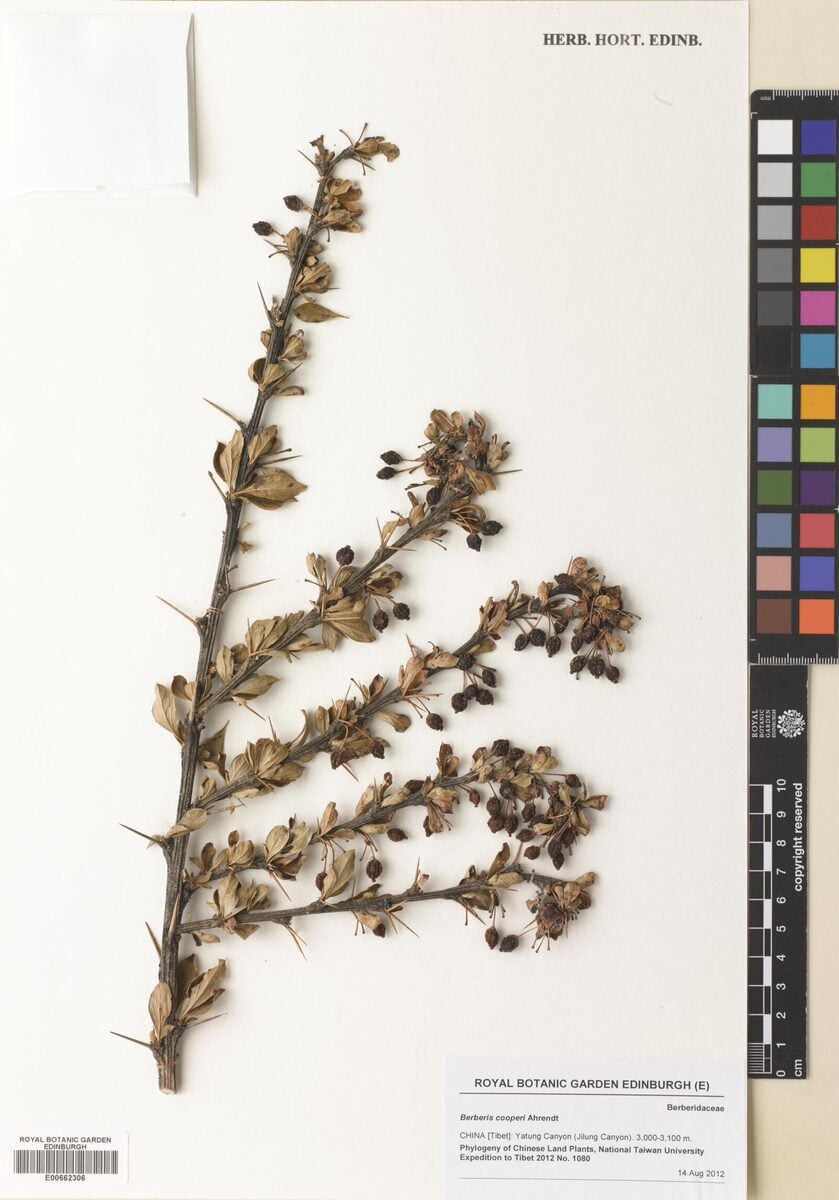
Berberis georgii
Ahrendt.
Barberry
gbif· cc-by
Meise Botanic Garden
gbif· cc-by
Royal Botanic Gardens, Kew
gbif· cc-by
Royal Botanic Gardens, Kew
Summary
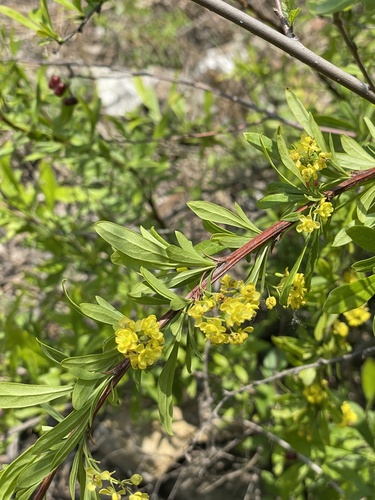
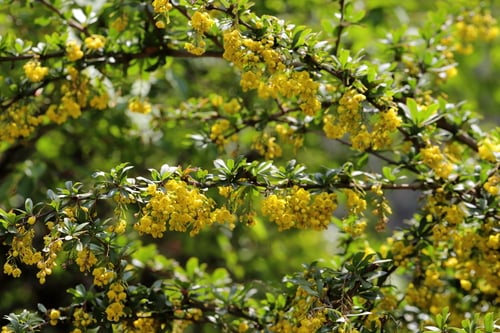
A deciduous shrub reaching 3 m tall with medium growth rate. Hardy to UK zone 3. Flowers May to June; seeds mature September to October. Hermaphrodite and self-fertile, pollinated by insects. Attracts wildlife. Tolerates light sandy, medium loamy, and heavy clay soils, including nutritionally poor soils. Grows in mildly acid, neutral, or basic pH; adapts to semi-shade or full sun; prefers dry or moist conditions.
Description
A deciduous shrub reaching 3 m tall with medium growth rate. Hardy to UK zone 3. Flowers May to June; seeds mature September to October. Hermaphrodite and self-fertile, pollinated by insects. Attracts wildlife. Tolerates light sandy, medium loamy, and heavy clay soils, including nutritionally poor soils. Grows in mildly acid, neutral, or basic pH; adapts to semi-shade or full sun; prefers dry or moist conditions.
Edible Uses
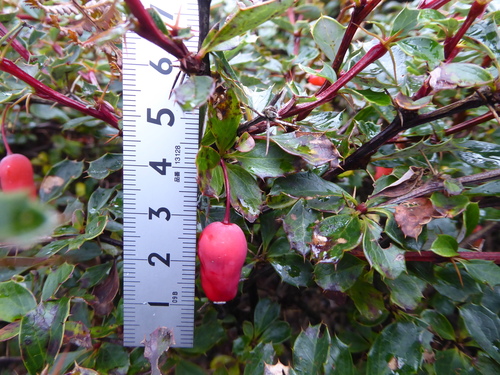
Edible Parts: Fruit Edible Uses: Fruit - raw or cooked. A very acid lemon-like flavour, it is nice in small quantities raw. When cooked it can be used in pies, preserves etc. A very good size for a barberry, the fruit is up to 10mm long and 4mm wide. A refreshing lemon-like drink can be made from the fruit.
Traditional Uses
The fruit are acidic. They are used in preserves, pies, desserts and also eaten fresh. The fruit can be used to make a drink.
This uses section is brief — help expand it
Medicinal Uses
Antibacterial Cancer Dysentery Berberine, universally present in rhizomes of Berberis species, has marked antibacterial effects. Since it is not appreciably absorbed by the body, it is used orally in the treatment of various enteric infections, especially bacterial dysentery. It should not be used with Glycyrrhiza species (Liquorice) because this nullifies the effects of the berberine. Berberine has also shown antitumour activity.
Known Hazards
Do not use with Glycyrrhiza species (Liquorice) as this negates the berberine's therapeutic effects.
Distribution
A cool temperate plant. Plants are very cold hardy. They can survive temperatures to -35°C.
Where It Grows
Britain, Europe,
Cultivation
Prefers a warm moist loamy soil but it is by no means fastidious, succeeding in thin, dry and shallow soils. Grows well in heavy clay soils. Succeeds in full sun or light shade. Plants are hardy to about -35°c. This species is a hybrid of unknown origin, probably involving B. vulgaris. It is an exceptionally free-fruiting form and is of interest in breeding programmes. This species is probably an alternate host of black-stem rust of wheat. Hybridizes freely with other members of this genus. Plants can be pruned back quite severely, they resprout well from the base.
Propagation
Seed - best sown as soon as it is ripe in a cold frame, when it should germinate in late winter or early spring. Seed from over-ripe fruit will take longer to germinate, whilst stored seed may require cold stratification and should be sown in a cold frame as early in the year as possible. The seedlings are subject to damping off, so should be kept well ventilated. When the seedlings are large enough to handle, prick them out into individual pots and grow them on in a cold frame. If growth is sufficient, it can be possible to plant them out into their permanent positions in the autumn, but generally it is best to leave them in the cold frame for the winter and plant them out in late spring or early summer of the following year. Cuttings of half-ripe wood, July/August in a frame. Cuttings of mature wood of the current season's growth, preferably with a heel, October/November in a frame. Suckers, removed in late autumn/early winter and planted out in situ or potted up and planted out in late spring.
Other Uses
Dye A yellow dye is obtained from the roots, bark and stem. Special Uses Attracts Wildlife Food Forest
Notes
There are about 450-500 Berberis species.
Synonyms
References (1)
- Plants for a Future database, The Field, Penpol, Lostwithiel, Cornwall, PL22 0NG, UK. http://www.scs.leeds.ac.uk/pfaf/