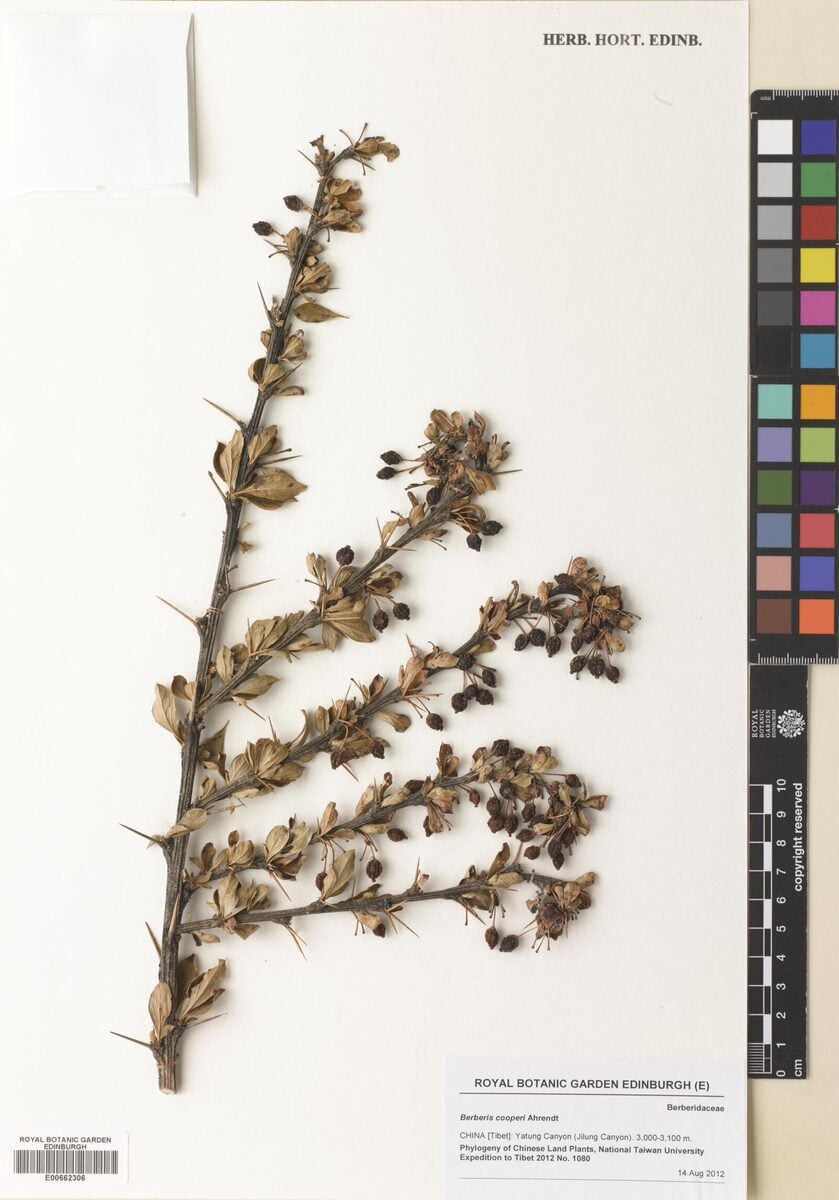
Berberis fendleri
A. Gray
Colorado barberry
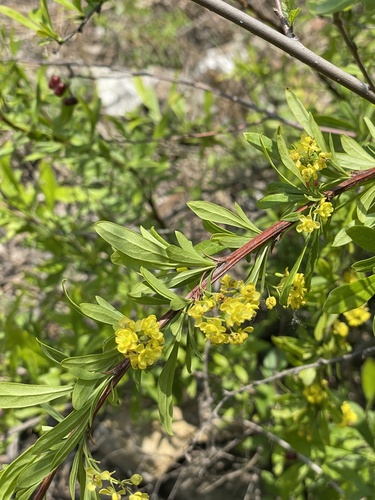
iNaturalist· cc-by
(c) Eric Knight, some rights reserved (CC BY)
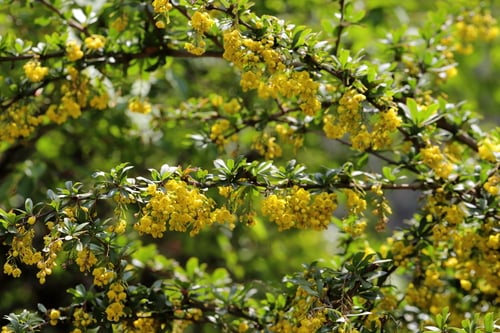
iNaturalist· cc-by-nc
(c) avocat, some rights reserved (CC BY-NC), uploaded by avocat
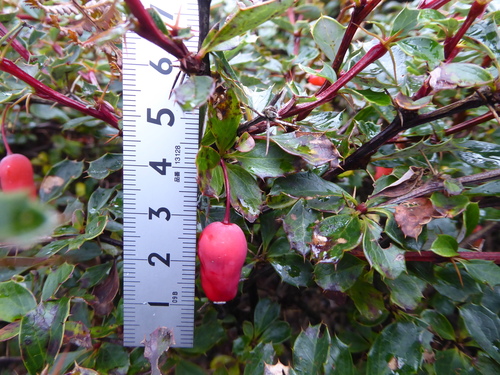
iNaturalist· cc-by-nc
(c) Tammo Reichgelt, some rights reserved (CC BY-NC), uploaded by Tammo Reichgelt
Summary
Source: WikipediaBerberis fendleri, commonly known as Colorado barberry, is a shrub native to canyons and mountain slopes in the western United States (Colorado, New Mexico, and Utah).
Description
Deciduous shrub growing to 1.5 m tall by 1 m wide. Hardy to UK zone 5. Flowers in May. Hermaphroditic and self-fertile, pollinated by insects. Tolerates light sandy, medium loamy, and heavy clay soils, including nutritionally poor types. Grows in mildly acid to mildly alkaline pH. Adapts to semi-shade or full sun. Prefers dry or moist soil. Leaves turn color with fruit maturity, creating striking autumn display on mountain slopes.
Edible Uses
Edible Parts: Fruit Edible Uses: Fruit - raw or cooked. Flavorful and pleasantly tart, but small, seedy, and often dry. The fruits are about 5mm long. The berries of Colorado barberry are edible and flavorful, though smaller and drier than those of other southwestern Berberis species. They can be eaten raw, cooked, or dried and are suitable for jellies, syrups, and preserves. Despite containing several small seeds, both pulp and seeds are chewable [2-3]. Taste, Processing & Kitchen Notes: Ripe berries deliver a sweet-tart flavor blending hints of grape, lemon, and strawberry. Their astringency is mild compared to related species, and the bitterness resides mainly in the seeds. They can be used as a natural acidulant in sauces or desserts. When cooked, the berries yield a bright red syrup with a flavor reminiscent of red currants. To prepare, the fruits can be rinsed, simmered gently for 10–15 minutes, and strained through a fine sieve. The resulting liquid can be concentrated into syrup or jelly. Berries can also be sun-dried, though care must be taken to protect them from insects, as the sticky drying fruit attracts flies. Seasonality (Phenology): Flowering occurs from May to July, depending on elevation and rainfall. Fruits develop through late summer and typically ripen from August to October. The deciduous leaves turn color in synchrony with the fruit’s maturity, making ripe shrubs visually striking against mountain slopes. Harvest & Processing Workflow: Berries should be hand-harvested when fully red and slightly soft, typically late August through September. Wearing gloves prevents scratches from spines. Rinse the berries, inspect for insects, and process promptly—either cooked into syrup or spread thinly for drying. For syrup: simmer berries in water, strain through muslin, and reduce to half volume. For drying: spread single layers on mesh trays in warm shade for 2–3 days. Look-Alikes & Confusion Risks: This species can be confused with Fremont’s barberry (B. fremontii), which is evergreen with compound glaucous leaves and thicker, spiny leaflets. Colorado barberry is distinguished by its deciduous simple leaves and smaller stature. Its red berries are also less inflated than those of B. fremontii. Traditional / Indigenous Use Summary: Colorado barberry was used by Indigenous peoples and early settlers as a source of tart berries for preserves and trail food. Though less prominent in ethnobotanical records than its larger relatives, it was known to tribes of the Four Corners region as both a food and a mild medicinal plant. The bark and roots, rich in berberine, were occasionally boiled to make a yellow dye or antimicrobial wash.
Medicinal Uses
Antibacterial Cancer Dysentery Berberine, universally present in rhizomes of Berberis species, has marked antibacterial effects. Since it is not appreciably absorbed by the body, it is used orally in the treatment of various enteric infections, especially bacterial dysentery. It should not be used with Glycyrrhiza species (Liquorice) because this nullifies the effects of the berberine. Berberine has also shown antitumour activity.
Known Hazards
The fruits are safe when consumed in moderation, though all Berberis species contain berberine, a potent alkaloid present mainly in roots, bark, and stems. These tissues should not be used for self-medication without professional guidance, as berberine can interact with prescription drugs.
Distribution
It is a temperate plant.
Where It Grows
North America, USA,
Cultivation
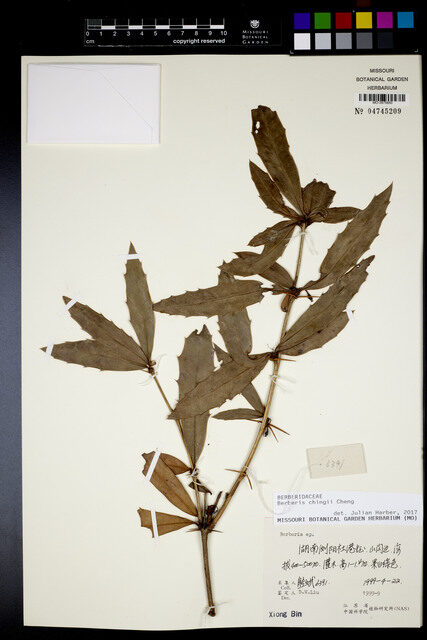
This species prefers well-drained, rocky or sandy loams, often derived from limestone or volcanic substrates. It grows best in full sun to partial shade, tolerating dry conditions once established but favoring sites with snowmelt or seasonal moisture. It withstands cold winters and summer drought, characteristic of montane climates. Prefers a warm moist loamy soil but is by no means fastidious, succeeding in thin, dry and shallow soils. Grows well in heavy clay soils. Succeeds in full sun or light shade. Hybridizes freely with other members of this genus. Plants can be pruned back quite severely, they resprout well from the base. Identification & Habit: Berberis fendleri forms a scraggly shrub reaching 0.5–1.5 m (1.5–5 ft) in height, with multiple spiny branches arising from a woody base. The stems are yellowish-brown, and cross-sections of mature branches reveal the unmistakable bright yellow inner wood. The leaves are simple and oblanceolate, grouped in small clusters along the branches rather than evenly distributed. They are glossy green above, sometimes paler beneath, and may have entire or slightly toothed margins. During autumn, they develop striking pastel tones of pink, orange, and yellow before dropping. In spring to early summer, racemes of 3–15 small, bright yellow flowers appear along the branches. These give rise to ellipsoid red berries, often slightly glossy, which mature through late summer into early fall. Seasonality (Phenology): Flowering occurs from May to July, depending on elevation and rainfall. Fruits develop through late summer and typically ripen from August to October. The deciduous leaves turn color in synchrony with the fruit’s maturity, making ripe shrubs visually striking against mountain slopes. Habitat & Range: Colorado barberry is found throughout mountainous regions of northern New Mexico, southwestern Colorado, and southeastern Utah, often along rocky canyons, woodland edges, and open slopes. It occurs from 1,500–2,700 m (5,000–9,000 ft) in elevation, frequently in pinyon-juniper and mixed conifer communities. Size & Landscape Performance: Typical plants form dense thickets up to 1.5 m tall and 1.5 m wide. Growth is slow but steady, with a compact, branching habit. The shrub’s bright autumn foliage, yellow spring flowers, and red fruit clusters provide multi-season ornamental appeal. It performs well in xeric landscapes and native restoration plantings, offering both aesthetic and ecological value. Pests & Problems: The primary challenges include fruit fly larvae that infest berries and rust fungi (notably Puccinia graminis), which can affect both barberry and nearby cereal crops. Although B. fendleri is less commonly a rust host than Eurasian Berberis vulgaris, caution is warranted near grain fields. Occasional aphids or scale insects may appear but rarely cause damage.
Propagation
Seed - best sown as soon as it is ripe in a cold frame, when it should germinate in late winter or early spring. Seed from over-ripe fruit will take longer to germinate, whilst stored seed may require cold stratification and should be sown in a cold frame as early in the year as possible. The seedlings are subject to damping off, so should be kept well ventilated. When the seedlings are large enough to handle, prick them out into individual pots and grow them on in a cold frame. If growth is sufficient, it can be possible to plant them out into their permanent positions in the autumn, but generally it is best to leave them in the cold frame for the winter and plant them out in late spring or early summer of the following year. Cuttings of half-ripe wood, July/August in a frame. Cuttings of mature wood of the current season's growth, preferably with a heel, October/November in a frame.
Other Uses
Dye The species is valued in native plant gardens, erosion control, and wildlife plantings for its adaptability and resilience. A yellow dye is obtained from the root. The shrub’s bright autumn foliage, yellow spring flowers, and red fruit clusters provide multi-season ornamental appeal. It performs well in xeric landscapes and native restoration plantings, offering both aesthetic and ecological value. Ecology & Wildlife: This shrub plays an important role in montane ecosystems, providing early-season pollen and nectar for native bees and later-season berries for birds, foxes, and small mammals. Its thorny branches offer protective nesting habitat for small birds. It coexists with ponderosa pine, Gambel oak, and chokecherry in open woodland ecotones. Special Uses
Notes
There are about 450-500 Berberis species.
Also Known As
Colorado Barberry (Berberis fendleri A. Gray)
References (3)
- Beckstrom-Sternberg, Stephen M., and James A. Duke. "The Foodplant Database." http://probe.nalusda.gov:8300/cgi-bin/browse/foodplantdb.(ACEDB version 4.0 - data version July 1994)
- Mem. Amer. Acad. Arts ser. 2, 4:5. 1849
- Plants for a Future database, The Field, Penpol, Lostwithiel, Cornwall, PL22 0NG, UK. http://www.scs.leeds.ac.uk/pfaf/