Berberis asiatica
Roxb. ex DC.
Himalayan barberry, Raisin barberry
iNaturalist· cc0
no rights reserved, uploaded by Neil Alderson
iNaturalist· cc-by-nc
(c) Mayukh Hajra, some rights reserved (CC BY-NC)
Summary
Source: WikipediaBerberis asiatica (Indian or Asian barberry), is a species of shrub, in the family Berberidaceae. It is native to the Himalayas (East and West Himalaya), India (including Himachal Pradesh region), Bangladesh, Myanmar, Nepal and Tibet. It is found in subtropical to temperate regions, and at altitudes of 600–2,700 m (1,968.5–8,858.3 ft) above sea level. B. asiatica is an upright, spiny and glabrous bush. It has blood-red coloured fruit. It was first published in Syst. Nat. 2: 13 in 1821. The name has been verified by United States Department of Agriculture and the Agricultural Research Service on 2 January 2003. Its fruit has potential nutraceutical values. Extracts from the fruit possesses a potential source of polyphenolic, mainly anthocyanin compounds, which can be used for treating inflammation diseases (Neag et al. 2018).
Description
A spiny shrub. It grows about 3 m high. The leaves have short stalks and occur in clusters. The leaves are 1.5-9 cm long by 0.5-2 cm wide. They are oval and leathery. There are spines around the edge. The flowers are yellow. The fruit is fleshy or pulpy and blue-black when ripe. The fruit are 8 mm across.
Edible Uses
Edible Parts: Fruit Edible Uses: Fruit - raw or dried and used like raisins. This species is said to make the best Indian raisins. Fully ripe fruits are fairly juicy with a pleasantly acid flavour, though there are rather a lot of seeds. The fruit is abundantly produced in Britain. The fruit is about 8mm long.
Traditional Uses
The ripe fruit are eaten fresh or pickled. They are also dried and used like raisins. Alcohol is distilled from the ripe fruit. Caution: Alcohol is a cause of cancer. The flowers are eaten raw.
Medicinal Uses
Antibacterial Cancer Dysentery Laxative Odontalgic Ophthalmic Tonic The roots are used in treating ulcers, urethral discharges, ophthalmia, jaundice, fevers etc. The roots contain 2.1% berberine, the stems 1.3%. The bark and wood are crushed in Nepal then boiled in water, strained and the liquid evaporated until a viscous mass is obtained. This is antibacterial, laxative and tonic. It is taken internally to treat fevers and is used externally to treat conjuctivitis and other inflammations of the eyes. Tender leaf buds are chewed and held against affected teeth for 15 minutes to treat dental caries. The fruit is cooling and laxative. Berberine, universally present in rhizomes of Berberis species, has marked antibacterial effects. Since it is not appreciably absorbed by the body, it is used orally in the treatment of various enteric infections, especially bacterial dysentery. It should not be used with Glycyrrhiza species (Liquorice) because this nullifies the effects of the berberine. Berberine has also shown antitumour activity.
Distribution
It is a temperate plant. Plants grow in Nepal from 600-2500 m altitude. They occur on exposed, rocky hillsides. It can grow in sun or shade. They are hardy.
Where It Grows
Afghanistan, Asia, Bhutan, China, Himalayas, India, Myanmar, Nepal, Northeastern India, SE Asia, Sikkim,
Cultivation
Prefers a warm moist loamy soil and light shade but it is by no means fastidious, succeeding in thin, dry and shallow soils. Grows well in heavy clay soils. Plants are often found growing in dense shade in the wild. Plants are generally very hardy and fruit abundantly in Britain. They grow very well in Cornwall. In colder areas of the country they are apt to be cut to the ground in severe winters, though they resprout well from the base. Hybridizes freely with other members of this genus. This species is often offered under the names of B. chitria or B. glaucocarpa. Plants can be pruned back quite severely, they resprout well from the base. Barberry is a moderately fast-growing plant, often reaching maturity in 3 to 5 years, depending on the species and growing conditions. The berries are typically harvested in late summer to early autumn, when they are ripe. Barberry generally flowers in spring, depending on the species and local climate.
Propagation
Seed - best sown as soon as it is ripe in a cold frame, when it should germinate in late winter or early spring. Seed from over-ripe fruit will take longer to germinate, whilst stored seed may require cold stratification and should be sown in a cold frame as early in the year as possible. The seedlings are subject to damping off, so should be kept well ventilated. When the seedlings are large enough to handle, prick them out into individual pots and grow them on in a cold frame. If growth is sufficient, it can be possible to plant them out into their permanent positions in the autumn, but generally it is best to leave them in the cold frame for the winter and plant them out in late spring or early summer of the following year. Cuttings of half-ripe wood, July/August in a frame. Cuttings of mature wood of the current season's growth, preferably with a heel, October/November in a frame.
Other Uses
Dye Agroforestry uses?: Barberry can be used as a hedge, as it provides dense foliage that offers shelter for wildlife. Additionally, its deep roots can help with soil stabilization. A yellow dye is obtained from the roots and stems. The spiny branches are used to make fencing around fields in Nepal. 1. Nectary - Flowers rich in nectar and pollen: Yes – Barberry flowers are small but rich in nectar and pollen, attracting bees and other pollinators. 2. Wildlife - Food (Fruit, Seeds, Leaf litter, Shelter, Nesting, Roosting): Yes – Barberry produces edible berries that are a food source for birds and other wildlife. The dense, thorny branches provide good shelter and protection for nesting and roosting birds. 3. Invertebrate Shelter (Overwintering sites, Leaf litter, Groundcover): Yes – Barberry shrubs' dense structure and leaf litter can offer overwintering sites and shelter for invertebrates. 4. Pest Confuser (Smell): No – Barberry is not known for emitting a smell that confuses pests. Special Uses Food Forest
Production
In Sikkim fruit are available Sep. to Oct.
Other Information
The fruit are popular.
Notes
There are about 450-500 Berberis species.
Synonyms
Also Known As
Aul chotra, Barberry, Choto, Chotto, Chutro, Daruharidra, Kanchan, Kerba, Perpak, Kilmora, Kimando, Kimor, Kingora, Kingore, Kirmada, Kissu, Kyerkar, Kyerwa, Marpyashi, Musa lede, Pichyar, Pirima, Rasanjan, Rasaunt, Skyer pa, Tge, Thakti-layem, Toksong
References (34)
- Agarwal, R. & Chandra, V., 2019, Diversity of wild edible plants in the Mandal-Chopta forest, Uttarakhand. Journal of Medicinal Plants Studies 2019; 7(1): 89-92
- Ambasta S.P. (Ed.), 2000, The Useful Plants of India. CSIR India. p 71
- Aryal, K. P., et al, 2018, Diversity and use of wild and non-cultivated edible plants in the Western Himalaya. Journal of Ethnobiology and Ethnomedicine (2018) 14:10
- Bahuguna, A. et al, 2010, Floristic Diversity and Indigenous uses of Forest Vegetation of Dabka Watershed in Indian Central Himalayas. Ethnobotanical Leaflets 14:491-510
- Bajracharya, D., 1980, Nutritive Values of Nepalese Edible Wild Fruits. Z. Lebensm. Unters. Forsch. 171: 363-366
Show all 34 references Hide references
- Bircher, A. G. & Bircher, W. H., 2000, Encyclopedia of Fruit Trees and Edible Flowering Plants in Egypt and the Subtropics. AUC Press. p 57
- Dobriyal, M. J. R. & Dobriyal, R., 2014, Non Wood Forest Produce an Option for Ethnic Food and Nutritional Security in India. Int. J. of Usuf. Mngt. 15(1):17-37
- Facciola, S., 1998, Cornucopia 2: a Source Book of Edible Plants. Kampong Publications, p 48
- Gautam, R. S., et al, 2020, Wild Edible Fruits of Nepal. Int. J. Appl. Sci. Biotechnol. Vol 8(3): 289-304
- Gautam, R. S., et al, 2022, Ethnobotanical Review of Wild Edible Plants of Nepal. Journal of Natural History Museum Volume 32, 2021-22 p 108
- Ghimire, S. K., et al, 2008, Non-Timber Forest Products of Nepal Himalaya. WWF Nepal p 29
- Glowinski, L., 1999, The Complete Book of Fruit Growing in Australia. Lothian. p 179
- Hedrick, U.P., 1919, (Ed.), Sturtevant's edible plants of the world. p 97
- John, L., & Stevenson, V., 1979, The Complete Book of Fruit. Angus & Robertson p 74
- Kala, C. P., 2007, Prioritization of cultivated and wild edibles by local people in the Uttaranchal hills of Indian Himalaya. Indian Journal of Traditional Knowledge. 6(1) pp 239-244
- Karki, S., et al, 2017, Minor Fruits in Nepal: Utilization and Conservation Efforts. Proceedings of 2nd National Workshop on CUAPGR, 2017.
- Lyle, S., 2006, Discovering fruit and nuts. Land Links. p 91
- Manandhar, N.P., 2002, Plants and People of Nepal. Timber Press. Portland, Oregon. p 108
- Masoodi, H. U. R. & Sundriyal, R. C., 2020, Richness of non-timber forest products in Himalayan communities—diversity, distribution, use pattern and conservation status. Journal of Ethnobiology and Ethnomedicine 16:56
- Mehta, P. S. et al, 2010, Native plant genetic resources and traditional foods of Uttarakhand Himalaya for sustainable food security and livelihood. Indian Journal or Natural products and Resources. Vol 1(1), March 2010 pp 89-96
- Mukhia, P.K., et al, 2013, Wild plants as Non Wood Forest Products used by the rural community of Dagana, a southern foothill district of Bhutan, SAARC Journal, 27 pages
- Murtem, G. & Chaudhrey, P., 2016, An ethnobotanical note on wild edible plants of Upper Eastern Himalaya, India. Brazilian Journal of Biological Sciences, 2016, v. 3, no. 5, p. 63-81.
- Plants for a Future database, The Field, Penpol, Lostwithiel, Cornwall, PL22 0NG, UK. http://www.scs.leeds.ac.uk/pfaf/
- Polunin, O., & Stainton, A., 2006, Flowers of the Himalaya, Oxford India Paperbacks. p 20
- Radha, B., et al, 2013, Wild Edible Plant Resources of the Lohba Range of Kedarnath Forest Division (KFD), Garhwal Himalaya, India. Int. Res J. Biological Sci. Vol. 2 (11), 65-73
- Singh, H.B., Arora R.K.,1978, Wild edible Plants of India. Indian Council of Agricultural Research, New Delhi. p 50
- Singh, V. B., et al, (Ed.) Horticulture for Sustainable Income and Environmental Protection. Vol. 1 p 214
- Sundriyal, M., et al, 1998, Wild edibles and other useful plants from the Sikkim Himalaya, India. Oecologia Montana 7:43-54
- Sundriyal, M., et al, 2004, Dietary Use of Wild Plant Resources in the Sikkim Himalaya, India. Economic Botany 58(4) pp 626-638
- Tiwari, J. K., et al, 2010, Some Promising Wild Edible Plants of Srinagar and its Adjacent Area in Alaknanda Valley of Garhwal Himalaya, India. Journal of American Science 6(4) p 167ff
- Tsering, J., et al, 2017, Ethnobotanical appraisal on wild edible plants used by the Monpa community of Arunchal Pradesh. Indian Journal of Traditional Knowledge. Vol 16(4), October 2017, pp 626-637
- Upreti, K., et al, 2010, Diversity and Distribution of Wild Edible Fruit Plants of Uttarakhand. Bioversity Potentials of the Himalaya. p 161
- Uprety, Y., et al, 2016, Traditional use and management of NTFPs in Kangchenjunga Landscape: implications for conservation and livelihoods. Journal of Ethnobiology and Ethnomedicine (2016) 12:19
- Wild edible plants of Himachal Pradesh
More from Berberidaceae
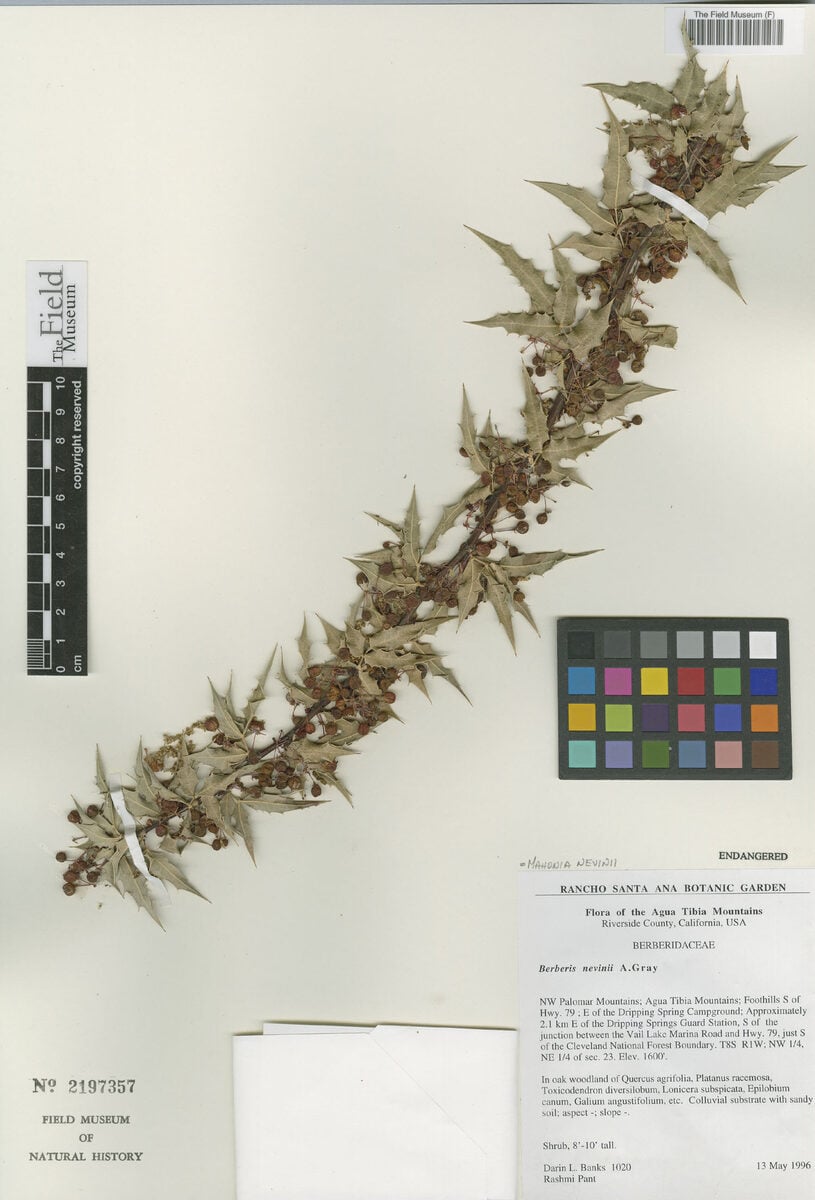
Mahonia nevinii - (Gray.)Fedde.
Nevin's barberry
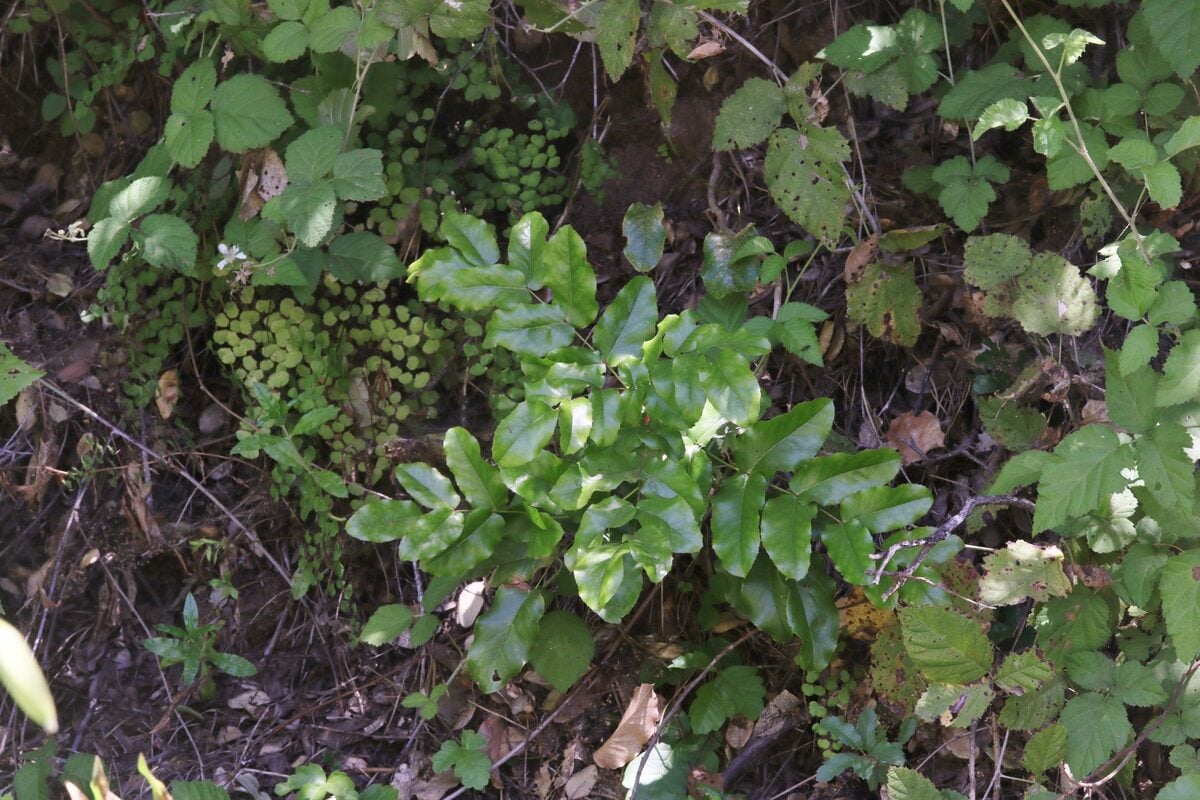
Mahonia pinnata - (Lag.)Fedde.
California Barberry, Wavyleaf barberry, Island barberry, Creeping Holly Grape
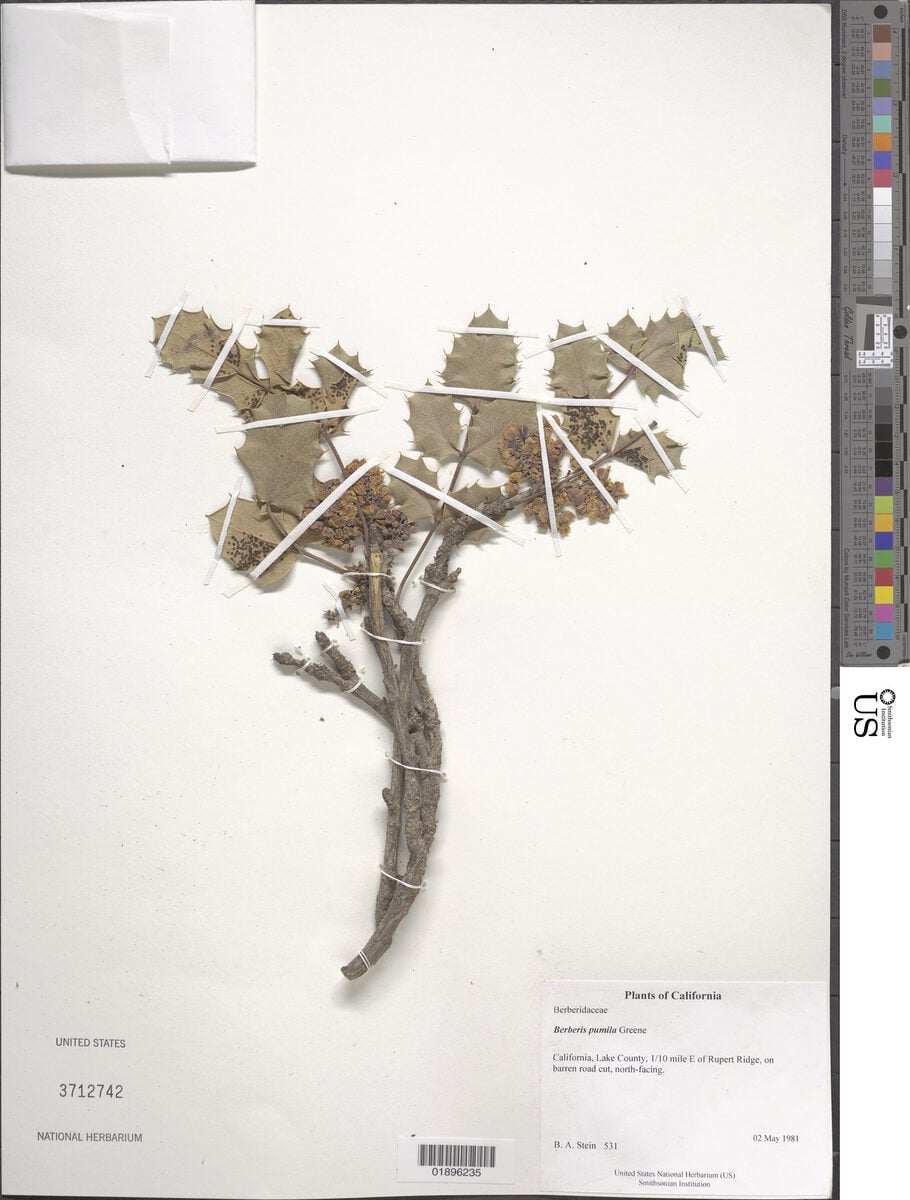
Mahonia pumila - (Greene.)Fedde.
Dwarf Barberry
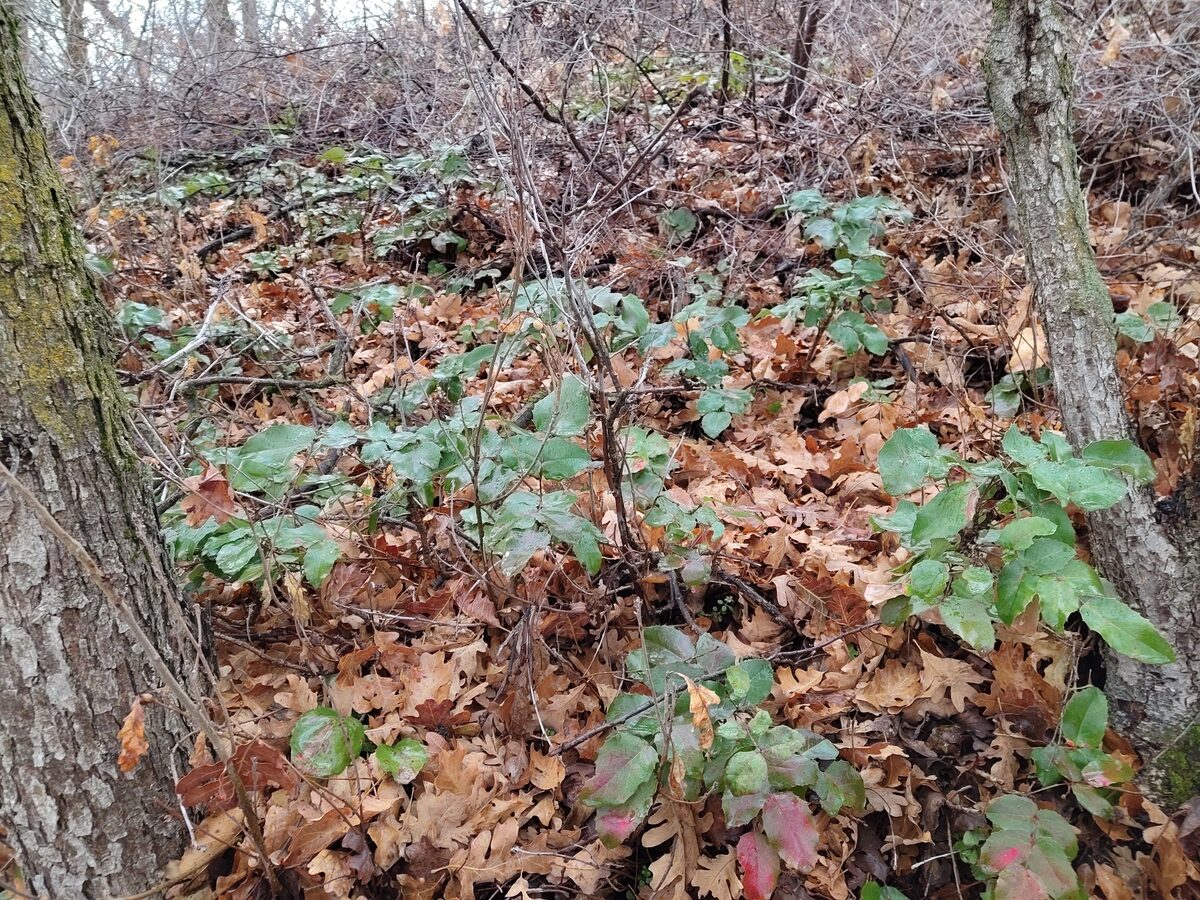
Mahonia repens - (Lindl.)G.Don.
Creeping Oregon Grape, Creeping barberry, Grape Oregon
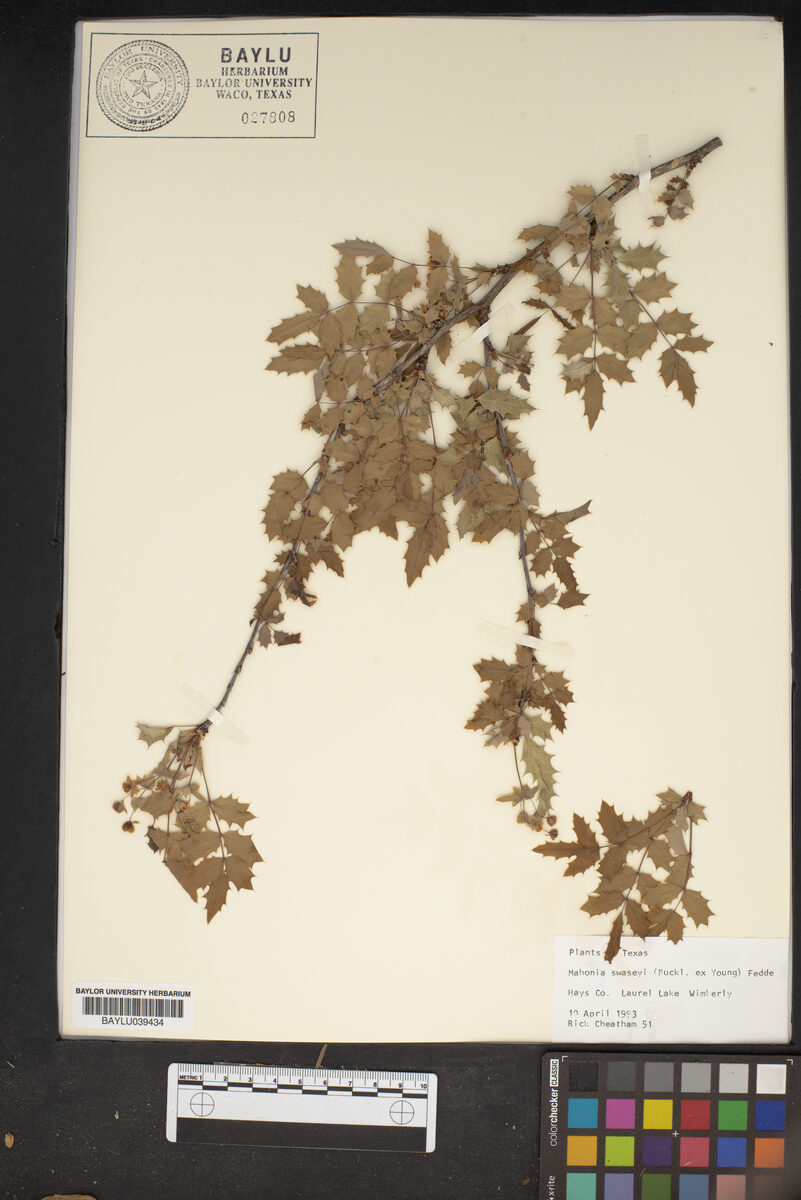
Mahonia swaseyi - (Buckley.)Fedde.
Texas Mahonia, Texas barberry
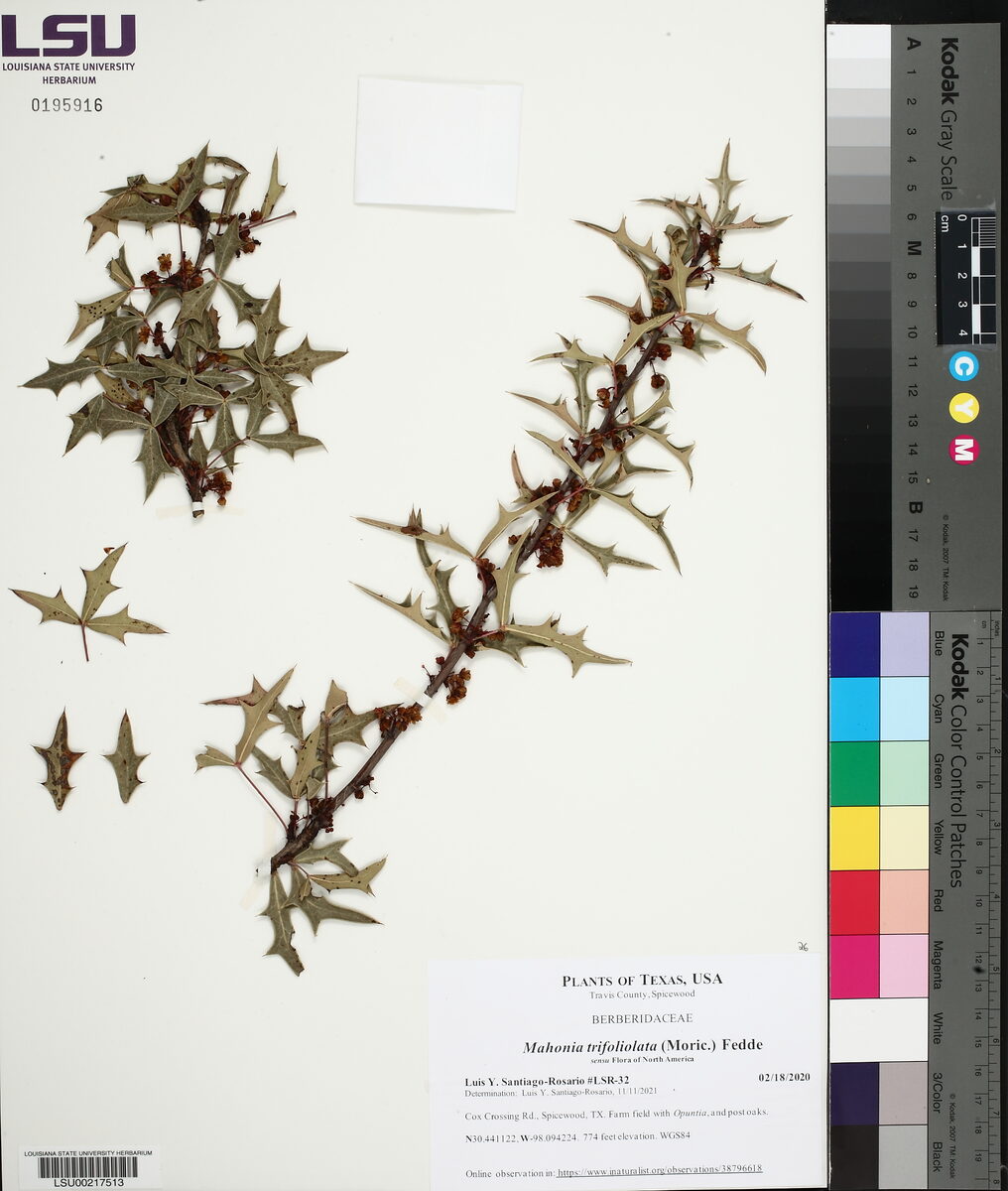
Mahonia trifoliolata - (Moric.)Fedde.
Threeleaf Barberry, Mexican Barberry, Algerita