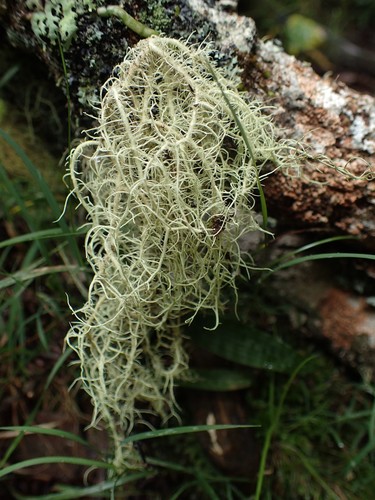
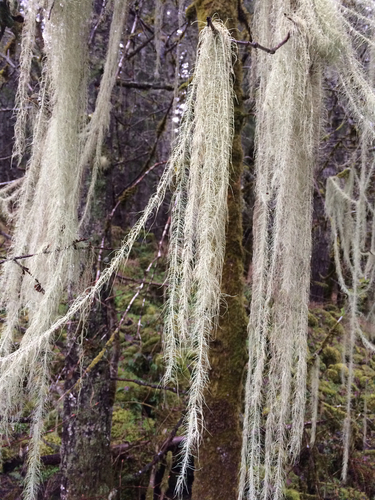
Evernia prunastri
(Linn.) Ach.
Oak moss
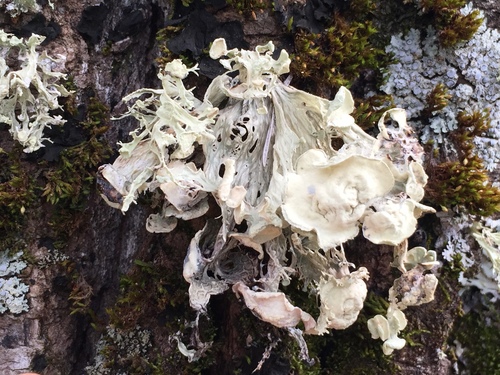
iNaturalist· cc-by-nc
(c) leslie_fs, some rights reserved (CC BY-NC)
iNaturalist· cc-by
(c) Paul Cook, some rights reserved (CC BY), uploaded by Paul Cook
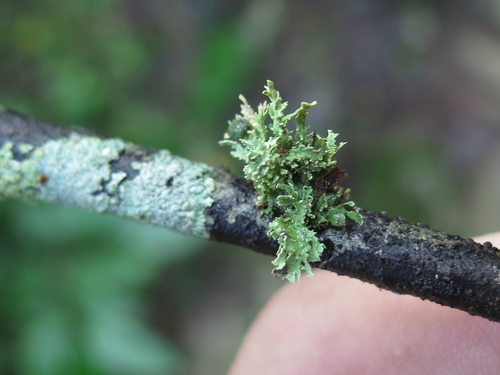
iNaturalist· cc-by-nc
(c) Samuel Brinker, some rights reserved (CC BY-NC), uploaded by Samuel Brinker
Description
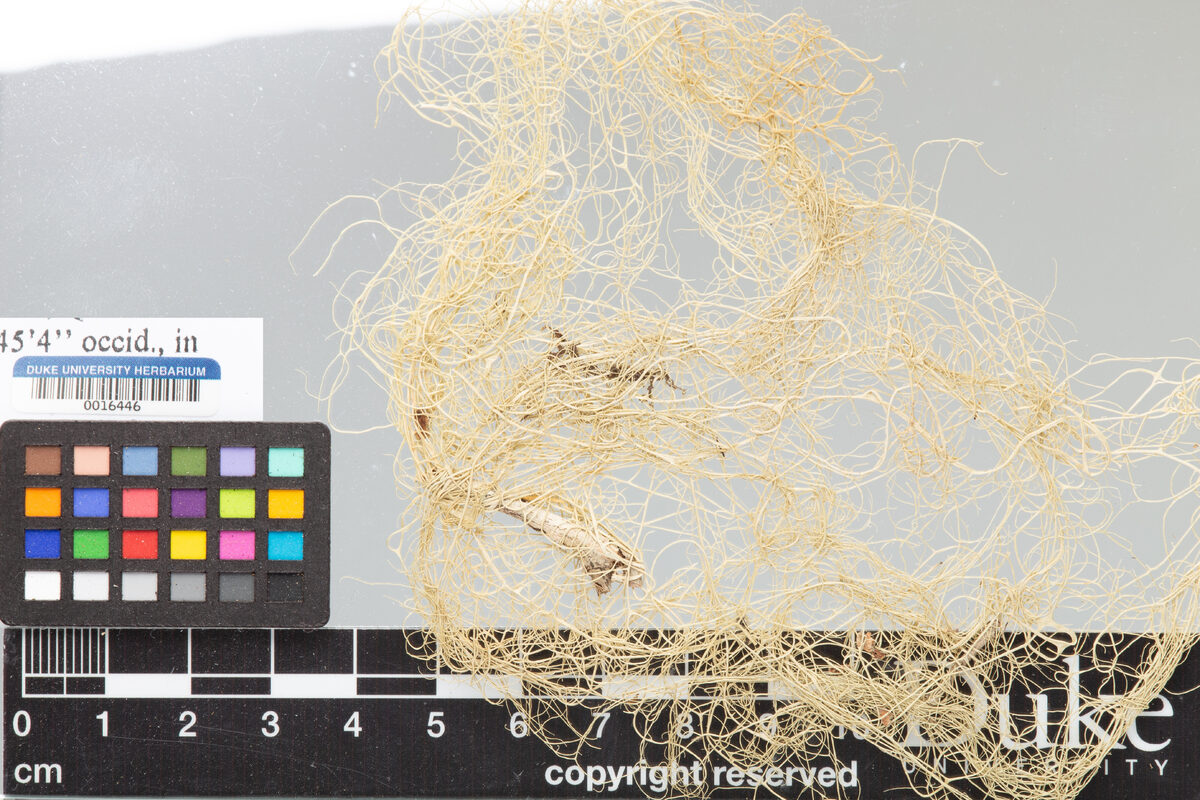
A lichen. It mostly grows on deciduous trees such as oak, sycamore, willow and alder. It also grows on fences, walls, rocks and soil. It has soft hanging branches. They are grey-green above and are white and cottony underneath. They can produce pink-brown spore producing disks but these are rare.
Edible Uses
The lichen is eaten and has a sweet smell. It is mixed into bread as a leavening agent, fermented, and used in commercial extracts to flavour baked goods, candy, drinks, soups and puddings.
Traditional Uses
The lichen has a sweet smell and is eaten. It is mixed in bread as a leavening agent. Extracts from the lichen are used commercially to flavour baked goods, candy, drinks, soups and puddings. It is also fermented.
Known Hazards
Oakmoss should be avoided by people with known skin sensitization issues. Its use in perfumes is now highly restricted by International Fragrance Association regulations, and many scents have been reformulated in recent years with other chemicals substituted for oakmoss.
Distribution
It needs a neutral substrate to grow on. Plants are damaged by polluted atmosphere and a sulphur level above 0.021 ppm.
Where It Grows
Africa, America, Asia, Cyprus, Czech Republic, Egypt, Europe, Greece, India, Mediterranean, North Africa, Norway, Scandinavia, Turkey, Türkiye,
Cultivation
It is difficult to cultivate but grows naturally.
Production
It is very slow growing. Plants are collected in dry winter weather.
Other Information
About 9,000 tons are collected annually
Notes
There are about 10 Evernia species.
Also Known As
Vetnicnik slivovy
References (7)
- Ambasta, S.P. (Ed.), 2000, The Useful Plants of India. CSIR India. p 215
- Brown, D., 2002, The Royal Horticultural Society encyclopedia of Herbs and their uses. DK Books. p 211
- Facciola, S., 1998, Cornucopia 2: a Source Book of Edible Plants. Kampong Publications, p 256
- Hedrick, U.P., 1919, (Ed.), Sturtevant's edible plants of the world. p 304
- Simkova, K. et al, 2014, Ethnobotanical review of wild edible plants used in the Czech Republic. Journal of Applied Botany and Food Quality 88, 49-67
Show all 7 references Hide references
- Uphof,
- www.lichen.com/usetype.html