Cissus repanda
(Wight & Arn.) Vahl.
Gendal
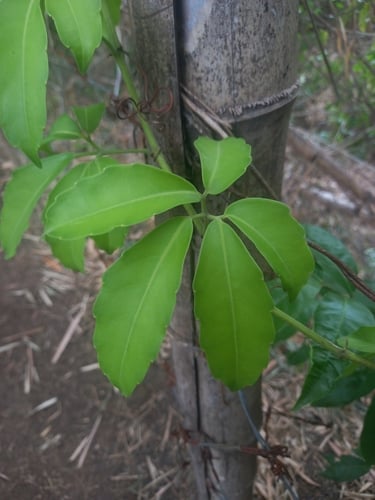
iNaturalist· cc-by-nc
(c) Shiwalee Samant, some rights reserved (CC BY-NC), uploaded by Shiwalee Samant
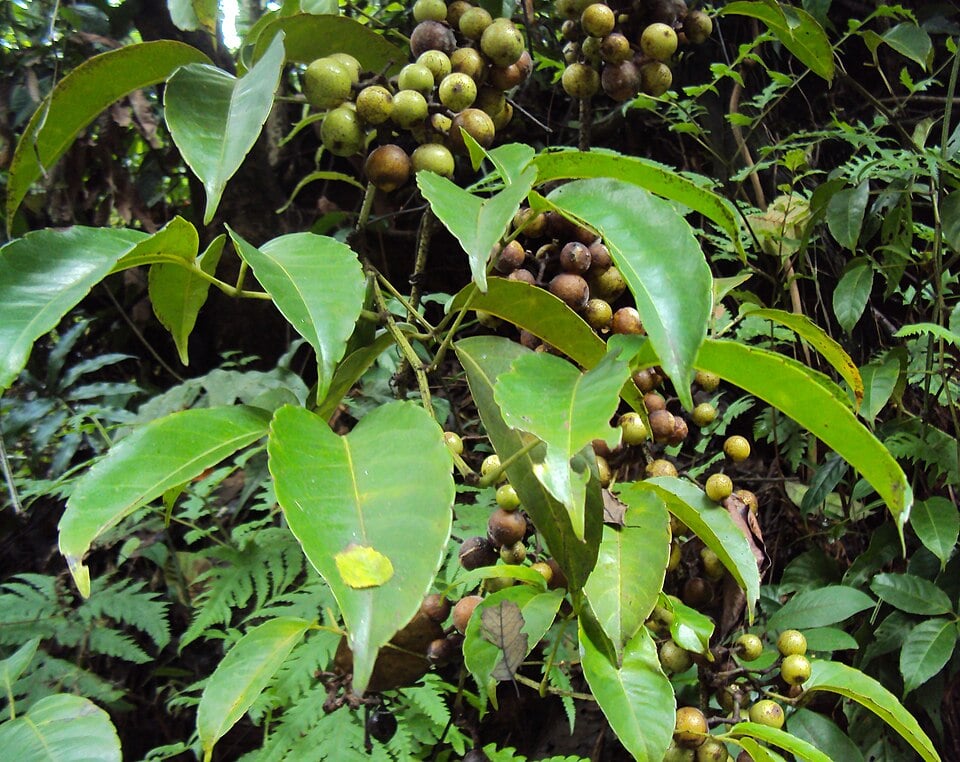
iNaturalist· cc-by-nc
(c) ab_satta, some rights reserved (CC BY-NC), uploaded by ab_satta
Description
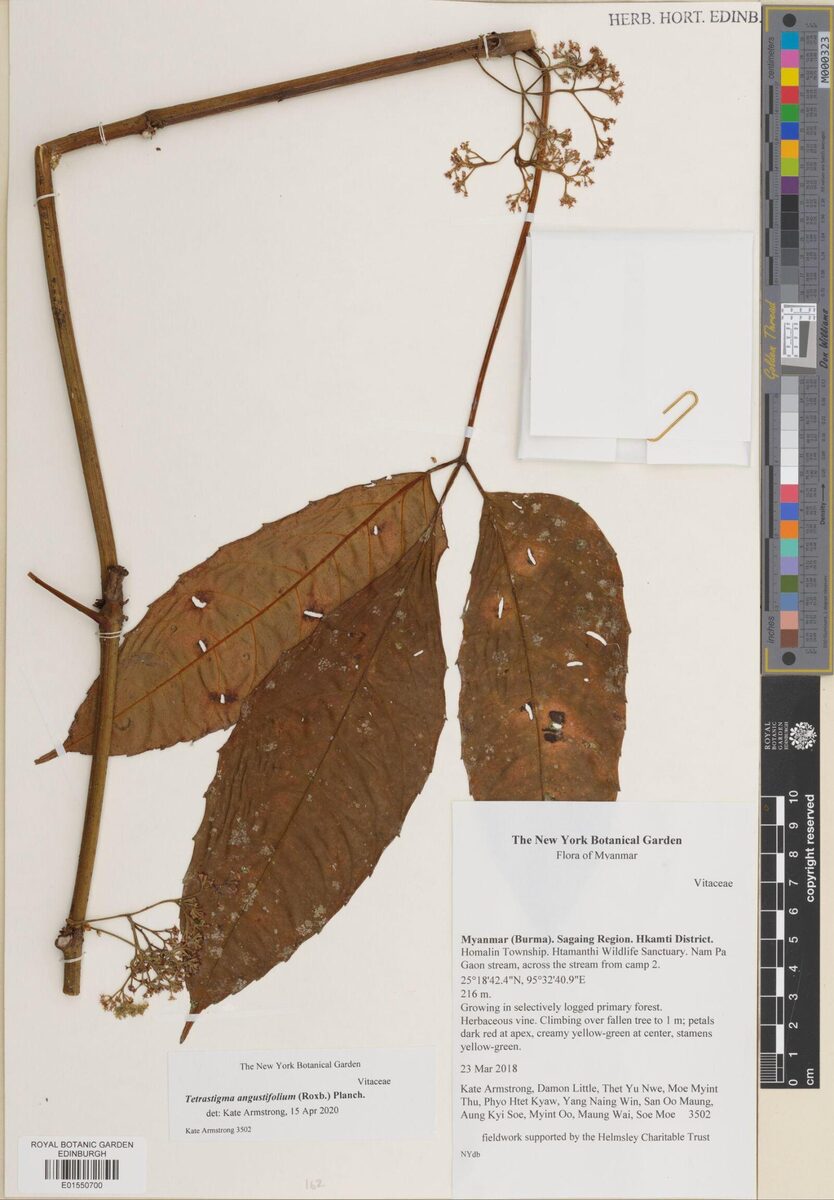
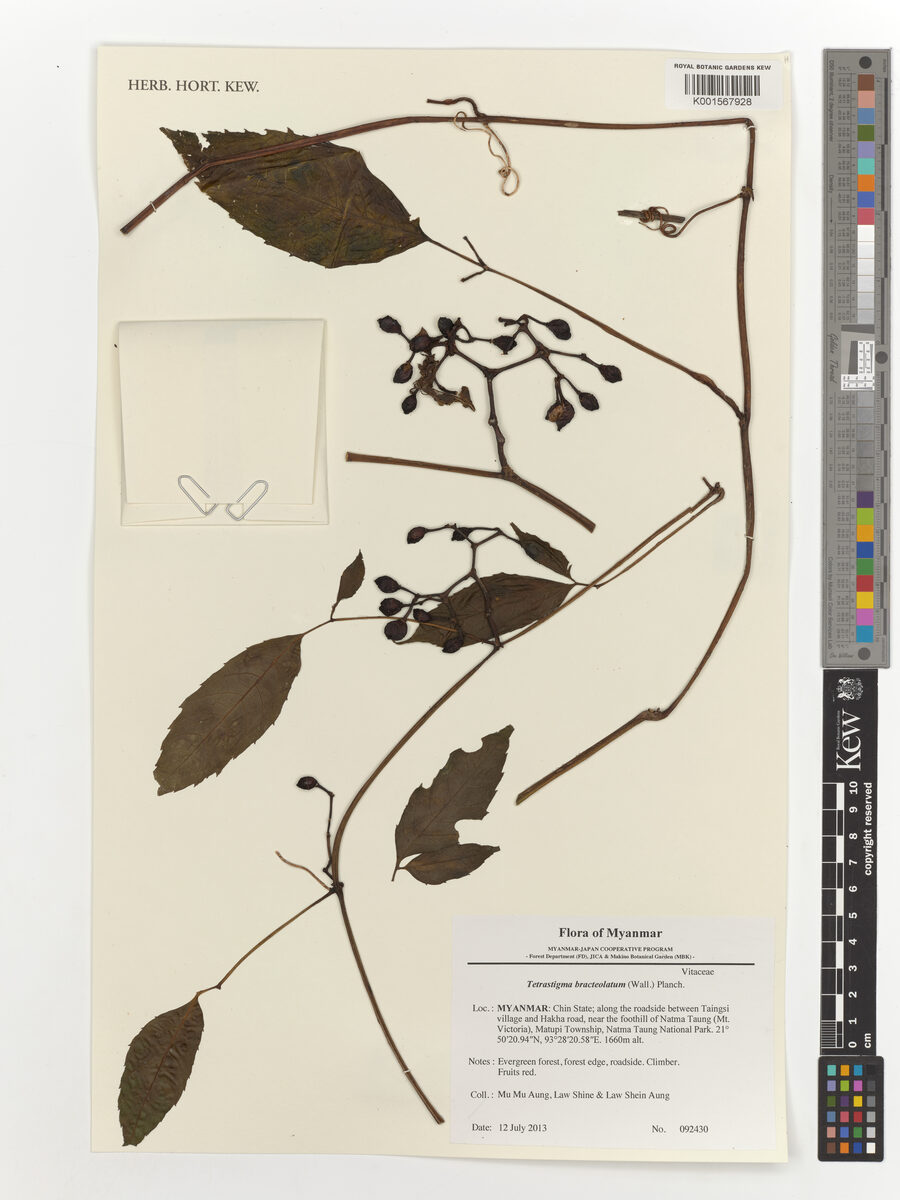
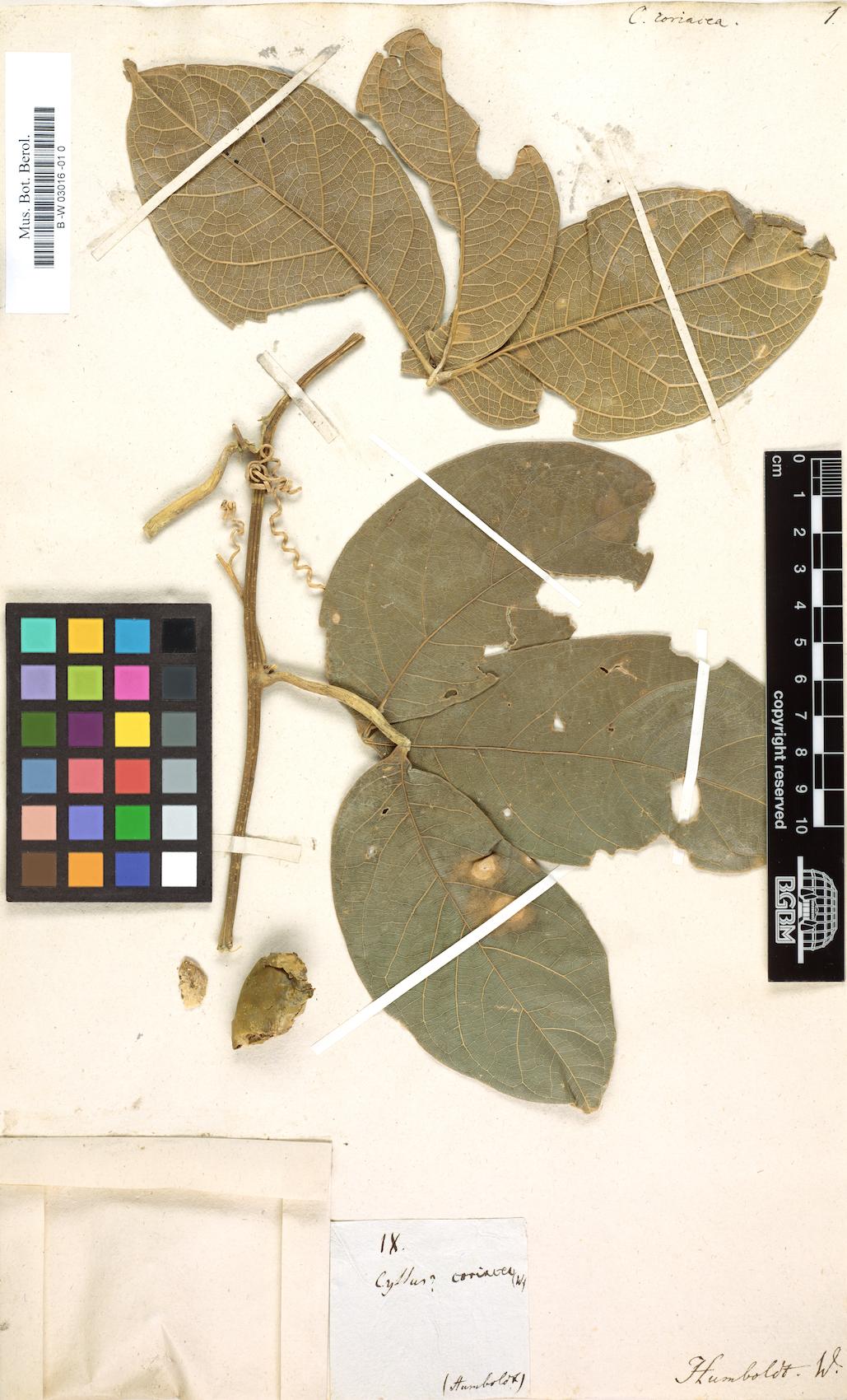
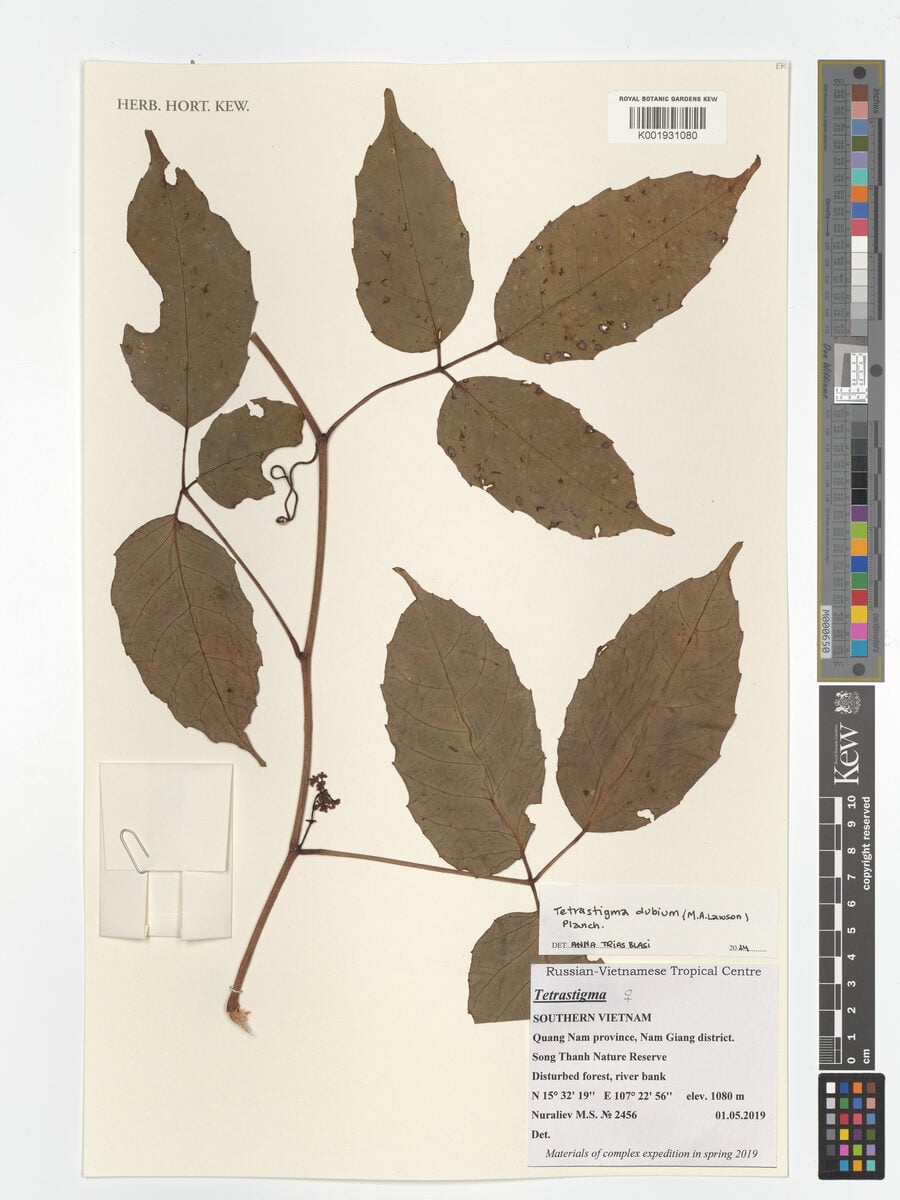
A large climber. It sheds its leaves. The stems are soft and have holes. The stems are 15 cm across. The stem climbs 24 m high in trees. The tendrils are forked. The leaves are roundish and deeply cut at the base. They are oval to heart shaped. They taper towards the tip. There are teeth with sharp points. There are rusty hairs underneath when young. The leaves are 7.5-12.5 cm long and 10-15 cm across and have 5-7 angles. The flowers are cream or red. They are 2.5 mm long. They occur in slender flat topped arrangements. The fruit are pear shaped. They are 8-12 mm long. There is a knob at the tip. They have one seed.
Edible Uses
The stems are cut to release drinkable water. Young leaves and shoots are cooked as a vegetable, and ripe fruits are eaten fresh.
Traditional Uses
The stems are cut to release water to drink. The ripe fruit are eaten fresh. The young leaves and shoots are cooked as a vegetable.
This uses section is brief — help expand it
Distribution
It is a subtropical plant. It grows in semi-evergreen jungles. In Nepal these are at 1400-2500 m altitude. They grow in open, rocky places. In Sikkim it is recorded between 400-800 m above sea level. In Sichuan and Yunnan.
Where It Grows
Asia, Bhutan, China, Himalayas, India, Indochina, Myanmar, Nepal, Northeastern India, SE Asia, Sikkim, Sri Lanka, Thailand,
Cultivation
Plants are grown from seed.
Production
In India plants flower and fruit in April to June.
Notes
There are about 200-350 Cissus species. There are about 75 species in tropical America.
Synonyms
Also Known As
Arem tsukme-natsu, Dausrem, Gendal, Hleza-gyi, Jhuleti, Khaupuang, Khaupuong, Lenpuang kung, Lenpuong teh, Medmedia-lop, Pani-bel, Panialata, Pani lahara, Panilahera, Vhyem-rik
References (17)
- Ambasta, S.P. (Ed.), 2000, The Useful Plants of India. CSIR India. p 127
- Baro, D., Baruah, S. and Borthukar, S. K. 2015, Documentation on wild vegetables of Baksa district, BTAD (Assam). Scholars Research Library. Archives of Applied Science Research, 2015, 7 (9):19-2 (As Vitis repanda)
- Dey, A. & Mukhererjee, A., 2015, Living and Survival Amidst Hunger: Wild Edible Botanicals as a Prime Forest Productivity in the Rural Purulia District, West Bengal, India from Colonial to Present. Research Journal of Forestry 9(3): 71-86
- Gangte, H. E., et al, 2013, Wild Edible Plants used by the Zou Tribe in Manipur, India. International Journal of Scientific and Research Publications, Volume 3, Issue 5
- Guite, C., 2016, A study of wild edible plants associated with the Paite tribe of Manipur, India, International Journal of Current Research. Vol. 8, Issue, 11, pp. 40927-40932
Show all 17 references Hide references
- Hedrick, U.P., 1919, (Ed.), Sturtevant's edible plants of the world. p 685 (As Vitis pallida)
- Jadhav, R., et al, 2015, Forest Foods of Northern Western Ghats: Mode of Consumption, Nutrition and Availability. Asian Agri-History Vol. 19, No. 4: 293-317
- Kumbhojkar, M.S. & Vartak, V.D., 1988, Ethnobotanical Studies on Wild Edible Grapes from Sacred Groves in Western Maharashtra. J. Econ. Tax. Bot. Vol. 12 No. 2 pp 257-263
- Kumar, R. & Saikia, P., 2020, Wild edible plants of Jharkhand and their utilitarian perspectives. Indian Journal of Traditional Knowledge Vol 19 (2), April 2020, pp 237-250 (As Vitis repanda)
- Manandhar, N.P., 2002, Plants and People of Nepal. Timber Press. Portland, Oregon. p 478 (As Vitis repanda)
- Mozhui, R., et al, 2011, Wild edible fruits used by the tribals of Dimapur district of Nagaland, India. Pleione 5(1): 56 - 64.
- Narzary, H., et al, 2013, Wild Edible Vegetables Consumed by Bodo tribe of Kokrajhar District (Assam), North-East India. Archives of Applied Science Research, 5(5): 182-190 (As Vitis repanda)
- Prodr. fl. Ind. orient. 125. 1834 (As Vitis pallida)
- Savita, et al, 2006, Studies on wild edible plants of ethnic people in east Sikkim. Asian J. of Bio Sci. (2006) Vol. 1 No. 2 : 117-125
- Sundriyal, M., et al, 1998, Wild edibles and other useful plants from the Sikkim Himalaya, India. Oecologia Montana 7:43-54
- Sundriyal, M., et al, 2004, Dietary Use of Wild Plant Resources in the Sikkim Himalaya, India. Economic Botany 58(4) pp 626-638
- Upreti, K., et al, 2010, Diversity and Distribution of Wild Edible Fruit Plants of Uttarakhand. Bioversity Potentials of the Himalaya. p 165