Buxus wallichiana
Baill.
Eastern Himalayan box
iNaturalist· cc-by-nc
(c) Azan Khan, some rights reserved (CC BY-NC), uploaded by Azan Khan
iNaturalist· cc-by-nc
(c) Azan Khan, some rights reserved (CC BY-NC), uploaded by Azan Khan
iNaturalist· cc-by-nc
(c) Azan Khan, some rights reserved (CC BY-NC), uploaded by Azan Khan
Summary
Evergreen shrub growing slowly to 2m tall and 2m wide. Hardy to UK zone 8 with year-round foliage and April-May flowering. Monoecious flowers pollinated by bees and flies. Tolerates light sandy, medium loamy, and heavy clay soils with preference for good drainage. Grows in mildly acidic to mildly alkaline and very alkaline soils. Adapts to semi-shade or full sun with preference for moist soil.
Description
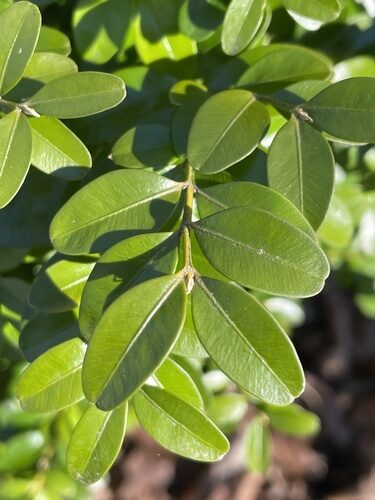
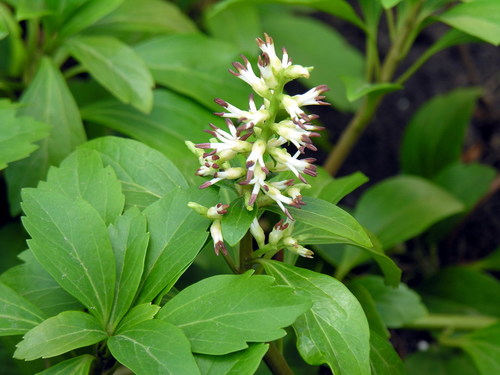
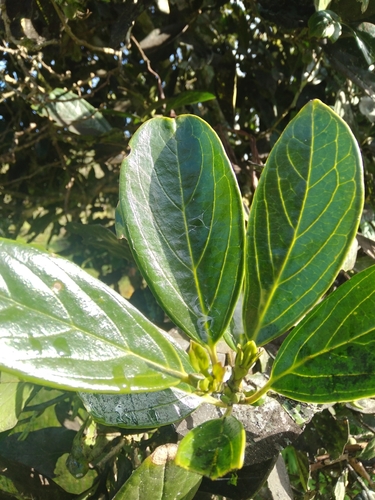
An evergreen shrub. It grows 1.8 m tall and spreads 2 m wide. The leaves are simple and have smooth edges. They are dark green. They occur in opposite pairs. The leaves are 5 cm long and about 6 mm wide. The flowers are in the axils of leaves. They are yellow.
Edible Uses
None known
Traditional Uses
The leaves and bark are used as a substitute for tea. They have also been used for hops in beer. CAUTION: The leaves contain an alkaloid which gives them their bitter taste.
Medicinal Uses
Bitter Diaphoretic Febrifuge Purgative The wood is diaphoretic. The leaves are bitter, diaphoretic and purgative. They have proved useful in the treatment of rheumatism and syphilis. The bark is febrifuge.
Distribution
It suits hardiness zones 8-10. In Pakistan it grows up to 3,000 m altitude.
Where It Grows
Afghanistan, Albania, Asia, Australia, Austria, Balkans, Belgium, Bhutan, Europe, France, Germany, Greece, Himalayas, India, Mediterranean, Nepal, Pakistan, Turkey, Türkiye,
Cultivation
Succeeds in almost any soil that is well-drained. Tolerates light shade and chalky soils. Tolerates a pH range from 5.5 to 7.4. This species is perfectly hardy in much of Britain, tolerating temperatures down to about -10°c, but it is very slow growing. The foliage is pungently scented, especially when wet.
Propagation
Seed - stratification is not necessary but can lead to more regular germination. The seed is best sown in a cold frame as soon as it is ripe. Sow stored seed as early in the year as possible in a cold frame. It usually germinates in 1 - 3 months at 15°c but stored seed can take longer. When large enough to handle, prick the seedlings out into individual pots and grow them on in the greenhouse for at least their first winter, planting them out into their permanent positions in late spring or early summer, after the last expected frosts. Cuttings of short side shoots with a heel, September in a frame. Difficult. Nodal cuttings in spring in a frame. Difficult.
Other Uses
Hedge Hedge Wood Plants can be grown as a hedge, they are very tolerant of pruning but are slow growing. Wood - hard, fine grained, durable. Used for engraving, fine carving, mathematical instruments etc. It is at least equal in quality to B. sempervirens. Special Uses Hedge Hedge Scented Plants
Notes
There are about 70 Buxus species. There are 50 in tropical America.
Synonyms
Also Known As
Chikri, Papri, Shamshad
References (5)
- Ambasta S.P. (Ed.), 2000, The Useful Plants of India. CSIR India. p 92
- Cundall, P., (ed.), 2004, Gardening Australia: flora: the gardener's bible. ABC Books. p 271
- Hedrick, U.P., 1919, (Ed.), Sturtevant's edible plants of the world. p 140 (As Buxus sempervirens)
- Monogr. Bux. 63.1859
- Negi, K.S., 1988, Some little known wild edible plants of U.P. Hills. J. Econ. Tax. Bot. Vol. 12 No. 2 pp 345-360