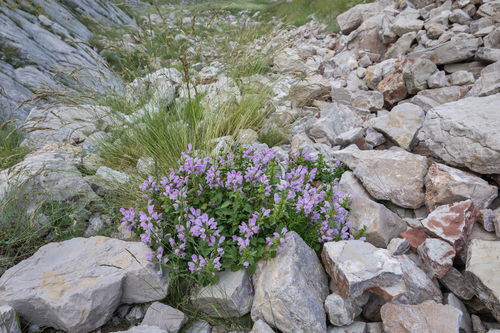
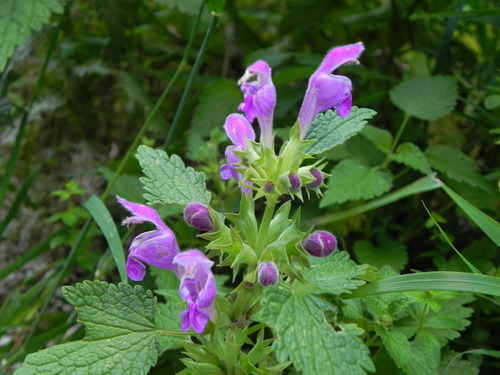
Thymus pulegioides
L.
Broad-leafed thyme, Greater wild thyme, Creeping thyme
iNaturalist· cc-by-nc
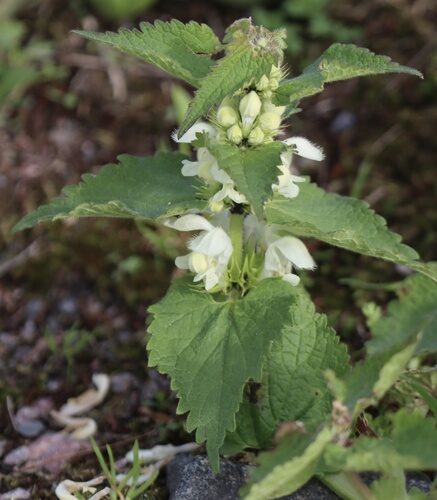
(c) Kathy Webb + Bill Depew, some rights reserved (CC BY-NC), uploaded by Kathy Webb + Bill Depew
iNaturalist· cc-by-nc
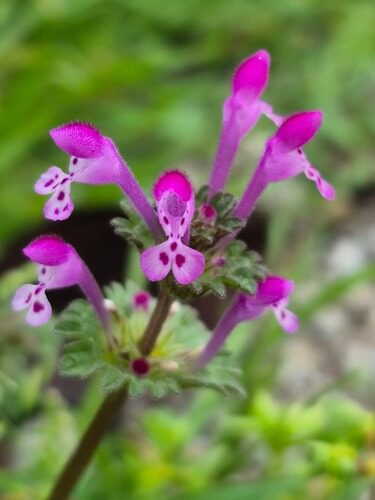
(c) hypochaeris, some rights reserved (CC BY-NC), uploaded by hypochaeris
iNaturalist· cc-by-nc
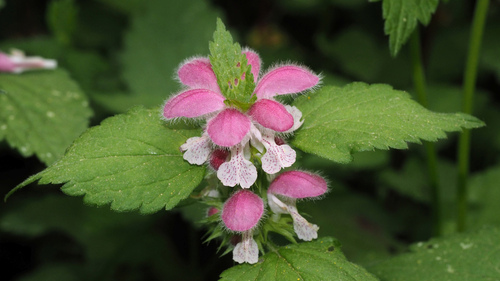
(c) Абакумов Николай Викторович, some rights reserved (CC BY-NC), uploaded by Абакумов Николай Викторович
Summary
Source: WikipediaThymus pulegioides, common names broad-leaved thyme or lemon thyme, is a species of flowering plant in the family Lamiaceae, native to Europe. Growing to 5–25 cm (2–10 in) tall by 25 cm (10 in) wide, it is a small spreading subshrub with strongly aromatic leaves, and lilac pink flowers in early summer. The specific epithet pulegioides highlights its similarity to another species within Lamiaceae, Mentha pulegium (pennyroyal).
Description
A bushy spreading shrub. It grows 10-30 cm high. The plant has hairs in the axils of the leaves. The leaves are narrowly oval and 1.3 cm long. They are mostly smooth. The flowers are pink or purple.
Edible Uses
The leaves of some cultivars work well as a culinary condiment — use them as part of a bouquet garni, or add to soups, vegetables, mushrooms, or courgettes. For drying, harvest in early and late summer just before the flowers open and dry the leaves quickly.
Traditional Uses
The leaves are used to flavour sauces and meat. The flowering aerial parts are used for a herbal tea.
This uses section is brief — help expand it
Medicinal Uses
The leaves, and especially their essential oil, are antiseptic, deodorant, disinfectant, and expectorant. The plant can be used fresh at any time of year, or harvested as it comes into flower and either distilled for the oil or dried for later use.
Distribution
It is a temperate plant. It grows on dry grassland and banks. It suits plant hardiness zone 4-9.
Where It Grows
Australia, Balkans, Bosnia, Britain, Europe, France, Italy, Luxembourg, Mediterranean, Norway, Poland, Portugal, Scandinavia, Spain, Switzerland,
Cultivation
Requires a light well-drained preferably calcareous soil in a sunny position. Succeeds in dry soils. Grows well between stepping stones on paths, tolerating light treading. Succeeds on walls. Thymes dislike wet conditions, especially in the winter. A layer of gravel on the soil around them will help protect the foliage from wet soils. Plants are hardy to at least -10°c. This is a very difficult genus taxonomically, the species hybridize freely with each other and often intergrade into each other. There are many named forms selected for their ornamental value. The leaves are highly aromatic. The flowers are rich in nectar and are very attractive to honey bees.
Propagation
Sow seed in spring in a cold frame, or in autumn in a greenhouse. Surface sow or barely cover the seed, as germination can be erratic. Once seedlings are large enough to handle, prick them out into individual pots and grow on in the greenhouse for at least their first winter. Plant out into permanent positions in late spring or early summer, after the last expected frosts. Divide plants in spring or autumn — larger divisions can go straight into permanent positions, while smaller ones are best potted up and grown on in light shade in a greenhouse or cold frame until established, then planted out in summer or the following spring. Take cuttings of young shoots, 5–8cm with a heel, in May/June in a frame, or half-ripe wood cuttings, 5–8cm with a heel, in July/August in a frame. Layering is also possible.
Other Uses
The essential oil extracted from the leaves is used in perfumery, as a mouthwash, and medicinally.
Synonyms
Also Known As
Bakketimian, Farigoleta, Majkina dusica, Peporino, Pepurino, Pepolino, Serpour, Serpoul
References (18)
- Abbet, C., et al, 2014, Ethnobotanical survey on wild alpine food plants in Lower and Central Valais (Switzerland). Journal of Ethnopharmacology 151 (2014) 624–634
- Bonet, M. A. & Valles, J., 2002, Use of non-crop food vascular plants in Montseny biosphere reserve (Catalonia, Iberian Peninsula). International Journal of Food Sciences and Nutrition (2002) 53, 225–248 (As Thymus serpyllum var. chamaedrys)
- Cundall, P., (ed.), 2004, Gardening Australia: flora: the gardener's bible. ABC Books. p 1415
- Facciola, S., 1998, Cornucopia 2: a Source Book of Edible Plants. Kampong Publications, p 137
- Girard, N. J., 2020, Sustainable Foraging of Wild Edible Plants in Norway. A Biocultural Approach. M. Sc. thesis Norwegian University. p 132
Show all 18 references Hide references
- INFOODSUpdatedFGU-list.xls
- Irving, M., 2009, The Forager Handbook, A Guide to the Edible Plants of Britain. Ebury Press p 223
- Lawton, B.P., 2002, Mints. A Family of Herbs and Ornamentals. Timber Press. p 213
- Łukasz Łuczaj and Wojciech M Szymański, 2007, Wild vascular plants gathered for consumption in the Polish countryside: a review. J Ethnobiol Ethnomedicine. 3: 17
- Pardo-de-Santayana, M., et al, 2007, Traditional knowledge of wild edible plants used in the northwest of the Iberian Peninsula (Spain and Portugal): a comparative study. Journal of Ethnobiology and Ethnomedicine 2007, 3:27
- Pieroni, A., 1999, Gathered wild food plants in the Upper Valley of the Serchio River (Garfagnana), Central Italy. Economic Botany 53(3) pp 327-341
- Pieroni, A.,& Giusti, M. E., 2009, Alpine Ethnobotany in Italy: Journal of Ethnobiology and Ethnomedicine. 5:32
- Prakofjewa, J., et al, 2023, Boundaries Are Blurred: Wild Food Plant Knowledge Circulation across the Polish-Lithuanian-Belarusian Borderland. Biology 2023, 12, 571.
- Redzic, S. J., 2006, Wild Edible Plants and their Traditional Use in the Human Nutrition in Bosnia-Herzegovina. Ecology of Food and Nutrition, 45:189-232
- Redzic, S., 2010, Use of Wild and Semi-Wild Edible Plants in Nutrition and Survival of People in 1430 Days of Siege of Sarajevo during the War in Bosnia and Herzegovina (1992–1995). Coll. Antropol 34 (2010) 2:551-570
- Rivera, D. et al, 2006, Gathered Mediterranean Food Plants - Ethnobotanical Investigations and Historical Development, in Heinrich M, Müller WE, Galli C (eds): Local Mediterranean Food Plants and Nutraceuticals. Forum Nutr. Basel, Karger, 2006, vol 59, pp 18–74
- Sp. pl. 2:592. 1753
- Tardio, J., et al, Ethnobotanical review of wild edible plants in Spain. Botanical J. Linnean Soc. 152 (2006), 27-71