Barringtonia acutangula
(L.) Gaertn.
Indian oak, Red Barringtonia
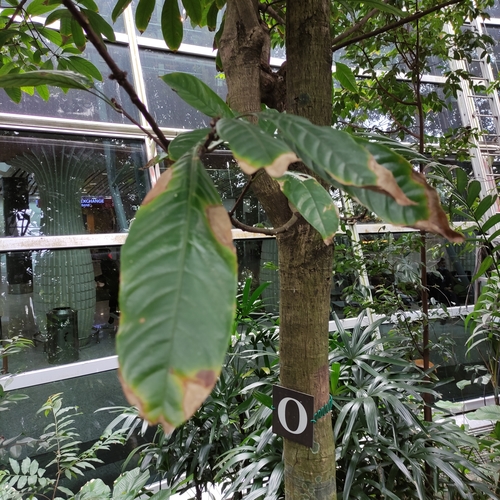
iNaturalist· cc-by-nc-sa
(c) 106611639464075912591, some rights reserved (CC BY-NC-SA), uploaded by 106611639464075912591
iNaturalist· cc-by-nc
(c) tranquangduykhuong22150053, some rights reserved (CC BY-NC)
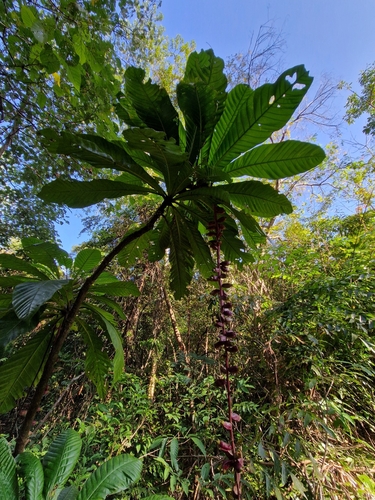
iNaturalist· cc-by-nc
(c) Pål A. Olsvik, some rights reserved (CC BY-NC), uploaded by Pål A. Olsvik
Summary
Source: WikipediaBarringtonia acutangula is a species of Barringtonia native to coastal wetlands in southern Asia and northern Australasia, from Afghanistan east to the Philippines, Queensland and the Northern Territory. Common names include freshwater mangrove, itchytree and mango-pine.
Description
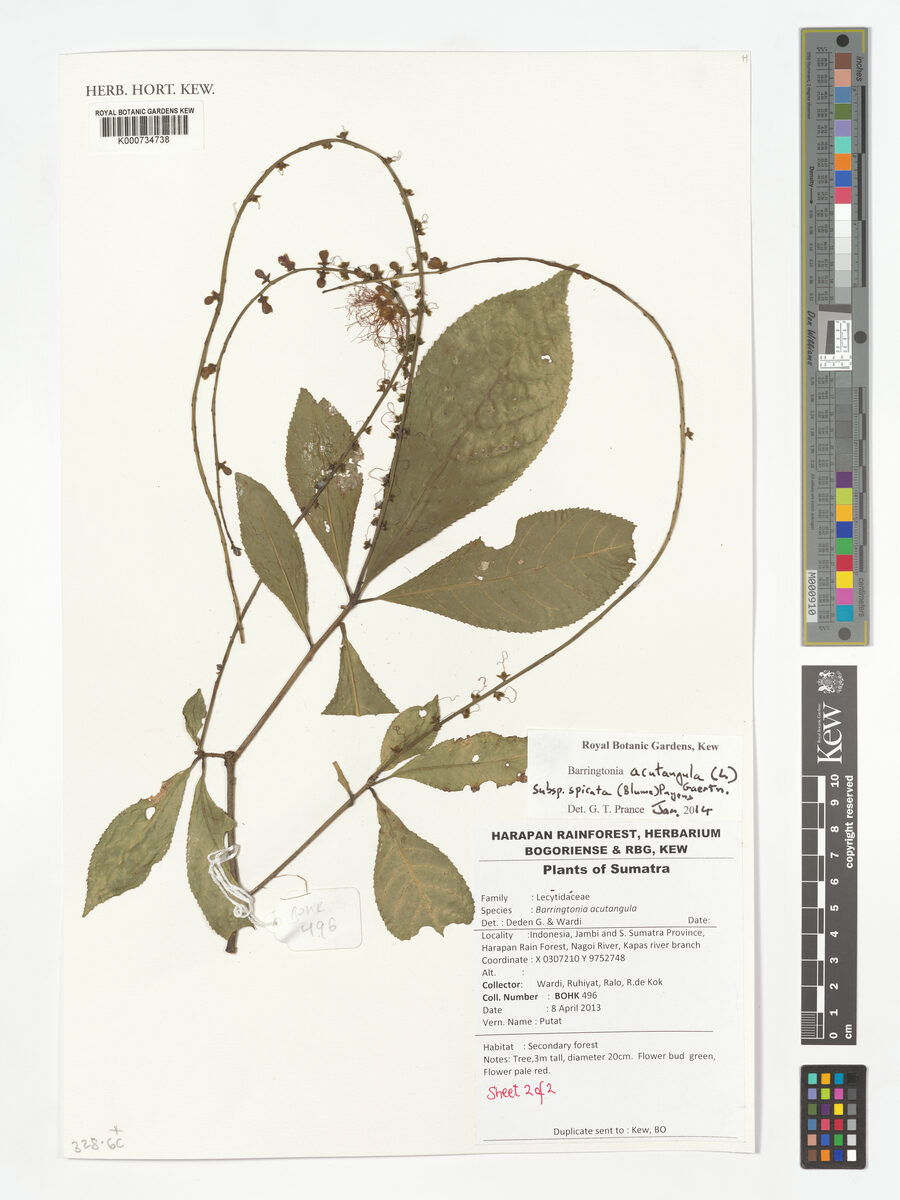
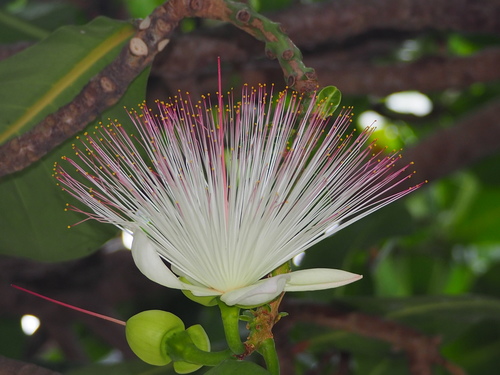
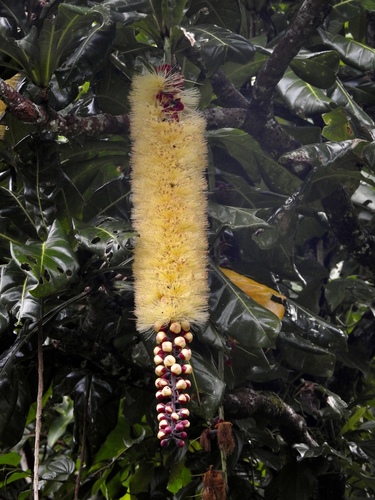
A small tree. It grows 4-15 m tall. The trunk can be 40-80 cm across. It can have several stems. It loses its leaves during the year. The leaves are broad and sword shaped. They taper to the base. They are bright green. The edges sometimes have small teeth. They are 4-14 cm long by 2-4.5 cm wide. The flowers are bright red. They are in heads 30 cm long. These hang downwards. The fruit are green and 4 angled. They are woody and 3.5 cm long. There is one seed and it has a groove.
Edible Uses
The leaves, flowers, and fruit are edible.
Medicinal Uses
Research on this plant has reported a number of medicinal uses, including antitumor (seed extract), antibiotic, inhibition of growth of Helicobacter pylori, antinociceptive activity and antifungal activity. The 1889 book 'The Useful Native Plants of Australia' records that "In India an extract or juice is obtained from the leaves of this tree which, when mixed with oil, is used in native [sic.] practice for eruptions of the skin. The kernels powdered and prepared with sago and butter, are used in diarrhoea; mixed with milk they produce vomiting (Treasury of Botany). The root is bitter, and is said to be similar to Cinchona, but also cooling and aperient. (Drury)."
Known Hazards
The bark is used to intoxicate fish.
Distribution
A tropical plant. It grows in moist places along rivers. It needs light and humidity. It grows near lakes and can grow in brackish water. It suits humid shady places. It is damaged by drought and frost. It occasionally grows up to 400 m above sea level. It suits hardiness zones 11-12.
Where It Grows
Riverbanks, swampy sites or rocky or sandy shores; at elevations from sea level to 400 metres.
Cultivation
Prefers a permanently moist but well-drained soil and a position in full sun. Particularly suited to humid, shady situations.
Propagation
Seed - best sown as soon as it is ripe in a position in full light. About 90% of fresh seed germinates. Cuttings of half-ripe wood.
Other Uses
The bark is a source of tannins. The heartwood is light pinkish to reddish-grey, or in some cases nearly white towards the outside of the log; it is not distinctly demarcated from the sapwood. Texture is medium to fine, the grain straight, the wood lustrous, with a smooth feel. The wood is light in weight, soft and fairly durable. It is easy to saw, works well by hand and on machine, and finishes to a dull smooth surface. If cut on the quarter it presents a noticeable silver grain, which should be taken advantage of in cabinet work, as it apparently does not warp much if so cut. It is used for boatbuilding, well construction, rice pounders, cabinet work, and carts. The wood turns black if buried in mud. Trees are planted as a windbreak. The flowers produce copious nectar and attract bees, who produce a good honey from it.
Synonyms
Also Known As
Barrenka, Chiec, Chik na, Chik num, Freshwater Mangrove, Hijal, Himbabalod, Hole kauva, Ingar, Ipil, Itchy Tree, Jiig, Kadapa, Kadon naam, Kandu almond, Kra don, Kyi, Kyi-ni, Lik vung, Loc vung, Mai chik, Neerpezhu, Pak kradon nam, Pangpanik, Phak kadon naam, Piwar, Poetat, Pooy-sai, Putat lembik, Putat nasi, Putat tayap, Putat, Raing toek, Reang toek, Stream Barringtonia, Ye-kyi
References (47)
- Ambasta S.P. (Ed.), 2000, The Useful Plants of India. CSIR India. p 68
- Barwick, M., 2004, Tropical and Subtropical Trees. A Worldwide Encyclopedic Guide. Thames and Hudson p 44
- Bodkin, F., 1991, Encyclopedia Botanica. Cornstalk publishing, p 133
- Cengel, D. J. & Dany, C., (Eds), 2016, Integrating Forest Biodiversity Resource Management and Sustainable Community Livelihood Development in the Preah Vihear Protected Forest. International Tropical Timber Organization p 110
- Chandrashekara, U. M., 2009, Tree species yielding edible fruit in the coffee-based homegardens of Kerala, India: their diversity, uses and management. Food Sec. 1:361-370
Show all 47 references Hide references
- Cooper, W. and Cooper, W., 2004, Fruits of the Australian Tropical Rainforest. Nokomis Editions, Victoria, Australia. p 266
- Cronin, L., 1989, The Concise Australian Flora. Reed. p 156
- Cruz-Garcia, G. S., & Price, L. L., 2011, Ethnobotanical investigation of 'wild' food plants used by rice farmers in Kalasin, Northeast Thailand. Journal of Ethnobiology and Ethnomedicine 7:33
- Dobriyal, M. J. R. & Dobriyal, R., 2014, Non Wood Forest Produce an Option for Ethnic Food and Nutritional Security in India. Int. J. of Usuf. Mngt. 15(1):17-37
- Eiadthong, W., et al, 2010, Management of the Emerald Triangle Protected Forests Complex. Botanical Consultant Technical Report. p 23
- Elliot, W.R., & Jones, D.L., 1982, Encyclopedia of Australian Plants suitable for cultivation. Vol 2. Lothian. p 306
- Engel, D.H., & Phummai, S., 2000, A Field Guide to Tropical Plants of Asia. Timber Press. p 73
- Etherington, K., & Imwold, D., (Eds), 2001, Botanica's Trees & Shrubs. The illustrated A-Z of over 8500 trees and shrubs. Random House, Australia. p 119
- Flora of Australia, Volume 8, Lecythidales to Batales, Australian Government Publishing Service, Canberra (1982) p 6
- Flora of Pakistan. www.eFloras.org
- Food Composition Tables for use in East Asia FAO http://www.fao.org/infoods/directory No. 390
- Forest Inventory and Planning Institute, 1996, Vietnam Forest Trees. Agriculture Publishing House p 411
- Fruct. sem. pl. 2:97, t. 101. 1790
- Gardner, S., et al, 2000, A Field Guide to Forest Trees of Northern Thailand, Kobfai Publishing Project. p 200
- Hearne, D.A., & Rance, S.J., 1975, Trees for Darwin and Northern Australia. AGPS, Canberra p 30
- Heywood, V.H., Brummitt, R.K., Culham, A., and Seberg, O. 2007, Flowering Plant Families of the World. Royal Botanical Gardens, Kew. p 185
- Japanese International Research Centre for Agricultural Science www.jircas.affrc.go.jp/project/value_addition/Vegetables
- Kachenchart, B., et al, 2008, Phenology of Edible Plants at Sakaerat Forest. In Proceedings of the FORTROP II: Tropical Forestry Change in a Changing World. Bangkok, Thailand.
- Khumgratok, S., Edible Plants in Cultural Forests of Northeastern Thailand. Mahasarakham University Thailand.
- Krishen P., 2006, Trees of Delhi, A Field Guide. DK Books. p 144
- Lazarides, M. & Hince, B., 1993, Handbook of Economic Plants of Australia, CSIRO. p 31
- Martin, F.W. & Ruberte, R.M., 1979, Edible Leaves of the Tropics. Antillian College Press, Mayaguez, Puerto Rico. p 197
- Nakahara, K. et al, 2002, Antimutagenicity of Some Edible Thai Plants, and a Biocative Carbazole Alkaloid, Mahanine, Isolated from Micromelum minutum. Journal of Agricultural and Food Chemistry. 50: 4796-4892
- Nicholson, N & H., 2000, Australian Rainforest Plants, V. Terania Rainforest Publishing. NSW. p 13
- Paczkowska, G. & Chapman, A.R., 2000, The Western Australian Flora. A Descriptive Catalogue. Western Australian Herbarium. p 278
- Petheram, R. J. and Kok, B., 2003, Plants of the Kimberley Region of Western Australia. UWA Press p 379
- Phon, P., 2000, Plants used in Cambodia. © Pauline Dy Phon, Phnom Penh, Cambodia. p 88
- Prance, G. T. & Jongkind, C. H., 2015, A Revision of African Lecythidaceae. Kew Bulletin. 70:1-68
- Radke, P & A, Sankowsky, G & N., 1993, Growing Australian Tropical Plants. Frith & Frith, Australia. p 21
- Reddy, K. N. et al, 2007, Traditional knowledge on wild food plants in Andhra Pradesh. Indian Journal of Traditional Knowledge. Vol. 6(1): 223-229
- Srichaiwong, P., et al, 2014, A Study of the Biodiversity of Natural Food Production to Support Community Upstream of Chi Basin, Thailand. Asian Social Science 10 (2):
- Suksri, S., et al, 2005, Ethnobotany in Bung Khong Long Non-Hunting Area, Northeast Thailand. Kasetsart J., (Nat. Sci) 39: 519-533
- Sukarya, D. G., (Ed.) 2013, 3,500 Plant Species of the Botanic Gardens of Indonesia. LIPI p 148
- Swaminathan, M.S., and Kochnar, S.L., 2007, An Atlas of major Flowering Trees in India. Macmillan. p 286
- Tanaka, Y & Van Ke, N., 2007, Edible Wild Plants of Vietnam. Orchid Press. p 88
- Thitiprasert, W., et al, 2007, Country report on the State of Plant Genetic Resources for Food and Agriculture in Thailand (1997-2004). FAO p 95
- Thoa P. T. K., et al, 2013, Biodiversity indices and utilization of edible wild plants: a case study of the Cham Island in Quang Nam Province, Vietnam. Journal of Research in Environmental Science and Toxicology 2(9) :167-174
- Townsend, K., 1994, Across the Top. Gardening with Australian Plants in the tropics. Society for Growing Australian Plants, Townsville Branch Inc. p 97
- Turreira Garcia, N., et al, 2017, Ethnobotanical knowledgeof the Kuy and Khmer people in Prey Lang, Cambodia. Cambodian Journal of Natural History 2017 (1): 76-101
- Wheeler, J.R.(ed.), 1992, Flora of the Kimberley Region. CALM, Western Australian Herbarium, p 235
- World Checklist of Useful Plant Species 2020. Royal Botanic Gardens, Kew
- www.frim.gov.my