Vachellia sieberiana
(DC.) Kyal. & Boatwr.
Paperbark acacia, Flat-topped thorn
iNaturalist· cc-by-nc
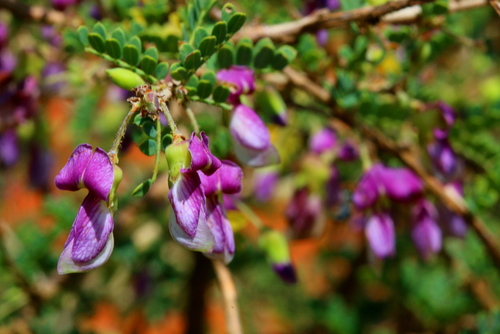
(c) Rouxne Botha, some rights reserved (CC BY-NC), uploaded by Rouxne Botha
iNaturalist· cc-by-nc
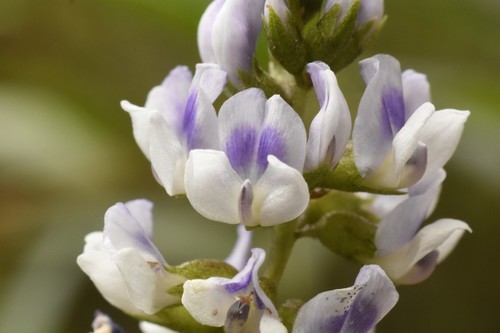
(c) riana60, some rights reserved (CC BY-NC), uploaded by riana60
iNaturalist· cc-by-nc
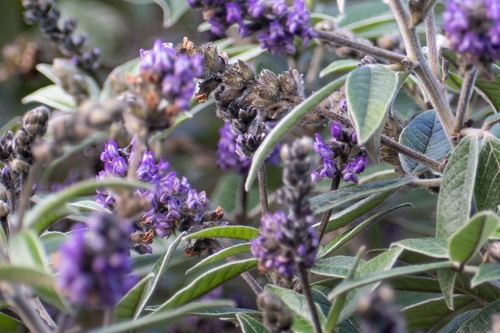
(c) fayne, some rights reserved (CC BY-NC), uploaded by fayne
Summary
Source: WikipediaVachellia sieberiana, until recently known as Acacia sieberiana, is a tree native to southern Africa and introduced into Pakistan. It is used in many areas for various purposes. The tree varies from 3 to 25 m in height, with a trunk diameter of 0.6 to 1.8 m. It is not listed as being a threatened species.
Description
A tree. It grows up to 18 m tall. The crown is spreading and often has a flat top. The bark at the base is usually rough. It is light coloured and corky. It flakes off. The thorns are straight and up to 9 cm long. The leaves are twice divided. There are 6-23 pairs of leaflets along a stalk. The leaflets are very small. The flowers are creamy white and in round heads. These are about 1 cm across. The fruit are large woody pods. These are 21 cm long by 3 cm wide. They are thick and slightly curved. There are 12 hard flat seeds inside. These are 1 cm long. Three varieties have been recognised.
Edible Uses
The gum is eaten raw, traditionally mainly by children. The leaves and other vegetable portions are also used.
Traditional Uses
The gum is eaten raw.
This uses section is brief — help expand it
Medicinal Uses
In Africa, the bark or root is used to treat urinary tract inflammation. The bark has astringent properties and it is used to treat colds, cough, and childhood fever. According to the World AgroForestry Centre, "A decoction of the root is taken as remedy for stomach-ache. The bark, leaves and gums are used to treat tapeworm, bilharzia, haemorrhage, orchitis, colds, diarrhoea, gonorrhoea, kidney problems, syphilis, ophthalmia, rheumatism and disorders of the circulatory system. It is also used as an astringent. The pods serve as an emollient, and the roots for stomach-ache, acne, tapeworms, urethral problems, oedema and dropsy."
Known Hazards
Vachellia sieberiana is valued largely as a source of forage, medicine and wood. The inner bark is a source of fibre purposes such as stringing beads). The gum is edible) and both livestock and game animals browse the tree and feed on the dropped pods, spreading viable seeds in their dung. The flowers of the tree make good forage for bees and bee hives are put directly in the trees to exploit the resource. The leaves of the tree commonly release toxic chemical compounds when the tree has been heavily browsed, some of the compounds may release hydrogen cyanide when ingested, which may be lethal to cattle. The fallen pods and foliage can provide lifesaving forage during dry times of the year. The gum of the tree is used as food, as an adhesive, and as an ingredient in making ink.
Distribution
It is a tropical plant. It occurs in semi arid areas. It grows in the Sahel. In Uganda is grows between 600-2,800 m altitude. It is sensitive to frost when young. It is fairly drought tolerant. It grows in areas with an annual rainfall above 300 mm. It can grow in arid places.
Where It Grows
Africa, Angola, Benin, Botswana, Burkina Faso, Cameroon, Central Africa, Chad, Congo, Côte d'Ivoire, East Africa, Eritrea, Eswatini, Ethiopia, Europe, Gambia, Ghana, Guinea, Guinée, Guinea-Bissau, India, Ivory Coast, Kenya, Liberia, Malawi, Mali, Mauritania, Mediterranean, Mozambique, Namibia, Niger, Nigeria, Pakistan, Portugal, Rwanda, Sahel, Senegal, Sierra Leone, South Africa, Southern Africa, Sudan, Swaziland, Tanzania, Togo, Uganda, West Africa, Zambia, Zimbabwe,
Cultivation
It is grown from seed. The seed should be put in hot water then allowed to cool and soak for 24 hours before sowing. The seed can be stored if kept cool, dry and insect free. The tree can be pruned or cut back and allowed to re-grow. Seeds can be stored if cool and dry.
Propagation
The seed of most, if not all, members of this genus has a hard seedcoat and may benefit from scarification before sowing to speed up germination. This can usually be done by pouring a small amount of nearly boiling water on the seeds (being careful not to cook them!) and then soaking them for 12 - 24 hours in warm water. By this time they should have imbibed moisture and swollen - if they have not, then carefully make a nick in the seedcoat (being careful not to damage the embryo) and soak for a further 12 hours before sowing. Germination rates of 60% have been achieved. Seedlings are quick growing. The seeds can be stored if kept cool, dry and insect free, ash is added to reduce insect damage.
Other Uses
The stem is a source of a pale yellow to yellowish brown soluble gum. Clear and of good quality, when mixed with soot it has been used to make ink. The bark and pods contain tannin. The bark is used to make a cordage fibre. The termite resistant, moderately hardwood is fairly light in weight. It has a featureless, off-white grain with little distinction between heartwood and sapwood. It is easy to work and is used in local construction, making furniture, tool handles and mortars. The wood is a good source of firewood and charcoal. Occasionally planted as a hedge, a windbreak and a shade tree in villages, rangelands and fields. The tree is considered to be a good source of nectar for bees.
Production
The tree is slow growing.
Other Information
It is mainly eaten by children.
Notes
There are about 1,350 Acacia species. Over 1,000 occur in Australia. Also as Mimosaceae.
Nutrition
| Part | Moisture | kJ | kcal | Protein | Vit A | Vit C | Iron | Zinc |
|---|---|---|---|---|---|---|---|---|
| Leaves | 91 | 126 | 30 | 1.8 | 945 | 19 | 3.7 | — |
| Gum | — | — | — | — | — | — | — | — |
| Leaves | — | — | — | — | — | — | — | — |
| Flowers | — | — | — | — | — | — | — | — |
Synonyms
Also Known As
Achara, Asa, Asaro, Conga, Etirir, Etirok, Gunga, Maronga, Minganzolo, Morumosetlha, Munga kuu, Mutiti, Muwawa, Muyanya, Mwera, Nthonkoryo, Papierbasdoring
References (30)
- Addis, G., et al, 2005, Ethnobotanical Study of Edible Wild Plants in Some Selected Districts of Ethiopia. Human Ecology, Vol. 33, No. 1, pp. 83-118
- Agroforestree Database. World Agroforestry Centre
- Ambasta S.P. (Ed.), 2000, The Useful Plants of India. CSIR India. p 7
- Bekele-Tesemma A., Birnie, A., & Tengnas, B., 1993, Useful Trees and Shrubs for Ethiopia. Regional Soil Conservation Unit. Technical Handbook No 5. p 66
- Bunderson, W. T. et al, 2002, Common Agroforestry Species in Malawi. Malawi Agroforestry Extension Project, Pubication No. 46, Lilongwe. p 14
Show all 30 references Hide references
- Chapman, J. D. & Chapman, H. M., 2001, The Forest Flora of Taraba and Andamawa States, Nigeria. WWF & University of Canterbury. p 183
- Choudhary, S., 1999, Ethnobotany of Janjangbureh Island, The Gambia, West Africa. Honors thesis Dept. Biology City University of New York.
- Dharani, N., 2002, Field Guide to common Trees & Shrubs of East Africa. Struik. p 36
- Drummond, R. B., 1981, Common Trees of the Central Watershed Woodlands of Zimbabwe, National Herbarium Salisbury. p 54
- Fowler, D. G., 2007, Zambian Plants: Their Vernacular Names and Uses. Kew. p 33
- Gallagher, D. E., 2010, Farming beyond the escarpment: Society, Environment, and Mobility in Precolonial Southeastern Burkina Faso. PhD University of Michigan
- Grubben, G. J. H. and Denton, O. A. (eds), 2004, Plant Resources of Tropical Africa 2. Vegetables. PROTA, Wageningen, Netherlands. p 559
- Harris, F. M. A. and Mohammed, S., 2003, Relying on Nature: Wild Foods in Northern Nigeria. Ambio Vol. 32 No. 1. p 25-30
- ILDIS Legumes of the World http:www;ildis.org/Legume/Web
- Joffe, P., 2007, Creative Gardening with Indigenous Plants. A South African Guide. Briza. p 133
- Katende, A.B., Birnie, A & Tengnas B., 1995, Useful Trees and Shrubs for Uganda. Identification, Propagation and Management for Agricultural and Pastoral Communities. Technical handbook No 10. Regional Soil Conservation Unit, Nairobi, Kenya. p 58
- Maydell, H. von, 1990 Trees and shrubs of the Sahel: their characteristics and uses. Margraf. p 141
- Mutie, F. M., et al, 2023, Important Medicinal and Food Taxa (Orders and Families) in Kenya, Based on Three Quantitative Approaches. Plants 2023, 12, 1145
- Palgrave, K.C., 1996, Trees of Southern Africa. Struik Publishers. p 251
- Palmer, E and Pitman, N., 1972, Trees of Southern Africa. Vol. 2. A.A. Balkema, Cape Town p 700
- Prodr. 2:463. 1825
- Roodt, V., 1998, Trees & Shrubs of the Okavango Delta. Medicinal Uses and Nutritional value. The Shell Field Guide Series: Part 1. Shell Botswana. p 195
- Royal Botanic Gardens, Kew (1999). Survey of Economic Plants for Arid and Semi-Arid Lands (SEPASAL) database. Published on the Internet; http://www.rbgkew.org.uk/ceb/sepasal/internet [Accessed 27th April 2011] (As Acacia sieberiana var. woodii)
- Ruiters-Welcome, A. K., 2019, Food plants of southern Africa. Ph.D. thesis. Univ. of Johannesburg p 62
- Storrs, A. E. C., 1995 reprint, Know Your Trees. Some Common Trees found in Zambia, Forestry Division. p 47
- van Wyk, B, van Wyk, P, and van Wyk B., 2000, Photographic guide to Trees of Southern Africa. Briza. p 43
- van Wyk, Ben-Erik, 2019, The diversity and multiple uses of southern African legumes. Australian Systematic Botany, 2019, 32, 519–546
- Venter, F & J., 2009, Making the most of Indigenous Trees. Briza. p 30
- Welcome, A. K. & Van Wyk, B.-E., 2019, An inventory and analysis of the food plants of southern Africa. South African Journal of Botany 122 (2019) 136–179
- www.worldagroforestrycentre.org/sea/products/afdbases/af/asp