Baccaurea velutina
(Ridley) Ridley
Tampoi tunggau
wikimedia· cc0
Wikimedia Commons - National Museum of Natural History
gbif· cc0
President and Fellows of Harvard College
gbif· cc0
President and Fellows of Harvard College
Description
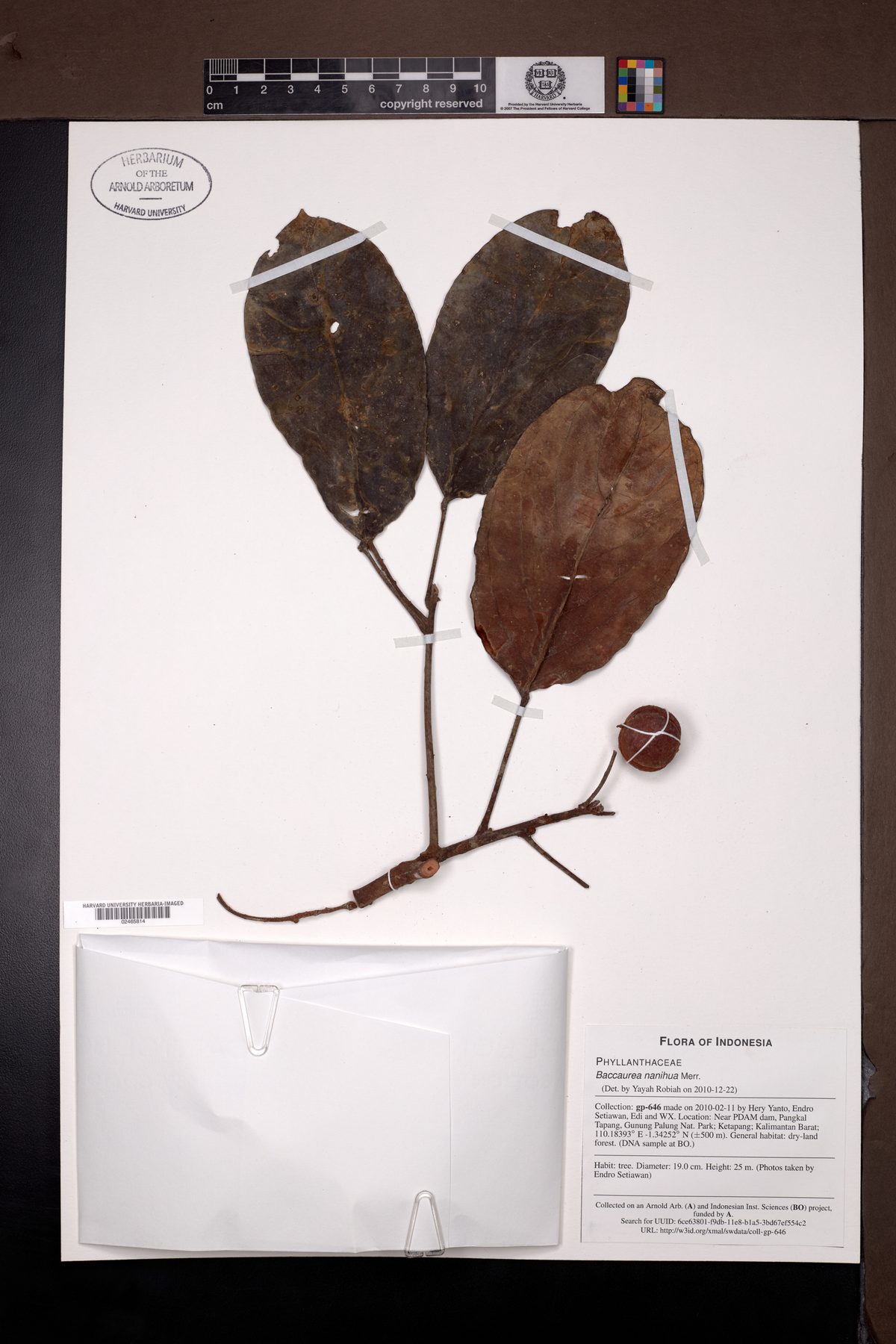
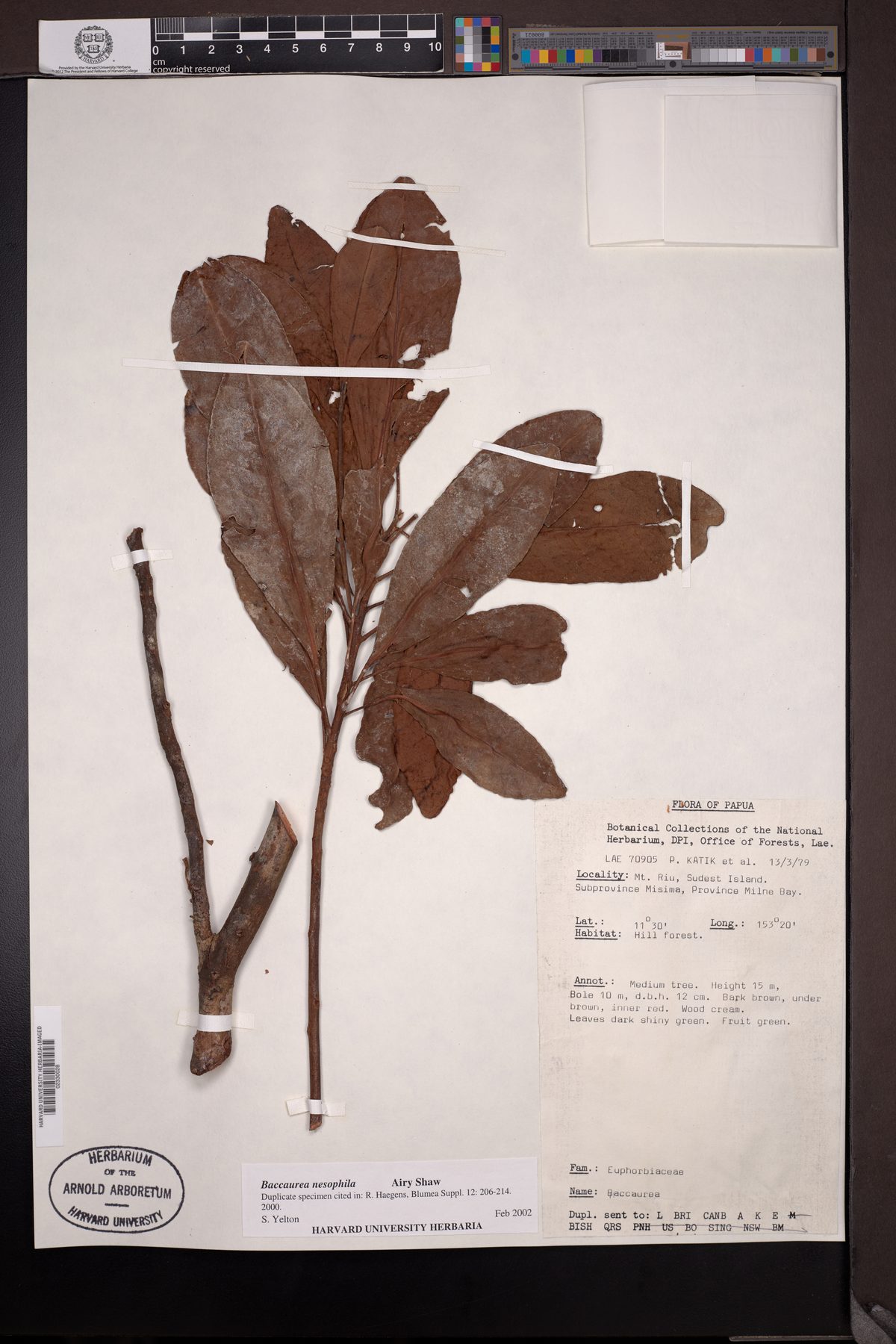
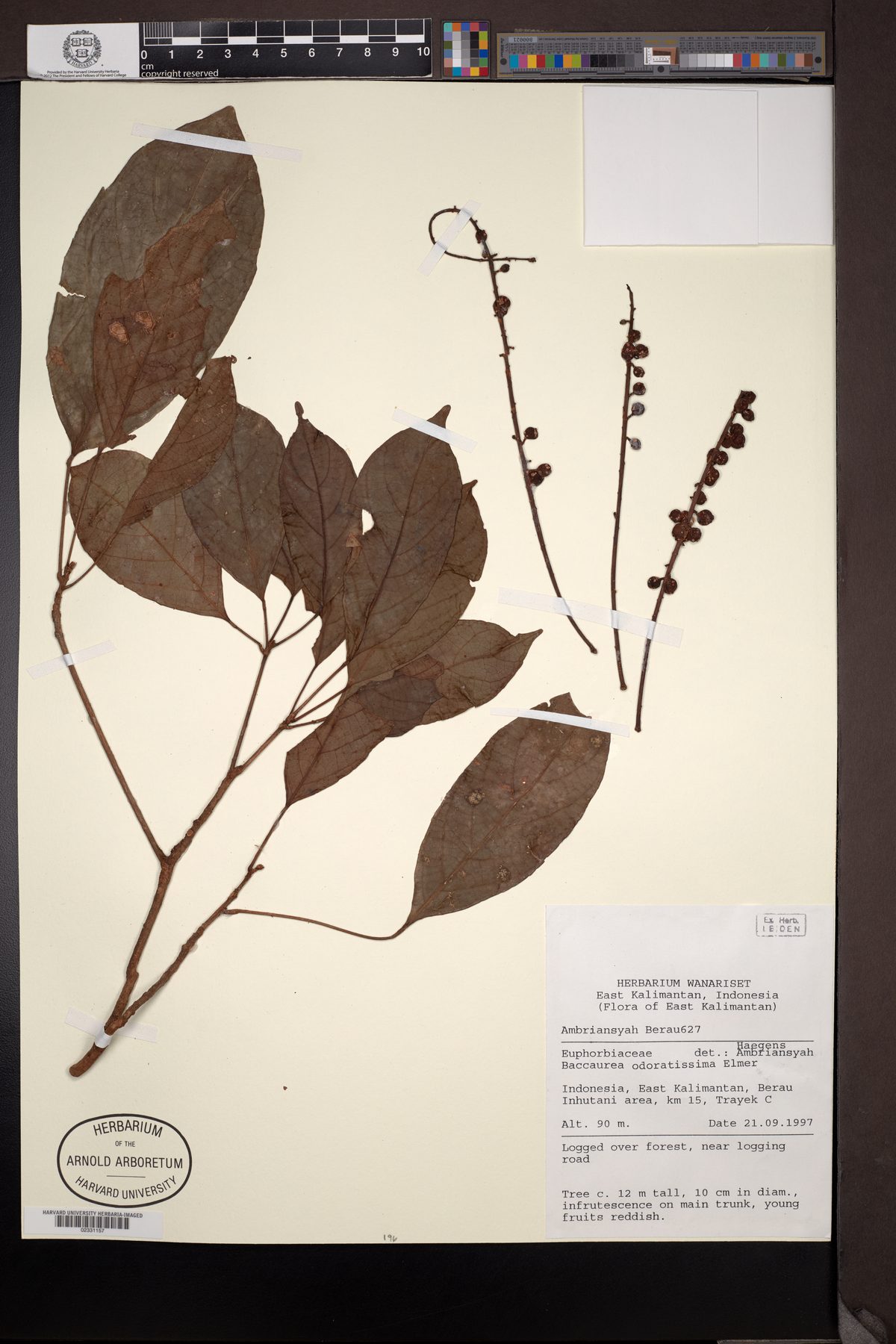
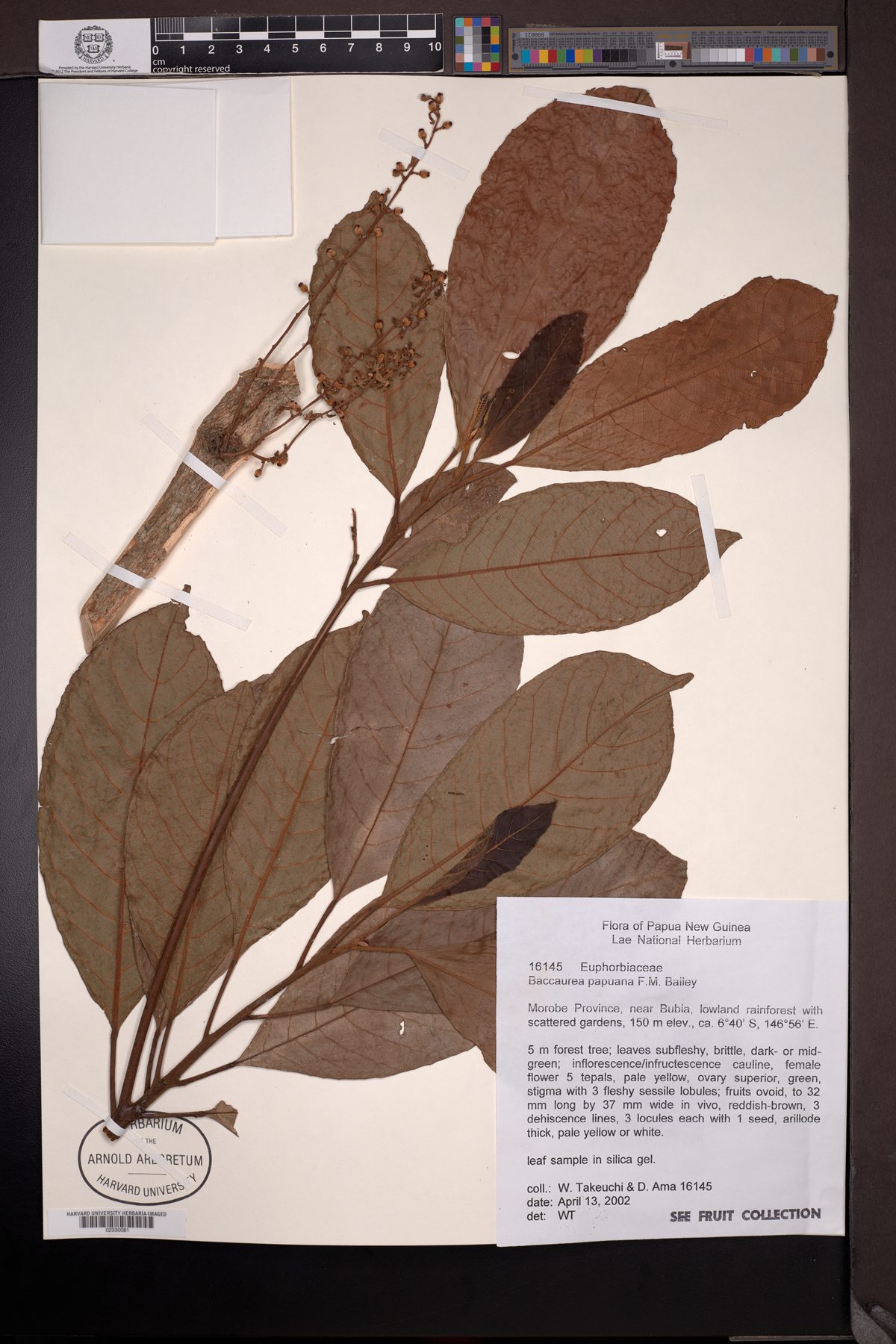
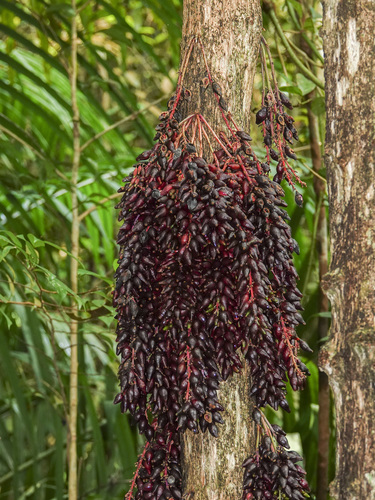
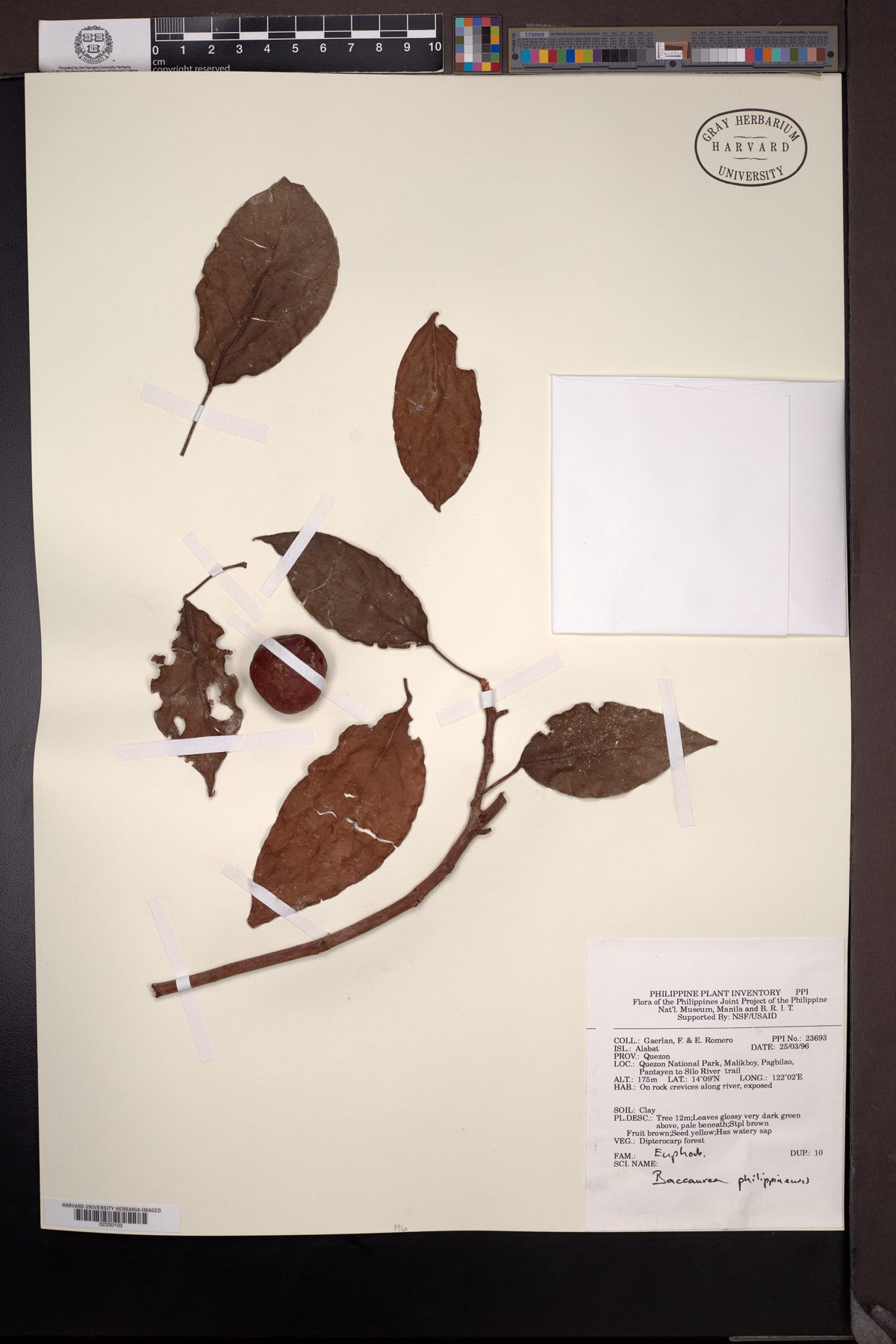
A tree. It grows 12-35 m tall. The branches have a velvety covering. The leaves are oval and 17 cm long by 10 cm wide. The fruit stalks are 7 cm long. The fruit is like a berry. They are small and orange coloured. They are sour.
Edible Uses
The small orange fruit is eaten, though it is sour.
Medicinal Uses
We have no specific information on this species, but the bark of several members of this genus is used to relieve eye inflammation.
Distribution
A tropical plant. It grows on ridges in the rain forest. It grows up to 1500 m altitude above sea level.
Where It Grows
Asia, Indochina, Indonesia, Malaysia, SE Asia, Thailand,
Cultivation
A dioecious species, both male and female forms need to be grown if fruit and seed are required.
Propagation
Seed - when sown fresh it usually germinates in a few days.
Other Uses
We have no specific information for this species, but the bark of several members of this genus is used, along with other ingredients, as a dyestuff to colour silk yellow, red or mauve, using the dyeing process known as 'pekan' in Malay. Although we have no specific information for this species, most members of this genus produce an excellent timber, which can be used to build houses and boats and to make furniture. In common with other trees that produce their flowers and fruits on the trunk of the tree, members of this genus are generally considered to be good support trees for the climbing rattan palms, which are grown to provide material for basket making, weaving into furniture, making ropes etc.
Notes
There are about 80 Baccaurea species.
Synonyms
Also Known As
Mafai-ling, Taban burong, Tampoi tunggal
References (5)
- Bircher, A. G. & Bircher, W. H., 2000, Encyclopedia of Fruit Trees and Edible Flowering Plants in Egypt and the Subtropics. AUC Press. p 51
- Burkill, I.H., 1966, A Dictionary of the Economic Products of the Malay Peninsula. Ministry of Agriculture and Cooperatives, Kuala Lumpur, Malaysia. Vol 1 (A-H) p 283
- Milow, P., et al, 2013, Malaysian species of plants with edible fruits or seeds and their evaluation. International Journal of Fruit Science. 14:1, 1-27
- Verheij, E. W. M. and Coronel, R.E., (Eds.), 1991, Plant Resources of South-East Asia. PROSEA No 2. Edible fruits and nuts. Pudoc Wageningen. p 320
- World Checklist of Useful Plant Species 2020. Royal Botanic Gardens, Kew