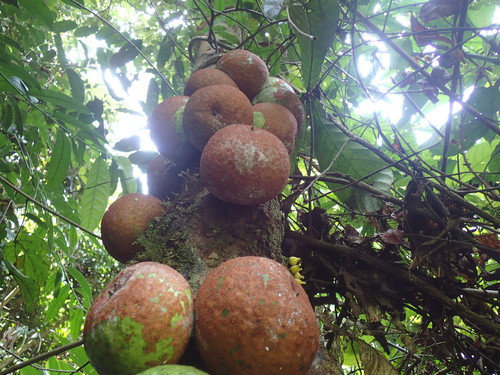
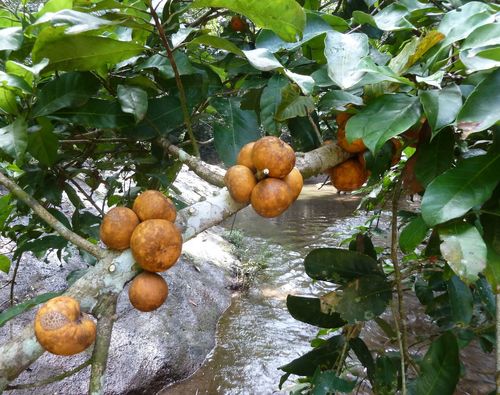
Pouteria bullata
(S. Moore) Baehni
Bullate pouteria
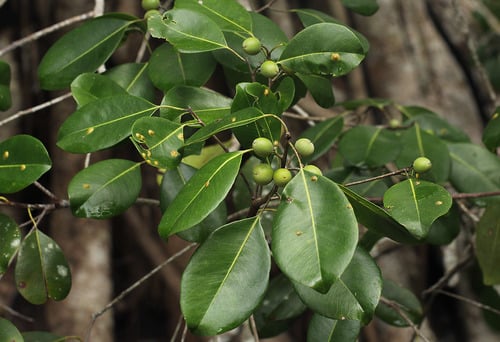
iNaturalist· cc-by-nc-nd
(c) Gabriel Bonfa, some rights reserved (CC BY-NC-ND), uploaded by Gabriel Bonfa
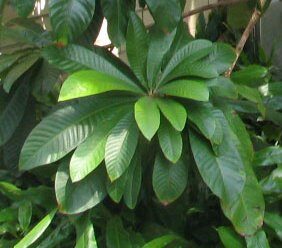
iNaturalist· cc-by-nc
(c) Geovane Siqueira, some rights reserved (CC BY-NC)
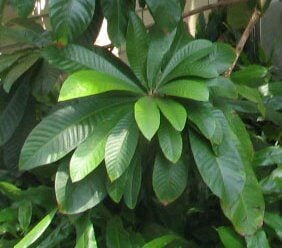
iNaturalist· cc-by-nc
(c) Geovane Siqueira, some rights reserved (CC BY-NC)
Summary
Source: WikipediaPouteria bullata is a species of plant in the family Sapotaceae. It is endemic to Brazil. It is threatened by habitat loss.
Description
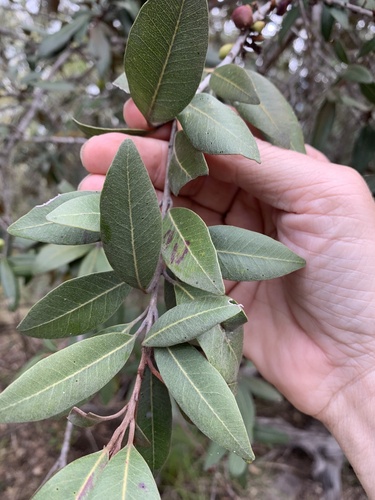
A tree. It loses many of its leaves during the year. It grows 10-16 m tall. The trunk has grooves along it. The young branches have a brown covering. The leaves are papery. They are near the ends of branches. The leaves are 18-28 cm long. There are hairs on the under surface. The flowers are in groups of 3-5 on bare branches. The fruit are oval and yellow. They are 6 cm long. There is 1 seed.
Edible Uses
Fruit - raw. The fruit contains a single large seed surrounded by a sweet, gelatinous pulp. The fruit should only be eaten when it is very ripe. The fruit is about 6cm long by 5cm wide.
Traditional Uses
The very ripe fruit are eaten fresh.
This uses section is brief — help expand it
Distribution
A tropical plant. It grows in semi-deciduous forest in Brazil.
Where It Grows
Brazil*, South America,
Cultivation
Plants are grown from seed. The seeds are collected from ripe fruit that have been stored in piles to allow them to partly decompose than washed out in running water. Seeds need to be planted fresh. They should be in light shade. Seedlings emerge in 60-70 days.
Propagation
Seed - best sown as soon as it is ripe in a partially shaded position in a nursery seedbed. A low germination rate can be expected, with the seed sprouting within 60 - 70 days.
Other Uses
The wood is of average texture, straight-grained, heavy, hard to cut, resistant to wood-eating organisms. It is used for external purposes and general construction.
Production
Plants grow slowly.
Notes
There are about 150-320 Pouteria species. They grow in the tropics.
Synonyms
Also Known As
Abiurana, Bapeba, Bapeva, Guapeba, Guapeva
References (5)
- Grandtner, M. M. & Chevrette, J., 2013, Dictionary of Trees, Volume 2: South America: Nomenclature, Taxonomy and Ecology. Academic Press p 523
- Kermath, B. M., et al, 2014, Food Plants in the Americas: A survey of the domesticated, cultivated and wild plants used for Human food in North, Central and South America and the Caribbean. On line draft. p 685
- Lorenzi, H., Bacher, L., Lacerda, M. & Sartori, S., 2006, Brazilian Fruits & Cultivated Exotics. Sao Paulo, Instituto Plantarum de Estuados da Flora Ltda. p 298
- Lorenzi, H., 2009, Brazilian Trees. A Guide to the Identification and Cultivation of Brazilian Native Trees. Instituto Plantarum de Estuados da Flora Ltda. Vol. 3 p 338
- Pennington, T.D., 1990, Sapotaceae in Flora Neotropica Monograph 52. New York Botanical Gardens. p 443