Hypholoma sublateritium
(Fr.) Quel.
Brick Cap, Perplexing hypholoma, Chestnut mushroom
iNaturalist· cc-by
(c) Alan Rockefeller, some rights reserved (CC BY)
iNaturalist· cc-by-nc
(c) Mak, some rights reserved (CC BY-NC)
iNaturalist· cc-by-nc
(c) Mak, some rights reserved (CC BY-NC)
Description
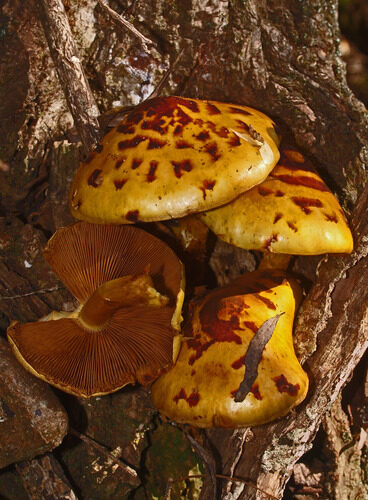
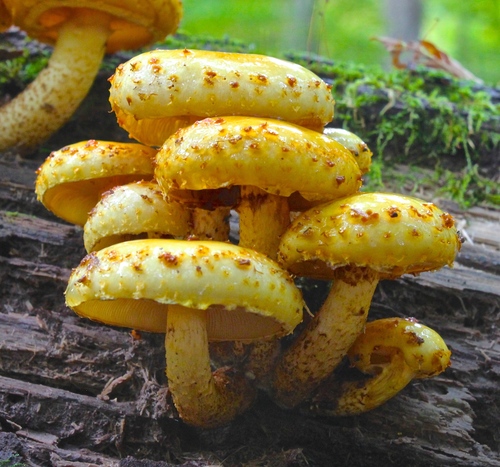
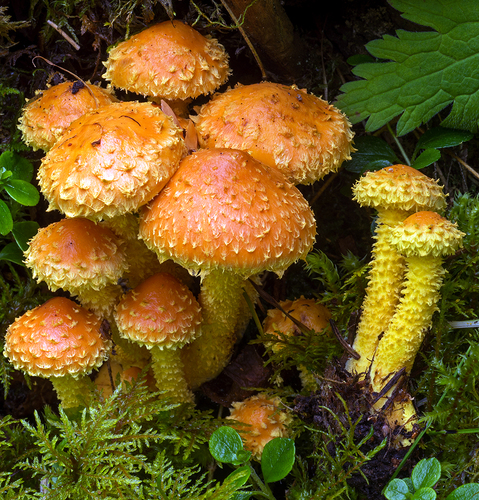
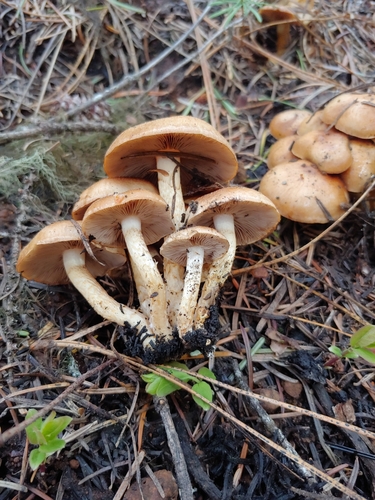
A mushroom. The young caps are brick red. The veil remnants hang on the edge. They have yellowish-green gills. At maturity the cap fades to orange-brown and the gills become purple-black due to spore production.
Edible Uses
The fruiting bodies are boiled and eaten in soups, typically treated in vinegar before cooking. Cultivated forms are available.
Traditional Uses
Caution; It is normally very bitter and not edible. CAUTION: It is poisonous. The fruiting bodies are boiled and eaten or used in soups. They are normally treated in vinegar before cooking. Cultivated forms are available.
Known Hazards
The mushroom is poisonous and normally very bitter. It is not edible in its natural state.
Distribution
It is a temperate plant.
Where It Grows
Africa, Asia, Australia, Japan, Liberia, Tasmania,
Synonyms
Also Known As
Kuri-take
References (8)
- Facciola, S., 1998, Cornucopia 2: a Source Book of Edible Plants. Kampong Publications, p 253
- Fuhrer, B & Robinson, R., 1992, Rainforest Fungi of Tasmania and SE Australia, CSIRO p 37
- Fuhrer, B., 2005, A field guide to Australian Fungi. Bloomings Books. p 97
- Hwang, L. C., et al, 2020, Traditional Botanical Uses of Non-Timber Forest Products (NTFP) in Seven Counties in Liberia. ACS Symposium Series; American Chemical Society: Washington, DC, 2020.
- Jordan, P., 2000, The Mushroom Guide and Identifier, Hermes House, p 60
Show all 8 references Hide references
- Pace, G., 1998, Mushrooms of the world. Firefly books. p 56 (Not edible)
- Tanaka,
- Uphof,