Carpotroche longifolia
(Poepp.) Benth.
Longleaf carpotroche
iNaturalist· cc-by-nc
(c) lindarasmussen, some rights reserved (CC BY-NC)
iNaturalist· cc-by-nc
(c) ramazan_murtazaliev, some rights reserved (CC BY-NC)
iNaturalist· cc-by-nc
(c) ramazan_murtazaliev, some rights reserved (CC BY-NC)
Description
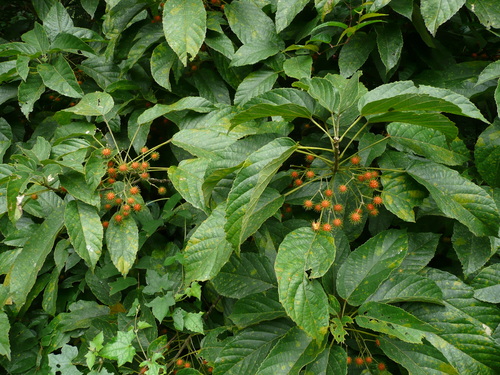
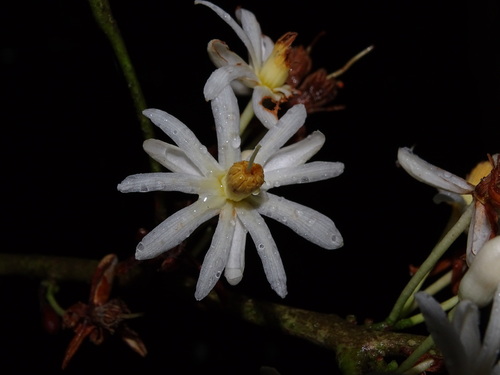
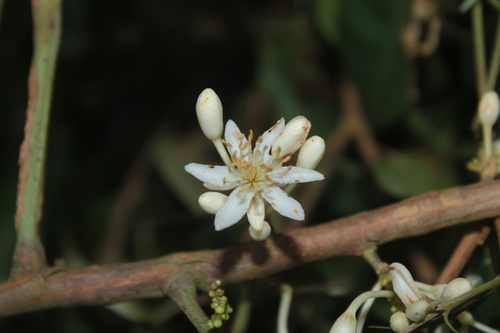
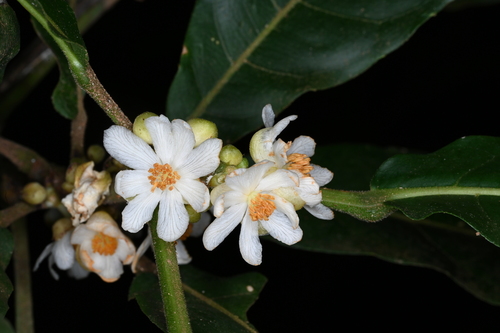
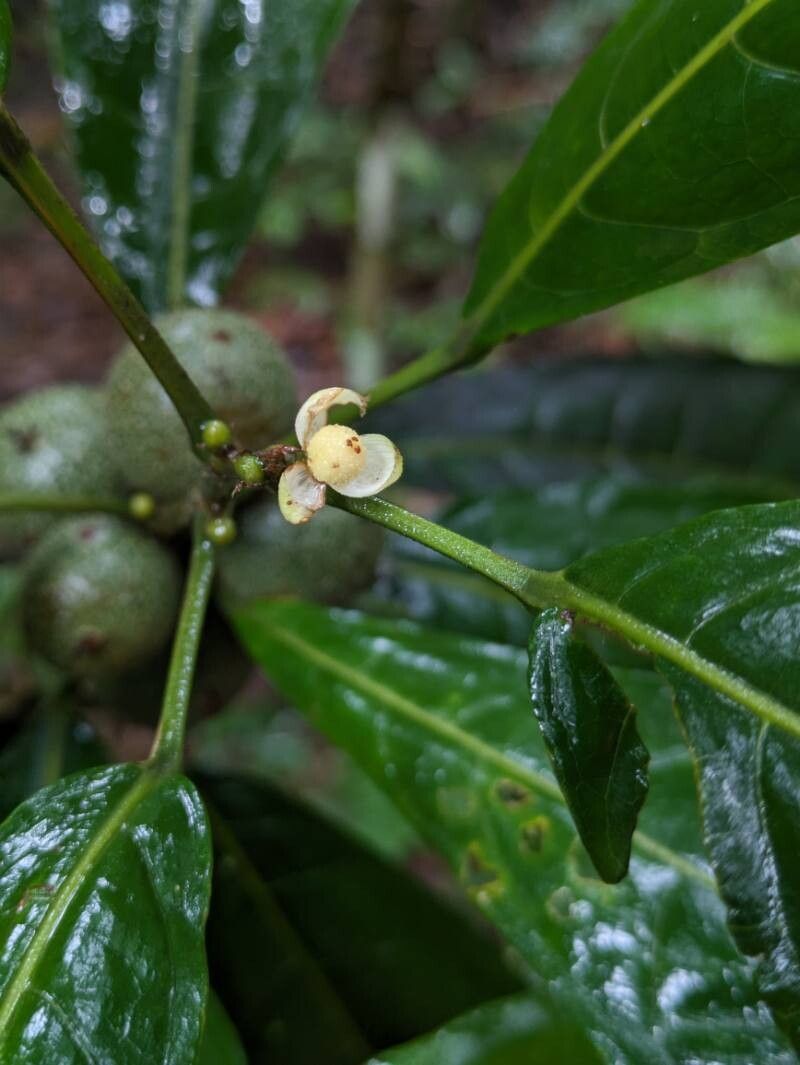
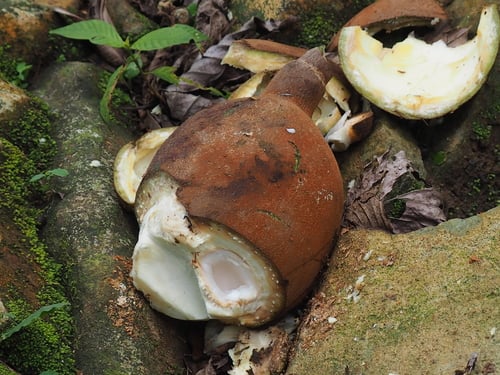
A shrub or tree. It grows 12 m tall. The flowers are in small clusters. They grow on the old wood. The fruit is a narrowly oval, woody capsule. It is 5 cm long by 3 cm wide and have 10-12 wings. These are a light green with small teeth. There are wings between these also with teeth. There are about 50 seeds with one rounded and 2 flat sides. They are 1 cm long by 0.6 cm wide and with red or orange arils or coverings over the seeds.
Edible Uses
The small fleshy aril (covering) around the seeds is eaten; the arils are red or orange.
Traditional Uses
The fruit are eaten. It is the small fleshy layer (aril) around the seeds that is eaten. Caution: The fruit have a cyanide smell and may need cooking.
Medicinal Uses
The oil from the seed is parasiticide. It is used in the treatment of dermatosis and leprosy.
Known Hazards
The fruit have a cyanide smell and may need cooking.
Distribution
A tropical plant. It grows along creeks and rivers, expecially on slopes.
Where It Grows
Brazil, Central America, Colombia, Ecuador, Guiana, Guianas, Guyana, Panama, Peru, South America, Suriname,
Cultivation
A tree of low elevations in the tropics. The tree flowers and fruits on old wood, usually along the branches and trunk of the tree.
Other Uses
The thin core of heartwood is dull brown, occasionally with extensive greyish areas; the sapwood is .pinkish brown to pale yellow. Moderately fine-textured; straight-or wavy-grained; with a slightly offensive odour. The wood is light in weight or moderately so; takes a smooth and fairly lustrous finish. No uses are recorded for it.
Production
Fruit are harvested off the tree trunk.
Notes
There are about 30 Carpotroche species. They are also put in the family Kiggelariaceae and Euphorbiacece. Also put in the Flacourtiaceae family.
Synonyms
Also Known As
Champa huayo, Huila
References (10)
- Bircher, A. G. & Bircher, W. H., 2000, Encyclopedia of Fruit Trees and Edible Flowering Plants in Egypt and the Subtropics. AUC Press. p 85
- Cuatrec. Publication : Trop. Woods No. 101, 28 (1955) Basionym author: (R.E.Schult.) Publishing author: Benth. Publication: in Journ. Linn. Soc. v. Suppl. ii. 82 1861
- Etkin, N.L. (Ed.), 1994, Eating on the Wild Side, Univ. of Arizona. p 137 (As Carpotroche linguifolia)
- Grandtner, M. M., 2008, World Dictionary of Trees. Wood and Forest Science Department. Laval University, Quebec, Qc Canada. (Internet database http://www.WDT.QC.ca)
- Grandtner, M. M. & Chevrette, J., 2013, Dictionary of Trees, Volume 2: South America: Nomenclature, Taxonomy and Ecology. Academic Press p 102
Show all 10 references Hide references
- Kermath, B. M., et al, 2014, Food Plants in the Americas: A survey of the domesticated, cultivated and wild plants used for Human food in North, Central and South America and the Caribbean. On line draft. p 187
- Penafield Anchundia, D. D., 2017, Traditional food consumption and its nutritional contribution in Guasaganda, Central Ecuador. PhD Ghent University p 71
- Roa, J. A. G. & Boada, D. S. G., 2018, Fundación para el Fortalecimiento de la Fruticultura y Plantas Alimenticias no Convencionales en Colombia.
- van Roosmalen, M.G.M., 1985, Fruits of the Guianan Flora. Utrecht Univ. & Wageningen Univ. p 126
- Vasquez, R. and Gentry, A. H., 1989, Use and Misuse of Forest-harvested Fruits in the Iquitos Area. Conservation Biology 3(4): 350f