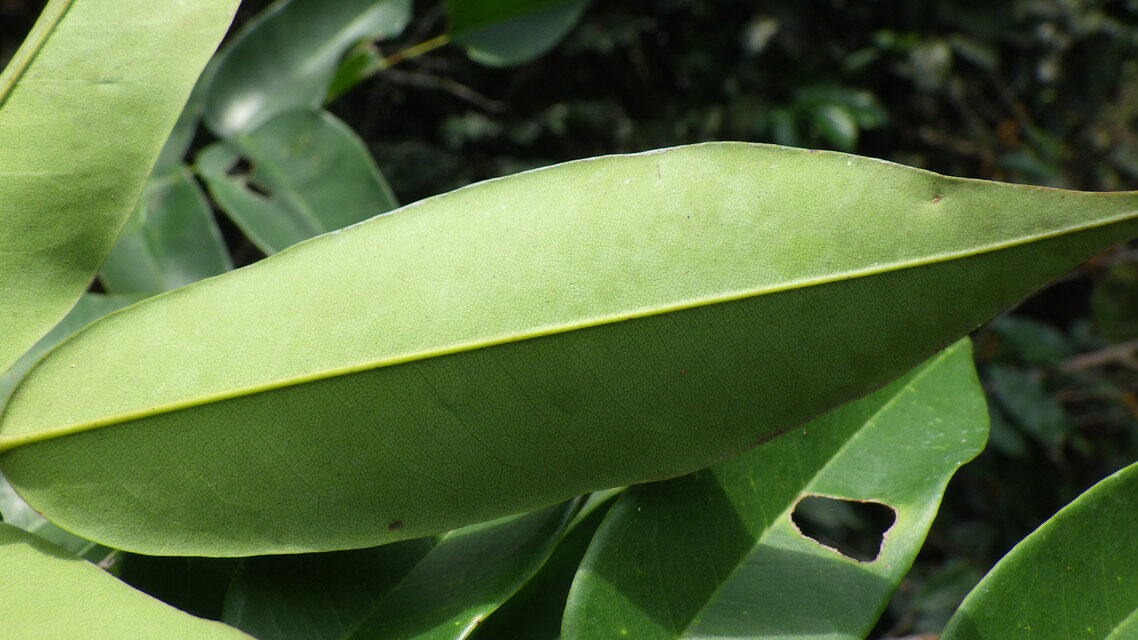
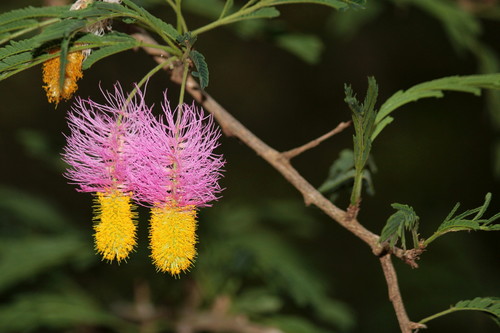
Inga ruiziana
G. Don
Ruiz inga
iNaturalist· cc-by-nc
(c) Marvin López M., some rights reserved (CC BY-NC), uploaded by Marvin López M.
iNaturalist· cc-by-nc
(c) Leonardo Álvarez-Alcázar, some rights reserved (CC BY-NC)
iNaturalist· cc-by-nc
(c) Leonardo Álvarez-Alcázar, some rights reserved (CC BY-NC)
Description
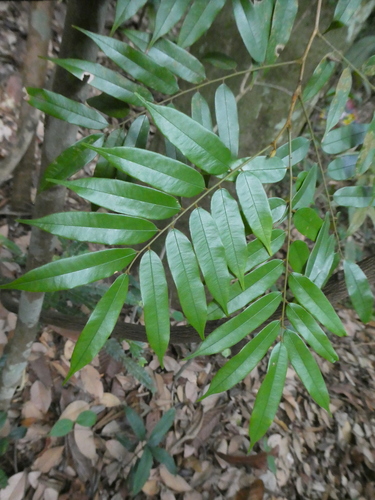
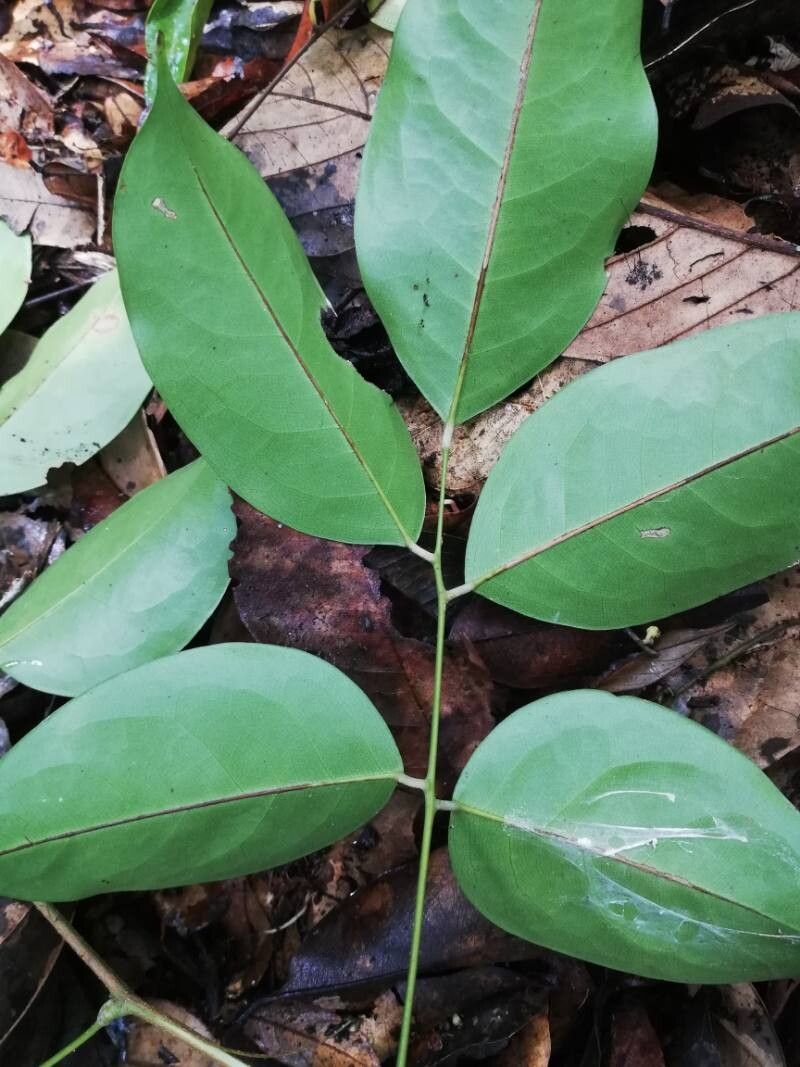
A tree. It is usually 10-15 m tall but can be 30 m tall. The leaves have leaflets in 4 or 5 pairs. The pair at the base are smaller. The young leaflets are hairy. The pods vary in size. They can be 7-22 cm long and 2-4 cm wide. They are yellow when fully ripe. The pods can be curved or straight.
Edible Uses
The sweet pulp inside the pods is eaten, and fruit are sold in markets.
Traditional Uses
The sweet pulp is eaten.
This uses section is brief — help expand it
Medicinal Uses
Various medicinal uses have been reported for the plant.
Distribution
A tropical plant. It grows in wet and moist lowland forests. It can also grow up to 2,000 m above sea level.
Where It Grows
Amazon*, Bolivia*, Brazil*, Central America, Colombia, Costa Rica, Ecuador*, Nicaragua, Panama, Peru*, South America, Venezuela,
Cultivation
Plants grow easily from fresh seeds. Seeds germinate in 1-2 weeks given moisture and shade.
Other Uses
The thin layer of reddish-brown heartwood is surrounded by the paler sapwood, which has creamy yellow or pinkish brown streaks and fine dark gray lines. The wood is moderately heavy to heavy, firm, and compact. It appears to be durable. The wood is used mainly for fuel. Used as shade trees in the lower coffee belt or in the cacao grove at below 600 metres elevation. Inga species generally have a number of factors that make them popular for use as shade trees in coffee and cacao plantations:- they grow quickly and so soon make an effecte shade; they respond well to drastic pruning and so are easy to keep within the required size and shade levels; they promote and maintain soil fertility; they are effective soil stabilizers.
Other Information
Fruit are sold in markets.
Notes
There are 350 Inga species. Also as Mimosaceae.
Synonyms
Also Known As
Ahuapi xenane, Allpa manka pakay, Ananqueneo, Bene, Bribri, Gumo, Killu pakay, Minga shiichi tape, Muun sampi, Noca pene, Pacai del Monte, Rufindi, Sesenga fino, Wakra pakay, Yacupacai
References (16)
- Barfod, A. S. & Kvist, L. P., 1996, Comparative Ethnobotanical Studies of the Amerindian Groups in Coastal Ecuador. The Danish Academy of Sciences and Letters. p 78
- Condit, R., et al, 2011, Trees of Panama and Costa Rica. Princeton Field Guides. p 200
- Gen. hist. 2:391. 1832
- Grandtner, M. M., 2008, World Dictionary of Trees. Wood and Forest Science Department. Laval University, Quebec, Qc Canada. (Internet database http://www.wdt.qc.ca)
- Grandtner, M. M. & Chevrette, J., 2013, Dictionary of Trees, Volume 2: South America: Nomenclature, Taxonomy and Ecology. Academic Press p 325
Show all 16 references Hide references
- Hermandez Bermejo, J.E., and Leon, J. (Eds.), 1994, Neglected Crops. 1492 from a different perspective. FAO Plant Production and Protection Series No 26. FAO, Rome. p 15
- Jernigan, K. A., 1997, An Ethnobiological Exploration of Sensory and Ecological Aspects of Tree Identification among the Aguaruna Kivaro (Peru). PhD thesis. Athens, Georgia. p 201
- Kermath, B. M., et al, 2014, Food Plants in the Americas: A survey of the domesticated, cultivated and wild plants used for Human food in North, Central and South America and the Caribbean. On line draft. p 445
- Macbride, J. F., 1943, Flora of Peru. Vol. 8, Part 3 No. 1 p 40
- Paz, F. S., et al, 2021, Edible Fruit Plant Species in the Amazon Forest Rely Mostly on Bees and Beetles as Pollinators. Journal of Economic Entomology, XX(XX), 2021, 1–13 (As Inga fagifolia)
- Reis, S. V. and Lipp, F. L., 1982, New Plant Sources for Drugs and Foods from the New York Botanical Garden herbarium. Harvard. p 116
- Roa, J. A. G. & Boada, D. S. G., 2018, Fundación para el Fortalecimiento de la Fruticultura y Plantas Alimenticias no Convencionales en Colombia.
- Smith, N., et al, 2007, Amazon River Fruits. Flavors for Conservation. Missouri Botanical Gardens Press. p 128
- Torre, de la, L., et al, 2008, Enciclopedia de las Plantas Útiles del Ecuador. Herbario QCA. Pontificia Universidad Católica del Ecuador. p 346
- Zambrana, P, et al, 2017, Traditional knowledge hiding in plain sight – twenty-first century ethnobotany of the Chácobo in Beni, Bolivia. Journal of Ethnobiology and Ethnomedicine (2017) 13:57 (As Inga fagifolia)
- Zambrana, P & Bussmann, (Eds.), 2017, La Etnobotanica de los Chacobo en El Siglo 21. Peru. p 25 (As Inga fagifolia)