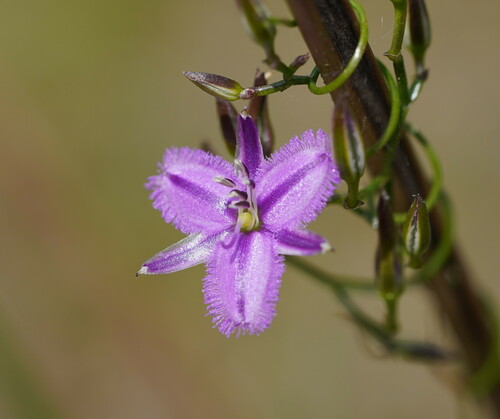
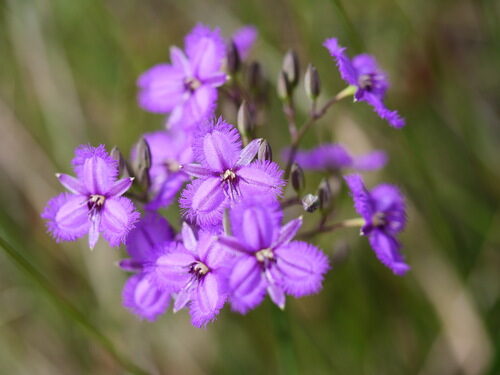
Asparagus horridus
L.
Grey asparagus
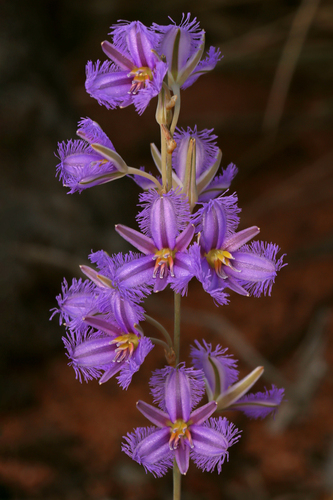
iNaturalist· cc-by-nc
(c) Wolfgang Bettighofer, some rights reserved (CC BY-NC), uploaded by Wolfgang Bettighofer
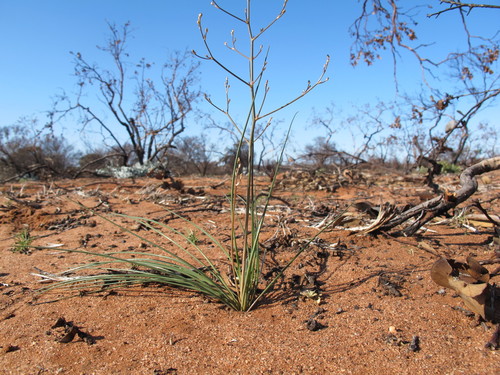
iNaturalist· cc-by-nc
(c) Peter Zika, some rights reserved (CC BY-NC), uploaded by Peter Zika
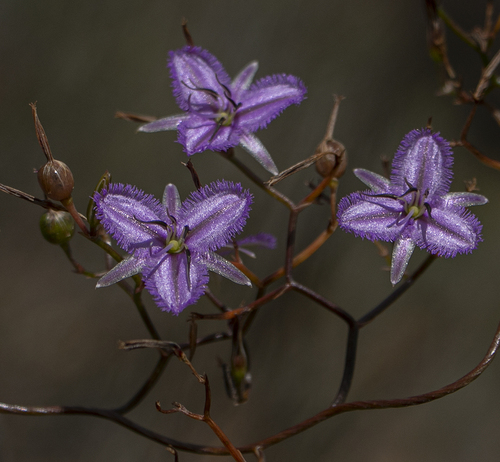
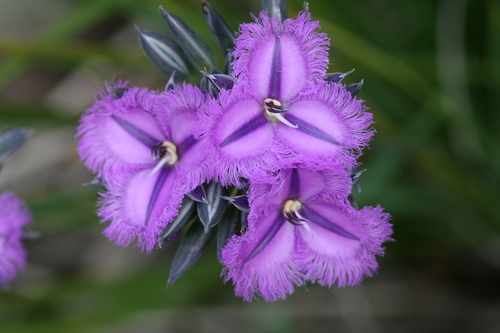
iNaturalist· cc-by-nc
(c) Wolfgang Bettighofer, some rights reserved (CC BY-NC), uploaded by Wolfgang Bettighofer
Summary
Source: WikipediaAsparagus horridus is a species of shrub in the family Asparagaceae. They are climbing plants. They have simple, broad leaves and fleshy fruit. Individuals can grow to 1 m (3.3 ft) tall. The species is native to Algeria, Balearic Islands, Canary Islands, Cyprus, Egypt (including Sinai), Greece (including Crete and East Aegean Islands), Gulf States, Italy (including Sardegna and Sicilia), Lebanon, Libya, Morocco, Palestine, Saudi Arabia, Spain, Syria and Tunisia.
Description
A tall plant. It can be 2 m tall. The stems are woody and have many branches. They are whitish or grey. The flattened green stems occur singly or in groups of 2-6. They are 3.5-4 mm long and have spines at their tips. Plants are separately male or female. The flowers are in groups of 2-6. They are 3.5-4 mm long. They are yellowish green. They have a sweet scent. The flowers are mixed with the leaves. The fruit is a berry which is black when ripe. It is 5.5-8 mm across.
Edible Uses
Young shoots are cooked and eaten in omelettes or used for pickles.
Traditional Uses
The young shoots are cooked and eaten in omelettes. They are also used for pickles.
This uses section is brief — help expand it
Distribution
It is a Mediterranean climate plant. It grows in rocky or sandy places often close to the sea.
Where It Grows
Africa, Cyprus, Egypt, Europe, France, Greece, Israel, Italy, Libya, Malta, Mediterranean, Middle East, Morocco, North Africa, Portugal, Saudi Arabia, Sicily, Spain,
Cultivation
Plants can be grown from seeds. It is best to pre-soak the seeds in warm water.
Notes
There are between 160-300 Asparagus species.
Synonyms
Also Known As
Ayrelli, Azzou, Sparaciu marinu, Sparacogna sarvaggia
References (11)
- Blamey, M and Grey-Wilson, C., 2005, Wild flowers of the Mediterranean. A & C Black London. p 483 (As Asparagus stipularis)
- Ciftcioglu, C. G., 2015, Sustainable wild-collection of medicinal and edible plants in Lefke region of North Cyprus. Agroforest Syst. Springer (As Asparagus stipularis)
- Della, A., et al, 2006, An ethnobotanical survey of wild edible plants of Paphos and Larnaca countryside of Cyprus. J. Ethnobiol. Ethnomed. 2:34 (As Asparagus stipularis)
- Fl. aegypt.-arab. 72. 1775 (As Asparagus stipularis)
- Geraci, A., et al, 2018, The wild taxa utilized as vegetables in Sicily (Italy): a traditional component of the Mediterranean diet. Journal of Ethnobiology and Ethnomedicine (2018) 14:14
Show all 11 references Hide references
- Ghanimi, R., et al, 2022, Ethnobotanical study on wild edible plants traditionally used by Messiwa people, Morocco. Journal of Ethnobiology and Ethnomedicine. 18:16
- Jardin, C., 1970, List of Foods Used In Africa, FAO Nutrition Information Document Series No 2.p 57 (As Asparagus stipularis)
- Licata, M., et al, 2016, A survey of wild plant species for food use in Sicily (Italy) – results of a 3-year study in four Regional Parks. Journal of Ethnobiology and Ethnomedicine 12:12
- Nassif, F., & Tanji, A., 2013, Gathered food plants in Morocco: The long forgotten species in Ethnobotanical Research. Life Science Leaflets 3:17-54
- Pasta, S., et al, 2020, An Updated Checklist of the Sicilian Native Edible Plants: Preserving the Traditional Ecological Knowledge of Century-Old Agro-Pastoral Landscapes. Frontiers in Plant Science. Volume 11|Article 388
- Tardio, J., et al, 2006, Ethnobotanical review of wild edible plants in Spain. Botanical J. Linnean Soc. 152, 27-71 (As Asparagus stipularis)