Vicia hirsuta
(L.) Gray
Hairy tare, Hairy vetch
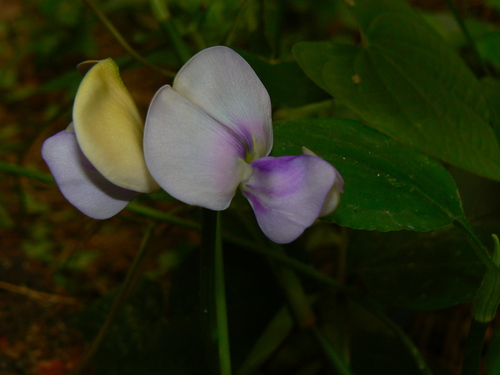
iNaturalist· cc-by-nc
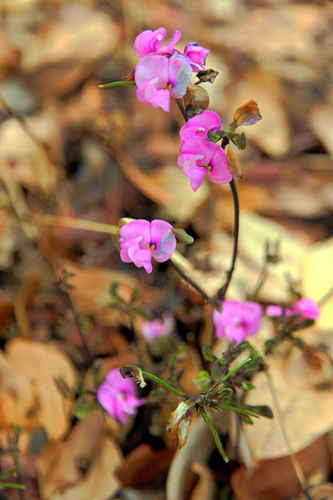
(c) Martin A. Prinz, some rights reserved (CC BY-NC), uploaded by Martin A. Prinz
iNaturalist· cc0
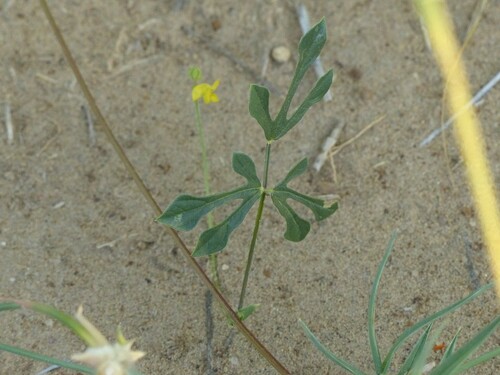
no rights reserved, uploaded by 葉子
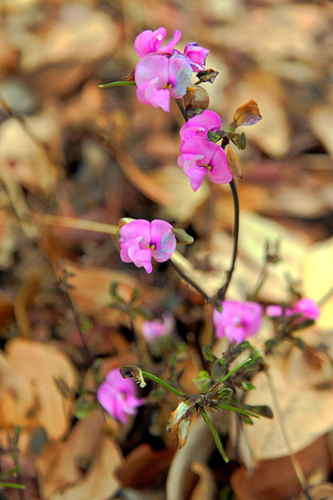
iNaturalist· cc-by-nc
(c) sageost, some rights reserved (CC BY-NC), uploaded by sageost
Summary
Source: WikipediaVicia hirsuta (syn. Ervilia hirsuta) (hairy tare, hairy vetch, tiny vetch) is a species of flowering plant in the pea and bean family Fabaceae.
Description
An annual herb. It is slender and trailing or climbing. It grows about 60 cm high. There is a tendril at the end and it is branched. The leaves have stalks. The leaves are 2-5 cm long and divided into leaflets along the stalk. There are 5-10 pairs of leaflets. These have short stalks. They are 0.8-1.5 cm long and 0.1-0.3 cm wide. They are oblong. The base is rounded. The flowers are white or tinged with purple. The fruit is a pod which is oblong and has 2 seeds. The seeds are 2 mm across and brown. The pod is hairy.
Edible Uses
Seeds are edible cooked and can be used like lentils, eaten as a staple food. Young leaves and stems are also edible cooked, used as a vegetable.
Traditional Uses
The tender leaves, shoots and fruits are cooked as a vegetable.
This uses section is brief — help expand it
Medicinal Uses
None known.
Known Hazards
The seeds contain trypsin inhibitors. Soaking them before cooking, perhaps even allowing them to sprout a little, and the cooking process itself, all serve to reduce the amount of trypsin inhibitors. The seeds also contain the non-protein amino acid canavanine, a toxic arginine analogue
Distribution
It is a temperate plant. In Nepal plants grow to about 2700 m altitude. In Argentina it grows from sea level to 3,000 m above sea level. Tasmania Herbarium. In Sichuan and Yunnan.
Where It Grows
Afghanistan, Africa, Albania, Algeria, America, Angola, Argentina, Asia, Australia, Austria, Balkans, Bangladesh, Belgium, Bhutan, Brazil, Britain, Bulgaria, Canada, Caribbean, Central Africa, Chile, China, Congo, Czech Republic, Denmark, East Africa, Egypt, Ethiopia, Europe, Finland, France, Germany, Greece, Haiti, Himalayas, Hungary, Iceland, India, Indonesia, Ireland, Italy, Japan, Kenya, Korea, Lebanon, Luxembourg, Mauritius, Mediterranean, Mexico, Middle East, Morocco, Myanmar, Nepal, Netherlands, New Zealand, Norfolk Island, North Africa, North America, Norway, Pakistan, Papua New Guinea, PNG, Poland, Portugal, Reunion, Romania, Russia, Rwanda, Scandinavia, SE Asia, South Africa, Southern Africa, South America, Spain, Sweden, Switzerland, Syria, Taiwan, Tanzania, Tasmania, Turkey, Türkiye, Turkmenistan, Uganda, USA, West Indies, Yugoslavia,
Cultivation
Plants are grown from seed.
Propagation
Pre-soak the seed for 24 hours in warm water, then sow in situ in spring or autumn.
Other Uses
A useful nectar plant for insects, especially bees, and provides shelter for beneficial insects including lacewings, parasitic wasps, beetles, and spiders. Acts as a pioneer species, helping to reestablish overused or damaged land. Fixes its own nitrogen through a symbiotic relationship with root bacteria. Also a dynamic accumulator of potassium, phosphorus, and nitrogen. Suited to food forest systems.
Notes
It is considered a weed in crops. There are about 140 Vicia species. They are mostly temperate.
Synonyms
Also Known As
Ankari, Birbut, Chirinji arxa, Chirinji, Choti kaer, Kutilkosa, Jhanjhaniya kari, Jhunjhuni, Jhuse kutelikosa, Kanghi, Kutilkosa, Masur chana, Masuri, Munmuna, Musur chana, Tiririte
References (29)
- Ambasta, S.P. (Ed.), 2000, The Useful Plants of India. CSIR India. p 675
- Asfaw, Z., Conservation and use of traditional vegetables in Ethiopia. FAO
- Asfaw, Z. and Tadesse, M., 2001, Prospects for Sustainable Use and Development of Wild Food Plants in Ethiopia. Economic Botany, Vol. 55, No. 1, pp. 47-62
- Bhatia, H., et al, 2018, Traditionally used wild edible plants of district Udhampur, J&K, India. Journal of Ethnobiology and Ethnomedicine (2018) 14:73
- Blamey, M and Grey-Wilson, C., 2005, Wild flowers of the Mediterranean. A & C Black London. p 89
Show all 29 references Hide references
- Dangol, D. R. et al, 2017, Wild Edible Plants in Nepal. Proceedings of 2nd National Workshop on CUAOGR, 2017.
- Flora of Australia Volume 49, Oceanic Islands 1, Australian Government Publishing Service, Canberra. (1994) p 189
- Flora of Pakistan. www.eFloras.org
- Gautam, R. S., et al, 2020, Wild Edible Fruits of Nepal. Int. J. Appl. Sci. Biotechnol. Vol 8(3): 289-304
- Haj, F., et al, 2012, Species Diversity and Ethno Botanical Classes of the Flora of Allai Valley District Battagram Pakistan. International Journal of Plant Research 2012, 2(4): 111-123
- Hedrick, U.P., 1919, (Ed.), Sturtevant's edible plants of the world. p 678
- Hussey, B.M.J., Keighery, G.J., Cousens, R.D., Dodd, J., Lloyd, S.G., 1997, Western Weeds. A guide to the weeds of Western Australia. Plant Protection Society of Western Australia. p 162
- Hu, Shiu-ying, 2005, Food Plants of China. The Chinese University Press. p 487
- Hwang, H., et al, 2013, A Study on the Flora of 15 Islands in the Western Sea of Jeollanamdo Province, Korea. Journal of Asia-Pacific Biodiversity Vol. 6, No. 2 281-310
- Hyde-Wyatt, B.H. & Morris D.I., 1975, Tasmanian Weed Handbook. Dept of Ag Tasmania. p 102
- ILDIS Legumes of the World http:www:ildis.org/Legume/Web
- Joshi, N., et al, 2007, Traditional neglected vegetables of Nepal: Their sustainable utilization for meeting human needs. Tropentag 2007. Conference on International Agricultural Research for Development.
- Joshi, N. & Siwakoti, M., 2012, Wild Vegetables Used by Local Community of Makawanpur District and Their Contribution to Food Security and Income Generation. Nepal Journal of Science and Technology Vol. 13, No. 1 (2012) 59-66
- Komarov, V. L. (Ed.) 1948, Flora of the U.S.S.R. Vol XIII (Engl. translation 1972)
- Lamp, C & Collet F., 1989, Field Guide to Weeds in Australia. Inkata Press. p 324
- Manandhar, N.P., 2002, Plants and People of Nepal. Timber Press. Portland, Oregon. p 476
- Marandi, R. R. & Britto, S. J., 2015, Medicinal Properties of Edible Weeds of Crop Fields and Wild plants Eaten by Oraon Tribals of Latehar District, Jharkhand. International Journal of Life Science and Pharma Research. Vo. 5. (2) April 2015
- Nat. arr. Brit. pl. 2:614. 1821
- Paczkowska, G . & Chapman, A.R., 2000, The Western Australian Flora. A Descriptive Calatogue. Western Australian Herbarium. p 453
- Plants for a Future database, The Field, Penpol, Lostwithiel, Cornwall, PL22 0NG, UK. http://www.scs.leeds.ac.uk/pfaf/
- Plants of Haiti Smithsonian Institute http://botany.si.edu/antilles/West Indies
- Tasmanian Herbarium Vascular Plants list p 32
- Wild edible plants of Himachal Pradesh
- World Checklist of Useful Plant Species 2020. Royal Botanic Gardens, Kew