Vateria indica
Linn.
White dammar, Indian copal-tree
iNaturalist· cc-by-sa
(c) Rohit, some rights reserved (CC BY-SA), uploaded by Rohit
iNaturalist· cc-by
(c) Rama Narayanan, some rights reserved (CC BY)
iNaturalist· cc-by
(c) Rama Narayanan, some rights reserved (CC BY)
Summary
Source: WikipediaVateria indica, the white dammar, is a species of tree in the family Dipterocarpaceae. It is endemic to the Western Ghats mountains in India. It is threatened by habitat loss. It is a large canopy or emergent tree frequent in tropical wet evergreen forests of the low and mid-elevations (below 1200 m).
Description
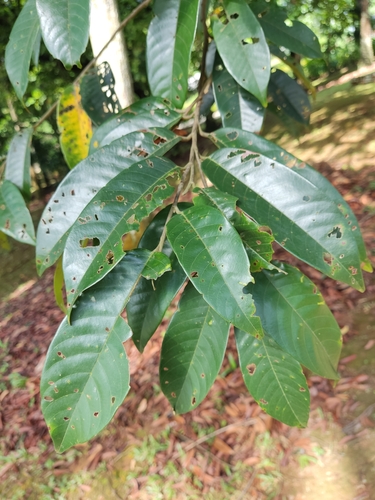
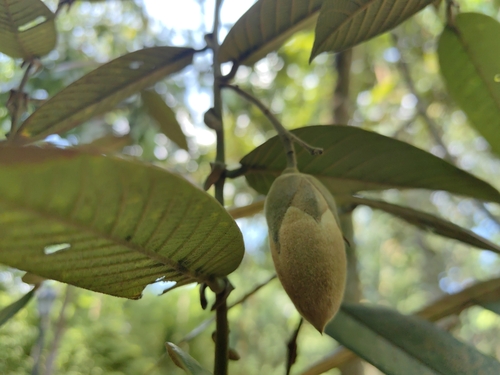
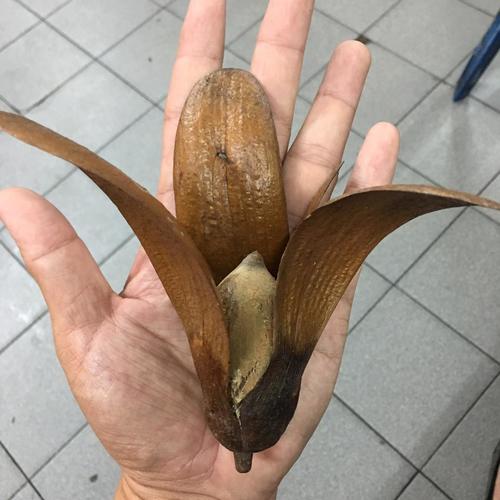
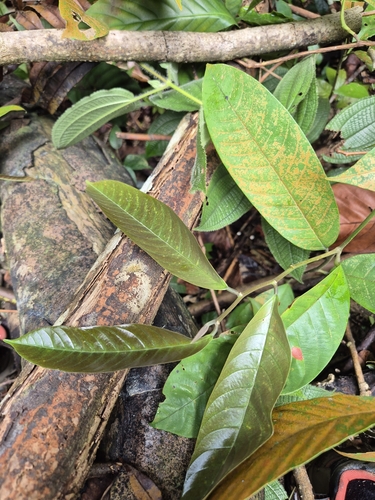
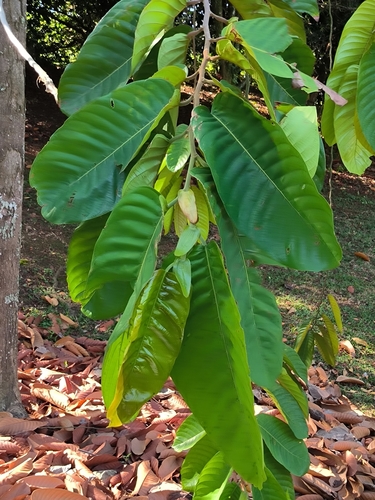
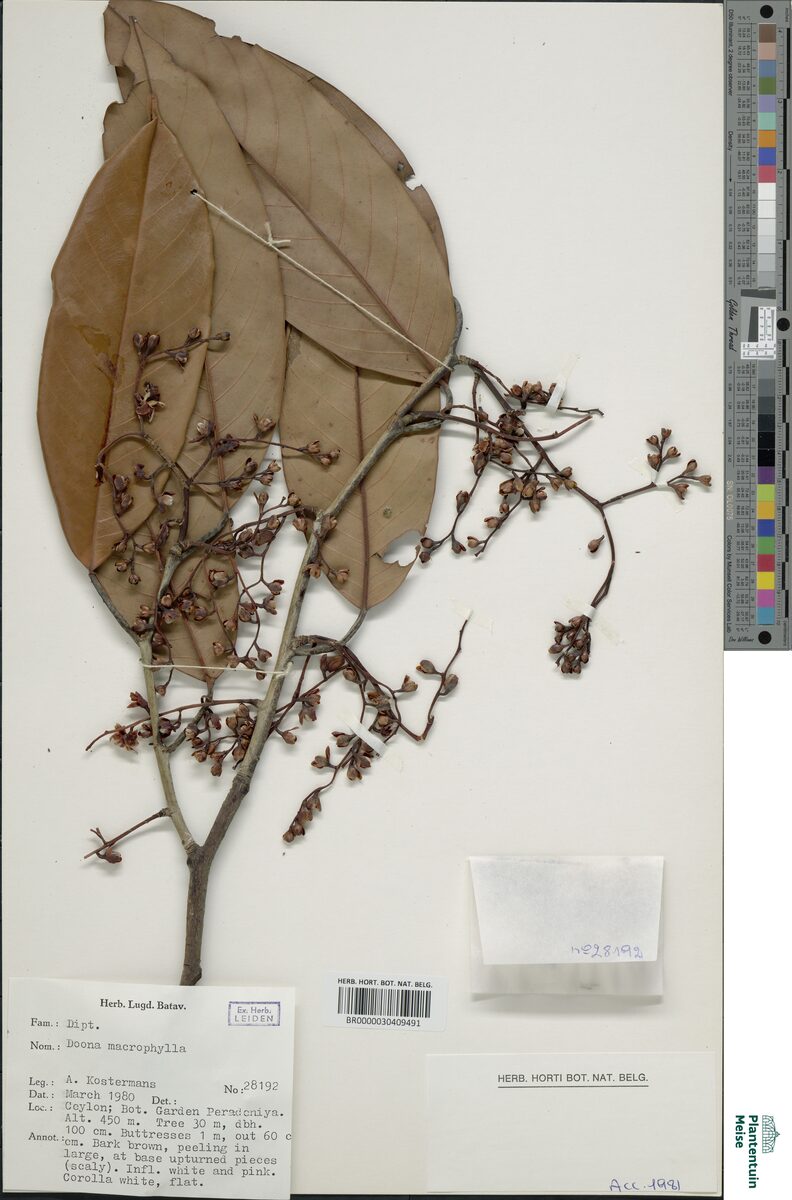
A large evergreen tree. The trunk is cylinder shaped and the bark is smooth and light grey. The young leaves are red. The mature leaves are 10-20 cm long by 5-10 cm wide. They are oval and have a short point. There are 14 pairs of veins. The flowers white and are 2 cm across. They have a scent and hang in drooping clusters. The petals spread out. The fruit is a large 5 valved capsule. It is fleshy and filled with fat.
Edible Uses
The seeds contain up to 50% of a solid fat known as 'piney tallow', which can be used to flavour food and as a substitute or adulterant for ghee. The bark is used to control fermentation in the production of alcoholic beverages such as arrack and toddy.
Traditional Uses
The seed yield an oil which is edible after refining. It is used in confectionary.
This uses section is brief — help expand it
Medicinal Uses
The resin obtained from the tree shares the same medicinal uses as pine resin. An oil from the seeds is valued locally as an external application to relieve rheumatism. The bark is astringent.
Distribution
A tropical plant. It grows in SW India. It grows between 60-760 m altitude along streams and in valleys.
Where It Grows
Asia, India, Sri Lanka,
Cultivation
A tree of low to moderate elevations in the moist, monsoonal tropics, where it can be found at elevations up to 1,200 metres. It grows best in areas where annual daytime temperatures are within the range 24 - 33°c, but can tolerate 17 - 38°c. It can be killed by temperatures below 14°c. It prefers a mean annual rainfall of 2,500 - 3,000mm, but tolerates 2,000 - 3,500mm. Succeeds in full sun and also, especially when young, in fairly dense shade. Prefers a light, fairly fertile, well-drained soil. Prefers a pH in the range 5 - 6, tolerating 4.5 - 6.9.
Propagation
Seed.
Other Uses
A resin extracted by incising the trunk is only slightly soluble in alcohol but dissolves readily in turpentine and drying oils. Like copal, it is used chiefly in making varnishes. The resin can be mixed with coconut oil and rolled into candles, though these burn with a dark, heavy smoke. It is also used to make imitation amber beads. The resin is said to occur in three forms: compact piney, cellular piney, and dark-coloured piney resin, the differences attributed to the method of collection and the age of the tree. The seed's piney tallow can fuel lamps and has been used to make candles, though the candles produced are too soft. The fruit contains 25% tannins, and the bark also contains tannins. The heartwood is light grey and the sapwood white with a tinge of red or grey. The wood is tough and hard but not widely sought after; it is used locally for canoes, the masts of native vessels, and coffins.
Synonyms
Also Known As
Ajakarna, Biladaamara, Biladupa, Bilaguggala, Chundrus, Dammar, Dhupadamaru, Dhupmaram, Guli, Hoogadamara, Kahruba, Looguludhupa, Maddidhupa, Munda-dhupa, Payani, Payia, Payin, Peinimarum, Perumpiney, Piney varnish-tree, Pineymaram, Ral, Safed damar, Saldhupa, Telladamaru, Vellai-damar, Vellakunturukkum, Vellei, Velleikuntricum, Veltha paini, White dhup
References (7)
- Ambasta, S.P. (Ed.), 2000, The Useful Plants of India. CSIR India. p 669
- Hedrick, 1972,
- Hedrick, U.P., 1919, (Ed.), Sturtevant's edible plants of the world. p 672
- Menninger, E.A., 1977, Edible Nuts of the World. Horticultural Books. Florida p 31
- Sahni, K.C., 2000, The Book of Indian Trees. Bombay Natural History Society. Oxford. p 35
Show all 7 references Hide references
- Sp. pl. 1:515. 1753
- Wickens, G.E., 1995, Edible Nuts. FAO Non-wood forest products. FAO, Rome. p 120