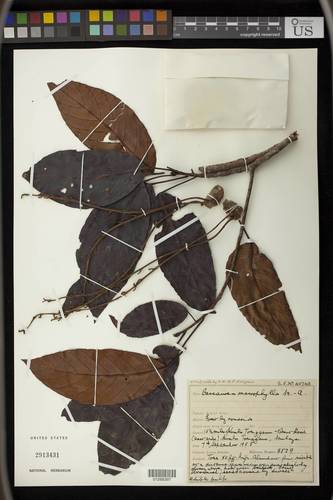
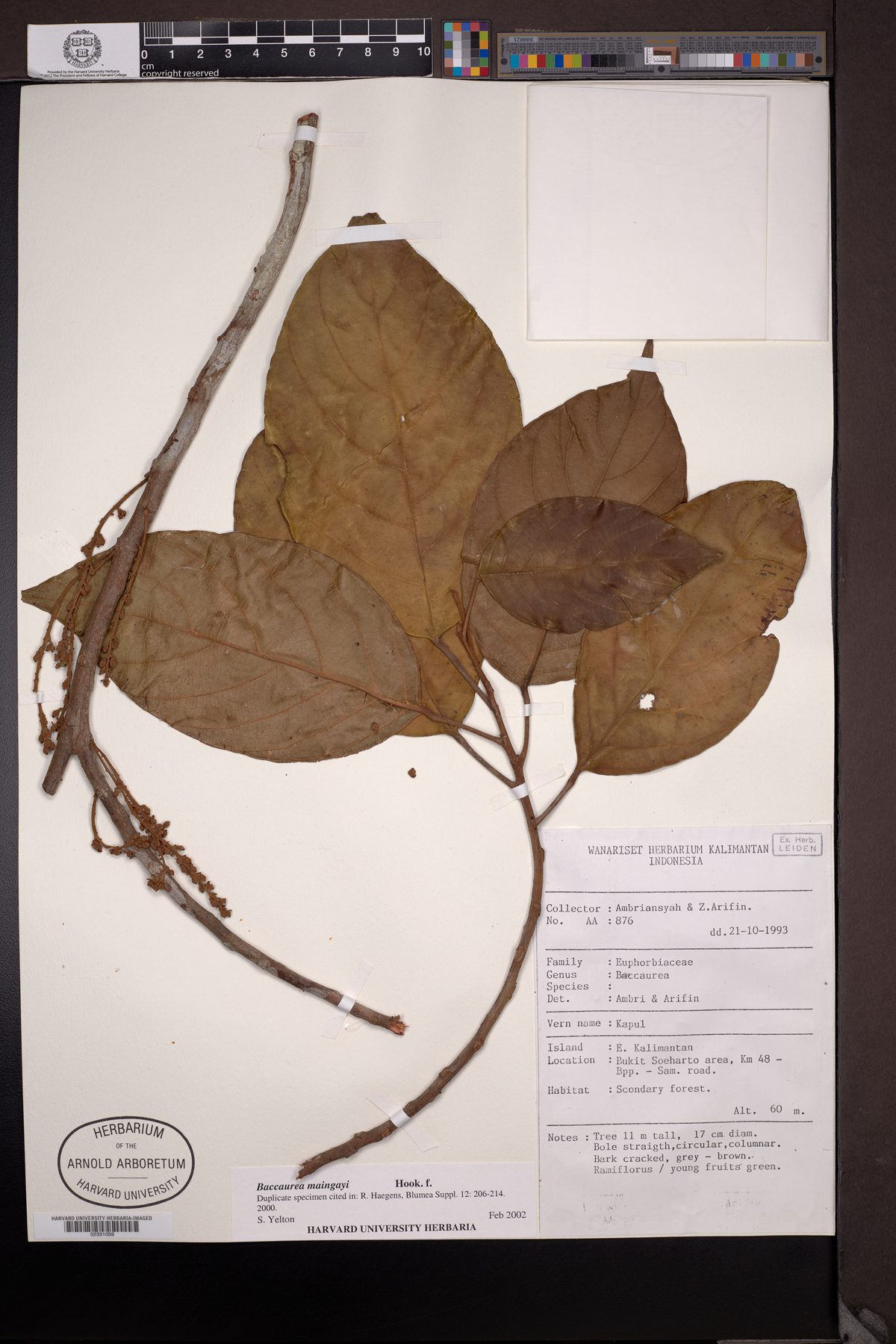
Uapaca togoensis
Pax.
iNaturalist· cc-by-nc-sa
(c) Marco Schmidt, some rights reserved (CC BY-NC-SA), uploaded by Marco Schmidt
iNaturalist· cc-by-nc-sa
(c) Marco Schmidt, some rights reserved (CC BY-NC-SA), uploaded by Marco Schmidt
Description
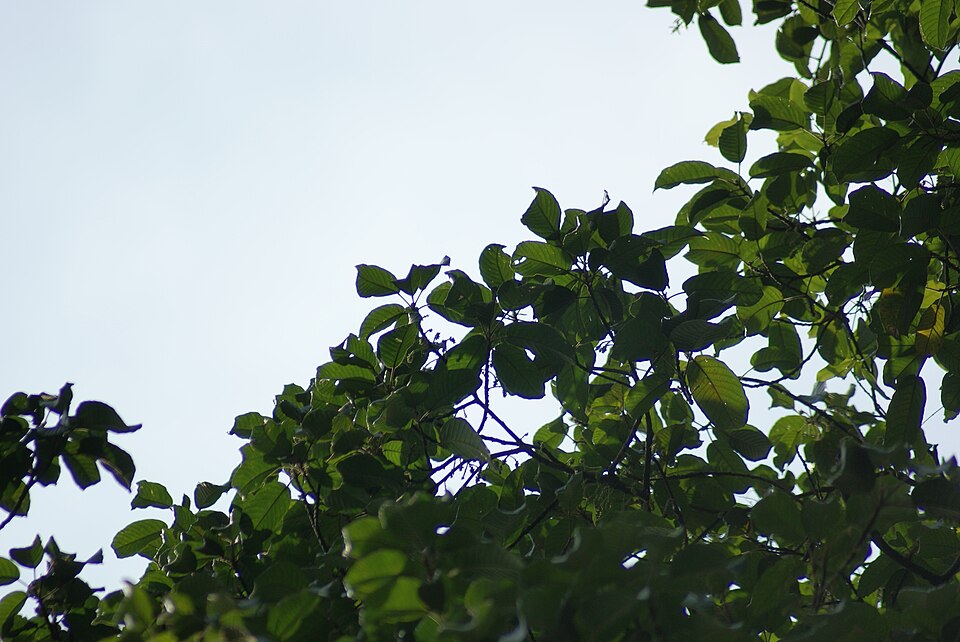
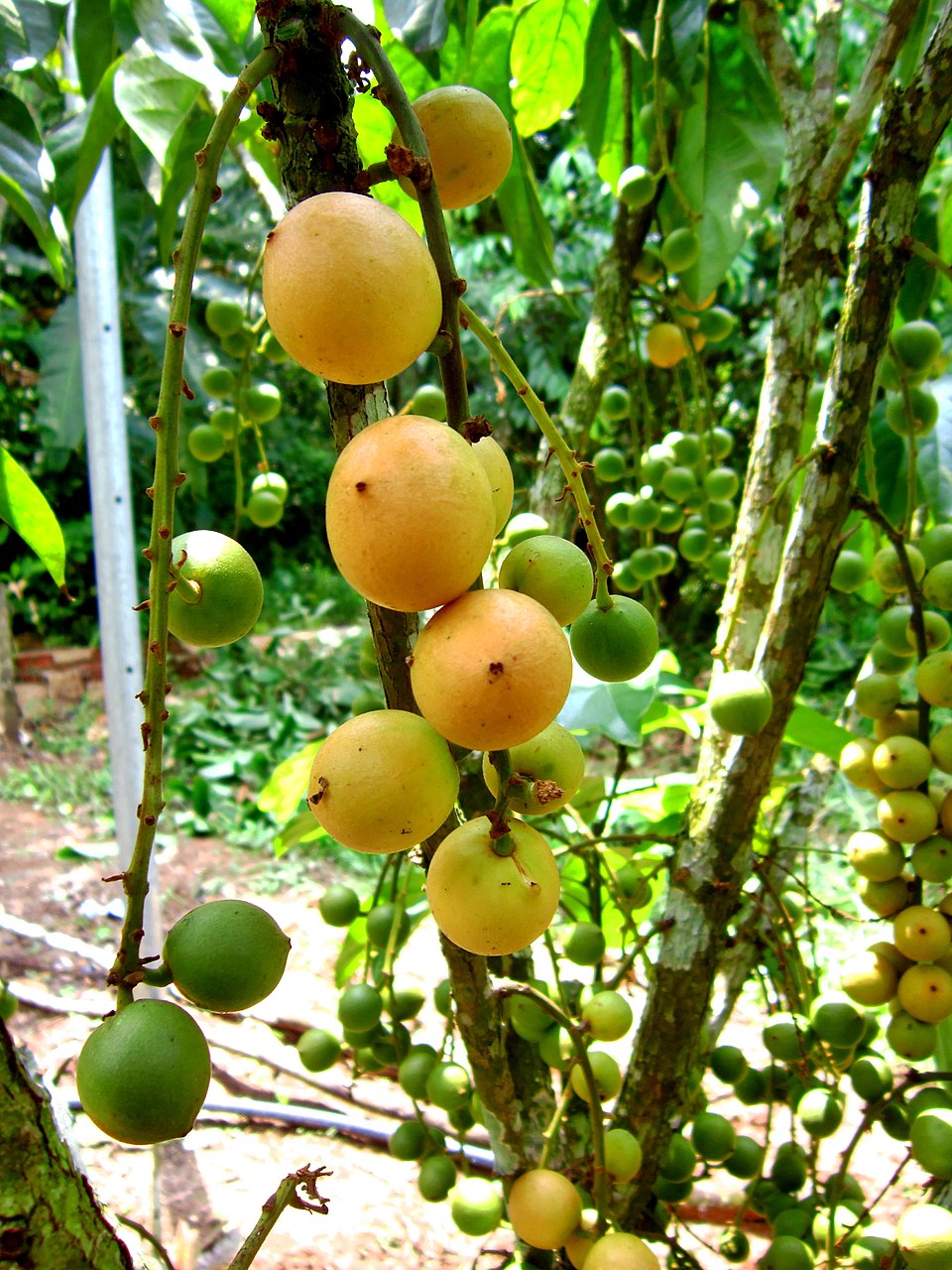
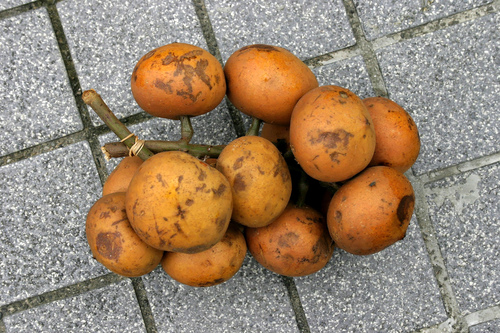
A small tree. It grows to 12 m high. The trunk is 1 m around. The trunk is straight then spreads to a wide crown. Trees growing in swampy ground can develop stilt roots. The bark is thick, dark grey and cracked. The leaves are 11-25 cm long by 5-15 cm wide. The leaves are oval and wedge shaped at the base. The edge can be slightly wavy. The leaf stalk is stout and 1-6 cm long. Male and female flowers can both occur in the same tree. The male flowers are on stout stalks 12-18 mm long. The heads are 5 mm across. The female flowers have short thick stalks. The fruit are round and yellow. They are 18 mm across. They contain 3 seeds.
Edible Uses
We do not have specific information for this species, but the fruits of many members of this genus are edible, generally sweet and juicy. The more or less ellipsoid fruit is around 25mm in diameter and 20mm long.
Distribution
It is a tropical plant. It grows in savannah locations. Trees grow in swampy ground. It grows along the edges of streams. In Nigeria it has been recorded at 230 and 1,400 m above sea level.
Where It Grows
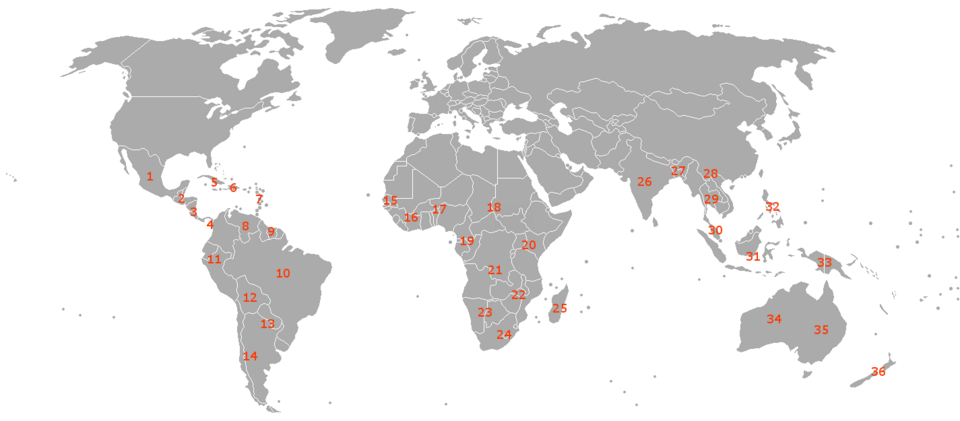
Africa, Benin, Burkina Faso, Cameroon, Central Africa, Central African Republic, CAR, Côte d'Ivoire, Gabon, Ghana, Guinea, Guinée, Guinea-Bissau, Ivory Coast, Mali, Nigeria, Senegal, Sierra Leone, Togo, West Africa,
Cultivation
A dioecious species, both male and female forms need to be grown if fruit and seed are required.
Other Uses
We do not have a specific description for the wood of this species. However, a general description for the wood of the West African, stilt-rooted members of this genus is as follows:- The heartwood is a pale red, red-brown, or chocolate-brown; it is usually not clearly demarcated from the paler sapwood. The texture is mostly medium to coarse; the grain generally straight; there is little lustre. The heartwood ranges from moderately durable to highly so, and is moderately resistant to termite attack. Generally care is required in seasoning, best results are obtained if quartersawn, logs should be converted soon after extraction to minimize shake and checking. The wood saws with some difficulty due to a high silica content, it generally finishes well and glues satisfactorily. It is used for purposes such as light construction, boatbuilding, flooring. A good fuel and charcoal wood.
Other Information
It is a commonly used fruit in West Africa.
Synonyms
Also Known As
Ajegbe, Bichine, Bissime, Dzogebedro, Iagale, Iala-guei, Kafafago, Mantchampo, Somon
References (11)
- Abbiw, D.K., 1990, Useful Plants of Ghana. West African uses of wild and cultivated plants. Intermediate Technology Publications and the Royal Botanic Gardens, Kew. p 48
- Ambe, G., 2001, Les fruits sauvages comestibles des savanes guinéennes de Côte-d’Ivoire : état de la connaissance par une population locale, les Malinké. Biotechnol. Agron. Soc. Environ. 5(1), 43-48 (As Uapaca somon)
- Assogbadjo, A. E. et al, 2013, Specific Richness and Cultural Importance of Wild Edible Trees in Benin. Acta Hort. 979, ISHS 2013
- Burkill, H. M., 1985, The useful plants of west tropical Africa, Vol. 2. Kew.
- Gallagher, D. E., 2010, Farming beyond the escarpment: Society, Environment, and Mobility in Precolonial Southeastern Burkina Faso. PhD University of Michigan.
Show all 11 references Hide references
- Jardin, C., 1970, List of Foods Used In Africa, FAO Nutrition Information Document Series No 2.p 166
- JSTOR Global Plants edible
- Keay, R.W.J., 1989, Trees of Nigeria. Clarendon Press, Oxford. p 161
- Le Houerou, H. N., (Ed.), 1980, Browse in Africa. The current state of knowledge. International Livestock Centre for Africa, Ethiopia. p 162
- Vivien, J., & Faure, J.J., 1996, Fruitiers Sauvages d'Afrique. Especes du Cameroun. CTA p 159
- World Checklist of Useful Plant Species 2020. Royal Botanic Gardens, Kew