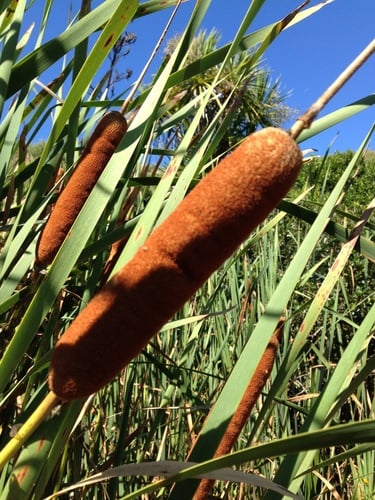
Typha minima
Funck ex Hoppe.
iNaturalist· cc-by-nc
(c) Martin Spaeth, some rights reserved (CC BY-NC), uploaded by Martin Spaeth
iNaturalist· cc-by-nc
(c) Wolfgang Bacher, some rights reserved (CC BY-NC), uploaded by Wolfgang Bacher
iNaturalist· cc-by-nc
(c) alexander1951, some rights reserved (CC BY-NC)
Summary
Source: WikipediaTypha minima, common name dwarf bulrush or miniature cattail or least bulrush, is a perennial herbaceous plant belonging to the Typhaceae family.
Description
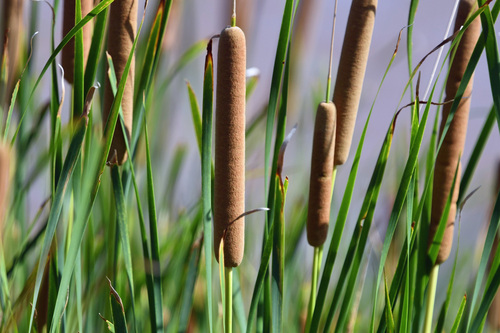
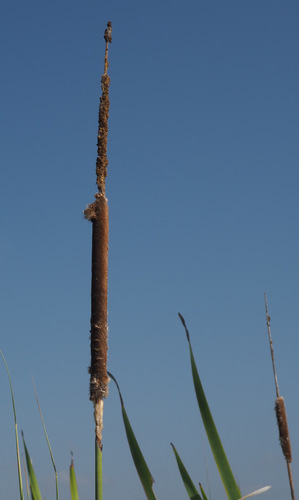
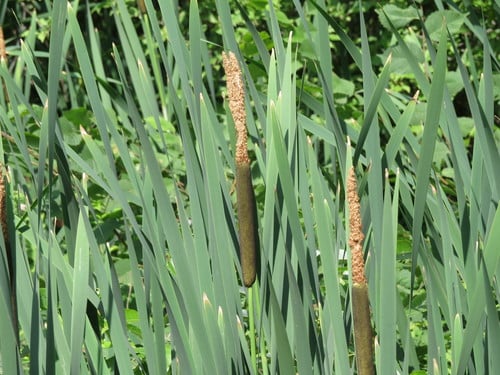
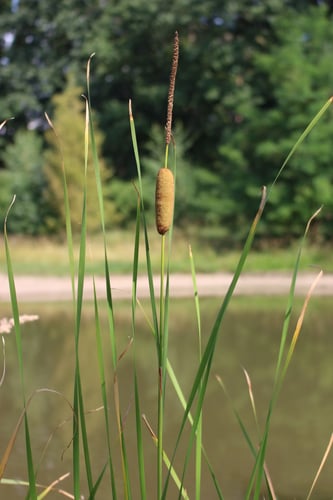
A rush. It grows 30-45 cm high. It can be only 6-8 cm high and 3-5 cm wide. The leaves are narrow and needle like. The flowers spikes are small and round and brown. They are shorter than the leaves. The flowers are in oblong, dark brown heads. They are scaly and finely hairy.
Edible Uses
The following notes are based on other members of this genus and probably apply to this species as well. Roots can be eaten raw or cooked — boil them like potatoes or macerate and boil to produce a sweet syrup. They can also be dried, ground into a protein-rich flour, and used as a soup thickener or blended with cereal flours to make biscuits, bread, and cakes. Seeds are small and fiddly but have a pleasant nutty flavour when roasted; an edible oil is also obtained from the seed, though the small seed size makes this a marginal crop. Pollen is a protein-rich addition to flour for bread and porridge, and is easiest used by eating it along with the young flowers. To harvest pollen, hold the flowering stem over a wide, shallow container and gently tap and brush it free; this also aids pollination to ensure future pollen and seed yields.
Medicinal Uses
The pollen is diuretic, emmenagogue, and haemostatic. Dried pollen is said to be anticoagulant, but when roasted with charcoal it becomes haemostatic. Internally, it is used to treat kidney stones, haemorrhage, painful menstruation, abnormal uterine bleeding, post-partum pains, abscesses, and cancer of the lymphatic system. It should not be prescribed for pregnant women. Externally it is used in the treatment of tapeworms, diarrhoea, and injuries.
Known Hazards
Pollen should not be prescribed for pregnant women.
Distribution
It is a temperate plant. It grows along rivers and in swamps. It suits hardiness zones 3-11. In Sichuan.
Where It Grows
Afghanistan, Asia, Australia, Caucasus, Central Asia, China, Europe, Germany, Iran, Japan, Kazakhstan, Kyrgyzstan, Middle East, Mongolia, Pakistan, Russia, Siberia, Slovenia, Switzerland, Tajikistan, Turkey, Türkiye, Turkmenistan, Uzbekistan,
Cultivation
Grows in boggy pond margins or shallow water. Requires a rich soil if it is to do well. Succeeds in sun or part shade.
Propagation
Surface sow seed in a pot stood in 3cm of water. Pot up seedlings as soon as possible and gradually increase the water depth as the plants develop. Plant out in summer. Division in spring is very easy — harvest young shoots when they are 10–30cm tall with some root attached and plant directly into permanent positions.
Other Uses
No other uses are currently known for this species.
Notes
There are 10 Typha species.
Also Known As
Najmanjši rogoz
References (9)
- Cundall, P., (ed.), 2004, Gardening Australia: flora: the gardener's bible. ABC Books. p 1445
- Flora of Pakistan. www.eFloras.org
- Hibbert, M., 2002, The Aussie Plant Finder 2002, Florilegium. p 304
- http://www.botanic-gardens-ljubljana.com/en/plants
- Marinelli, J. (Ed), 2004, Plant. DK. p 278
Show all 9 references Hide references
- Plants for a Future database, The Field, Penpol, Lostwithiel, Cornwall, PL22 0NG, UK. http://www.scs.leeds.ac.uk/pfaf/
- Romanowski, N., 2007, Edible Water Gardens. Hyland House. p 72
- Slocum, P.D. & Robinson, P., 1999, Water Gardening. Water Lilies and Lotuses. Timber Press. p 103
- Urgamal, M., Oyuntsetseg, B., Nyambayar, D. & Dulamsuren, Ch. 2014. Conspectus of the vascular plants of Mongolia. (Editors: Sanchir, Ch. & Jamsran, Ts.). Ulaanbaatar, Mongolia.