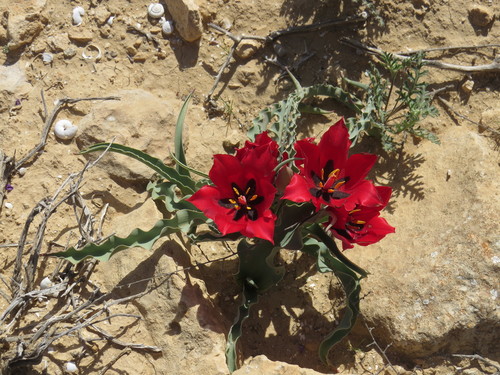
Tulipa gesneriana
L.
Tulip
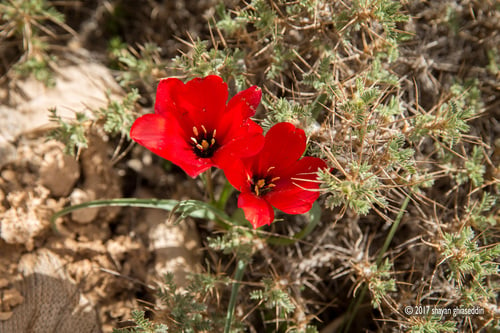
iNaturalist· cc-by-nc
(c) kc8srg, some rights reserved (CC BY-NC), uploaded by kc8srg
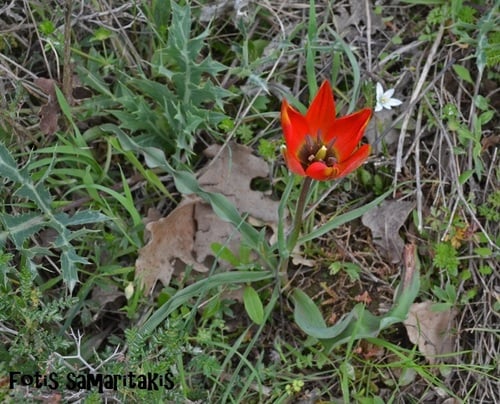
iNaturalist· cc-by-nc
(c) Игорь Поспелов, some rights reserved (CC BY-NC)
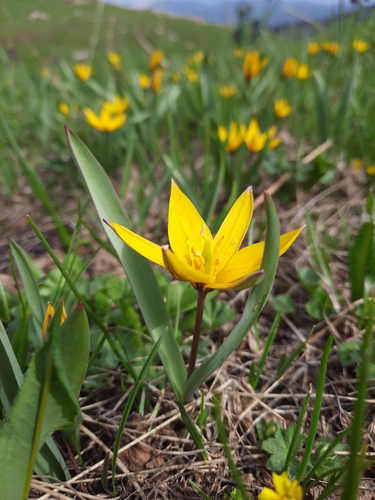
iNaturalist· cc-by-nc
(c) Игорь Поспелов, some rights reserved (CC BY-NC)
Summary
Source: WikipediaTulipa gesneriana, the Didier's tulip or garden tulip, is a species of plant in the lily family, cultivated as an ornamental in many countries because of its large, showy flowers. This tall, late-blooming species has a single blooming flower and linear or broadly lanceolate leaves. This is a complex hybridized neo-species, and can also be called Tulipa × gesneriana. Most of the cultivars of tulip are derived from Tulipa gesneriana. It has become naturalised in parts of central and southern Europe and scattered locations in North America.
Description
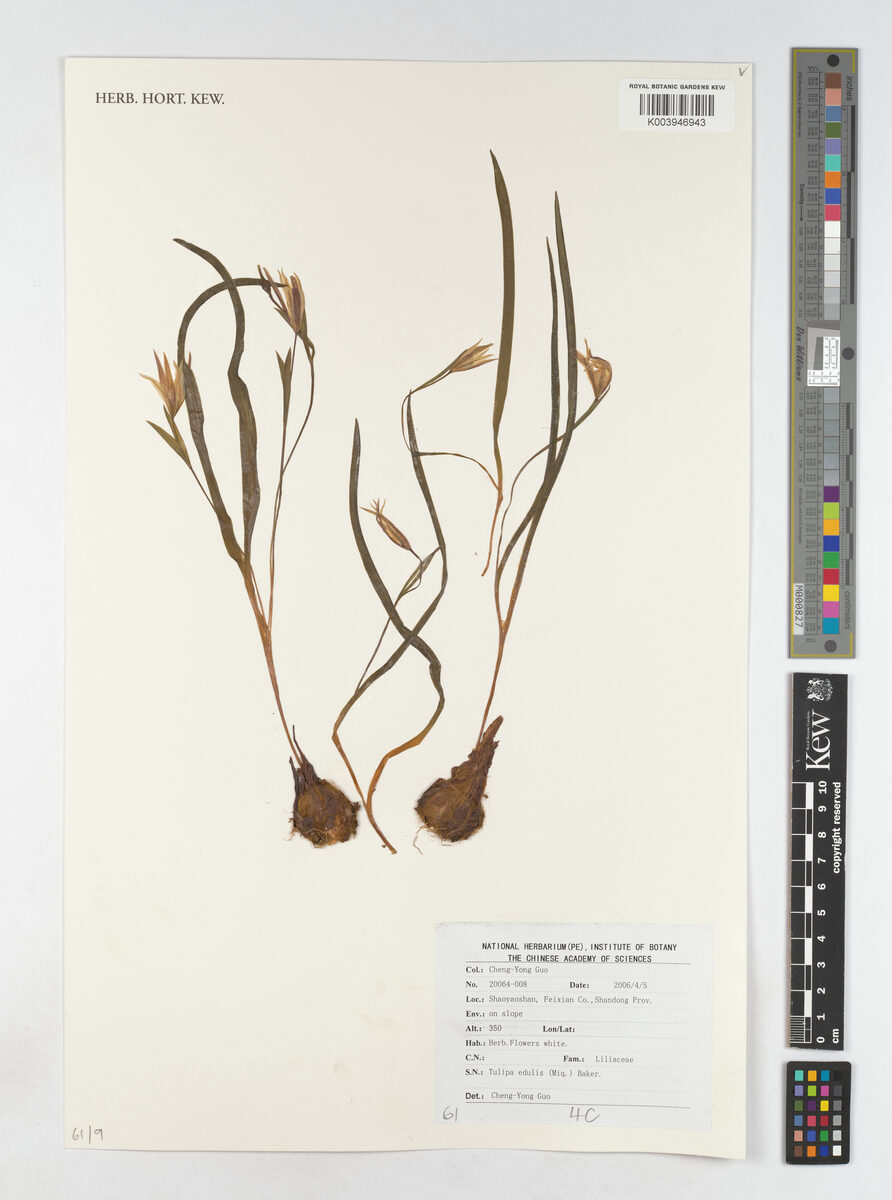
A bulb plant. The leaves are narrow or sword shaped. It produces a single flower.
This description is brief — help expand it
Edible Uses
The bulb is edible cooked. It can be dried and ground into a powder, then mixed with cereals when making bread. Some caution is advised regarding toxicity.
Traditional Uses
The bulbs are eaten in times of scarcity. They are dried and pulverised and added to cereals or flour. Caution: The flowers and bulbs can cause dermatitis through the allergen, tuliposide.
Medicinal Uses
None known
Known Hazards
The bulb and the flowers have been known to cause dermatitis in sensitive people, though up to 5 bulbs a day can be eaten without ill-effect.
Distribution
It is a temperate plant. In Yunnan.
Where It Grows
Asia, China, Europe, India, Korea, Turkey, Türkiye,
Cultivation
Easily grown in a sunny position in a well-drained sandy soil with added leafmould. The bulbs are very hardy, surviving soil temperatures down to about -12°c. This is a complicated species, or perhaps a group of very closely related species, some members of which are probably native to Europe. It is a parent of the cultivated garden tulips. The flowers are sweetly scented. Bulbs can be harvested in June after they have died down and then stored in a cool dry place, being planted out again in October.
Propagation
Seed is best sown in a shady part of a cold frame as soon as it is ripe in early summer, or in early autumn. A spring sowing of stored seed in the greenhouse also succeeds. Sow thinly so seedlings can be grown on without disturbance for their first growing season, applying liquid feeds to the pot if necessary. Once plants go dormant, divide the bulbs and pot 3–4 per pot. Grow on in the greenhouse for at least another year, then plant out when dormant. Offsets can be divided in July. Larger bulbs can go straight into permanent positions or be stored in a cool place and planted out in late autumn. Smaller bulbs are best potted and grown on in a cold frame for a year before planting out when dormant, from late summer to mid-autumn.
Other Uses
Plants grown indoors in pots have been shown to help remove toxins from the atmosphere, specifically formaldehyde, xylene and ammonia.
Notes
There are about 100 Tulipa species and many cultivated varieties.
Synonyms
References (4)
- Ambasta, S.P. (Ed.), 2000, The Useful Plants of India. CSIR India. p 656
- Liu, Yi-tao, & Long, Chun-Lin, 2002, Studies on Edible Flowers Consumed by Ethnic Groups in Yunnan. Acta Botanica Yunnanica. 24(1):41-56
- Plants for a Future database, The Field, Penpol, Lostwithiel, Cornwall, PL22 0NG, UK. http://www.scs.leeds.ac.uk/pfaf/
- Sp. pl. 1:306. 1753