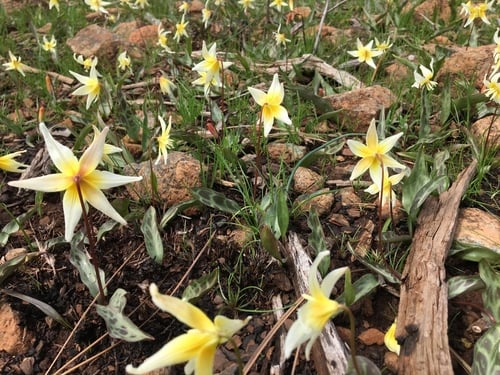
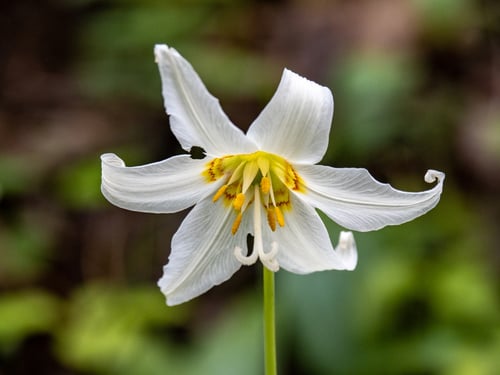
Tulipa clusiana
DC.
Wild tulip
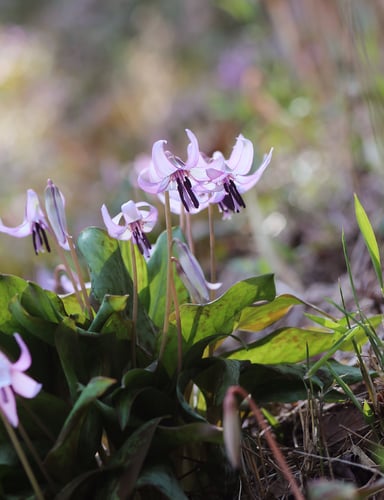
iNaturalist· cc-by-nc
(c) Stéphane Mars, some rights reserved (CC BY-NC)
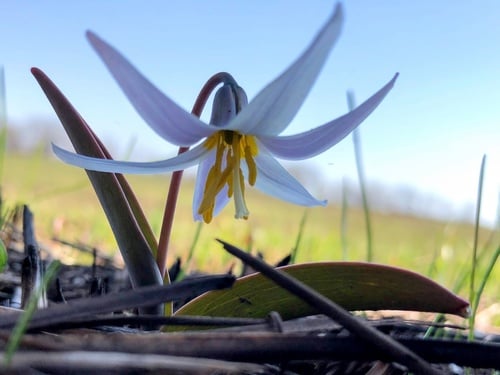
iNaturalist· cc-by-nc
(c) Stéphane Mars, some rights reserved (CC BY-NC)
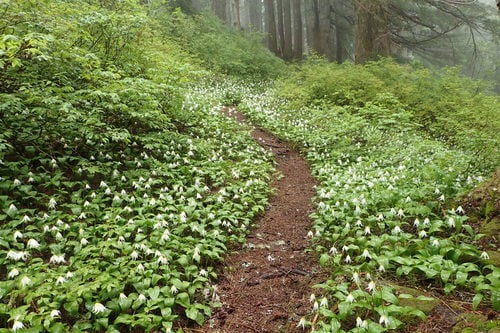
iNaturalist· cc-by-nc
(c) Stéphane Mars, some rights reserved (CC BY-NC)
Summary
Source: WikipediaTulipa clusiana, the lady tulip, is an Asian species of tulip native to Afghanistan, Iran, Iraq, Pakistan and the western Himalayas of India. It is widely cultivated as an ornamental and is reportedly naturalized in France, Spain, Portugal, Italy, Tunisia, Greece, and Turkey. The plant grows to a height of 6 to 12 in (15 to 30 cm). It flowers during the spring season. The following cultivars have received the Royal Horticultural Society's Award of Garden Merit. All are relatively small, with narrow pointed tepals, often bi-coloured. 'Cynthia' (outsides pink edged pale yellow, insides pale yellow) 'Lady Jane' (inners white, outers pink bordered with white) 'Peppermintstick' (outers cerise pink with white borders, inners white) 'Tinka' (yellow inside, red bordered yellow on the outside) var. chrysantha (yellow flowers, flushed red on the outside)
Description
A tulip bulb plant. It grows about 25 cm tall. Bulbs have a rough tunic with hairs around the base. The flowers are star-like. There are yellow marks near the base.
Edible Uses
The bulbs are eaten raw and have historically been consumed in times of scarcity.
Traditional Uses
The bulbs are eaten in times of scarcity. They can be eaten raw.
This uses section is brief — help expand it
Distribution
It is a temperate plant. In the Indian Himalayas it grows between 1,500-3,000 m above sea level. It suits cold arid places.
Where It Grows
Afghanistan, Asia, Australia, Himalayas*, India, Iran, Middle East, Pakistan, Tasmania,
Notes
There are about 100 Tulipa species and many cultivated varieties.
Synonyms
Also Known As
Kapichog, Kayaloon, Maghey, Mijhau, Shamdai, Spin gul, Tukapa
References (10)
- Ambasta, S.P. (Ed.), 2000, The Useful Plants of India. CSIR India. p 656 (As Tulipa clusiana subsp. stellata)
- Ballabh, B., et al, 2007, Raw edible plants of cold desert Ladakh. Indian Journal of Traditional Knowledge. 6(1) pp 182-184 (As Tulipa stellata var. chrysantha)
- Bhatia, H., et al, 2018, Traditionally used wild edible plants of district Udhampur, J&K, India. Journal of Ethnobiology and Ethnomedicine (2018) 14:73
- Candollea 40:165. 1985 (As Tulipa clusiana subsp. stellata)
- Hibbert, M., 2002, The Aussie Plant Finder 2002, Florilegium. p 302 (As Tulipa clusiana subsp. stellata)
Show all 10 references Hide references
- Khalid, N., et al, 2023, Wild food plants gathered by four cultural groups in North Waziristan, Pakistan. Genet Resour Crop Evol. 70:1243–1276
- Mehta, P. S. et al, 2010, Native plant genetic resources and traditional foods of Uttarakhand Himalaya for sustainable food security and livelihood. Indian Journal or Natural products and Resources. Vol 1(1), March 2010 pp 89-96 (As Tulipa stellata)
- Plants for a Future database, The Field, Penpol, Lostwithiel, Cornwall, PL22 0NG, UK. http://www.scs.leeds.ac.uk/pfaf/ (As Tulipa clusiana subsp. stellata)
- Rana, J.C. et al, 2011, Genetic resources of wild edible plants and their uses among tribal communities of cold arid regions of India. Genetic Resources and Crop Evolution. 59:135-149 (As Tulipa stellata)
- Tareen, N. M., et al, 2016, Ethnomedicinal Utilization of Wild Edible Vegetables in District Harnai of Balochistan Province - Pakistan. Pakistan Journal of Botany 48(3): 1159-1171