Trifolium africanum
Ser.
Cape clover
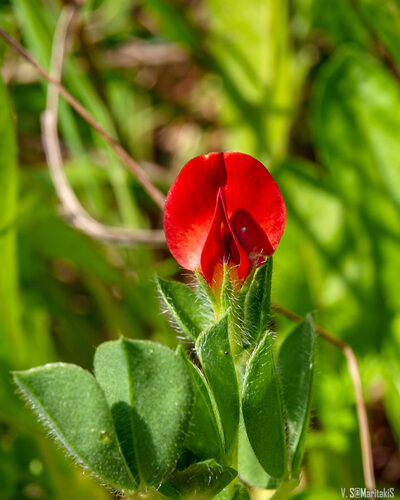
iNaturalist· cc-by-nc
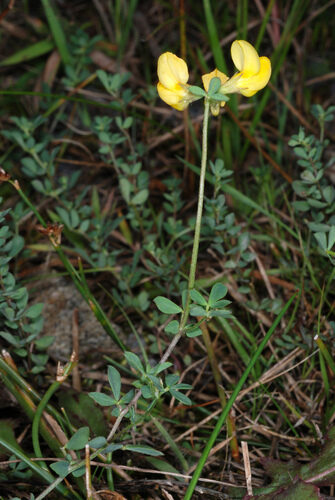
(c) linalasse, some rights reserved (CC BY-NC)
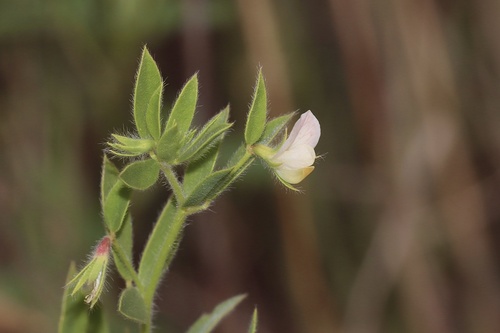
iNaturalist· cc-by-nc
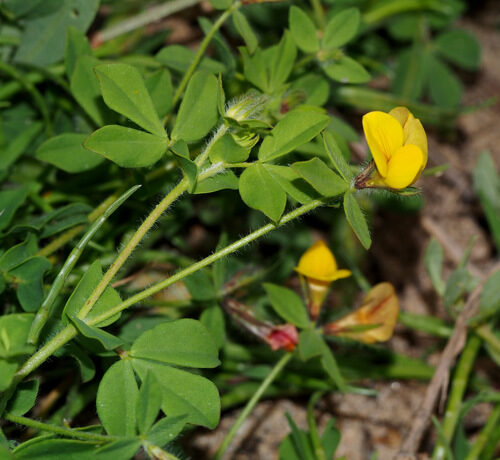
(c) Richard Gill, some rights reserved (CC BY-NC)
Description
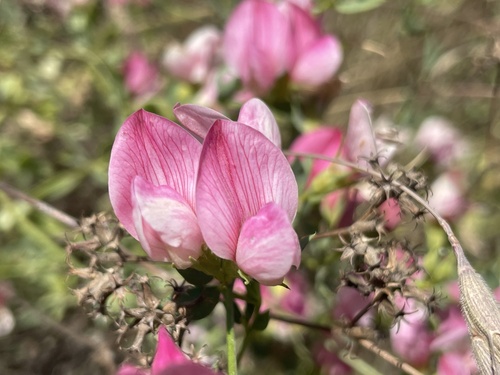
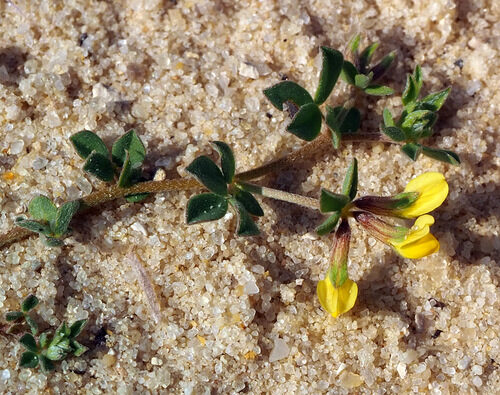
A herb. It is soft and straggling. It keeps growing from year to year. The branches are 30 cm long. They have few leaves. The leaflets are oval. They are 3 cm long by 1 cm wide. The flower heads are stalked and up to 6 cm long. The flowers are in compact dome shaped heads. They are pink.
Edible Uses
The flower heads are eaten raw, especially by children.
Traditional Uses
The flower is eaten raw.
This uses section is brief — help expand it
Distribution
A tropical plant. It can grow in arid places.
Where It Grows
Africa, Botswana, Eswatini, Lesotho, Namibia, South Africa, Southern Africa, Swaziland,
Other Information
It is eaten especially by children.
Notes
There are about 240 Trifolium species. They are mostly temperate. Also as Papilionaceae.
Synonyms
Also Known As
Moqophi, Moqopolla-thula, Moroko
References (9)
- Fox, F. W. & Young, M. E. N., 1982, Food from the Veld. Delta Books. p 216 (As var. glabellum)
- Guillarmod, J., 1971,
- Jardin, C., 1970, List of Foods Used In Africa, FAO Nutrition Information Document Series No 2.p 107
- Peters, C. R., O'Brien, E. M., and Drummond, R.B., 1992, Edible Wild plants of Sub-saharan Africa. Kew. p 138
- Royal Botanic Gardens, Kew (1999). Survey of Economic Plants for Arid and Semi-Arid Lands (SEPASAL) database. Published on the Internet; http://www.rbgkew.org.uk/ceb/sepasal/internet [Accessed 29th April 2011]
Show all 9 references Hide references
- Ruiters-Welcome, A. K., 2019, Food plants of southern Africa. Ph.D. thesis. Univ. of Johannesburg p 61
- Swaziland's Flora Database http://www.sntc.org.sz/flora
- van Wyk, Ben-Erik, 2019, The diversity and multiple uses of southern African legumes. Australian Systematic Botany, 2019, 32, 519–546
- Welcome, A. K. & Van Wyk, B.-E., 2019, An inventory and analysis of the food plants of southern Africa. South African Journal of Botany 122 (2019) 136–179