Trichodesma zeylanicum
(N. L. Burman) R. Br.
Camel bush, Cattle bush
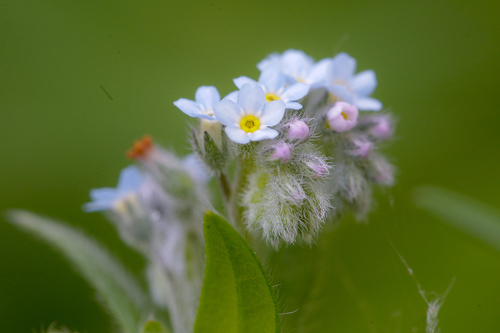
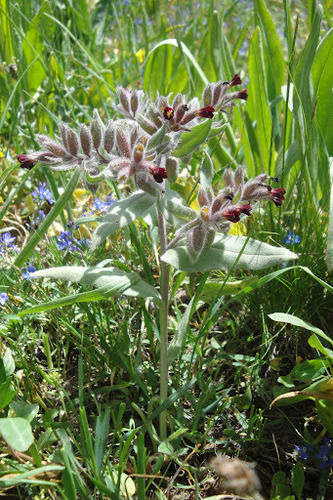
iNaturalist· cc-by-nc
(c) Jean, some rights reserved (CC BY-NC)
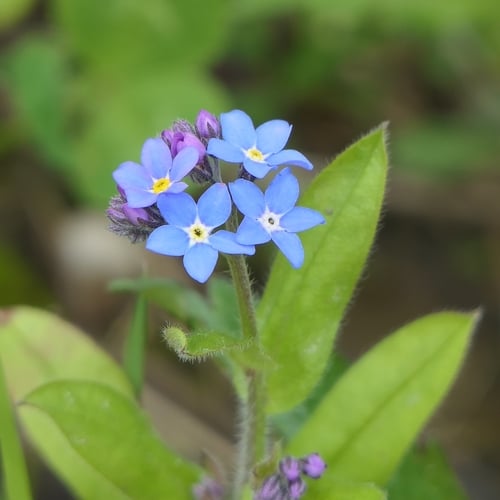
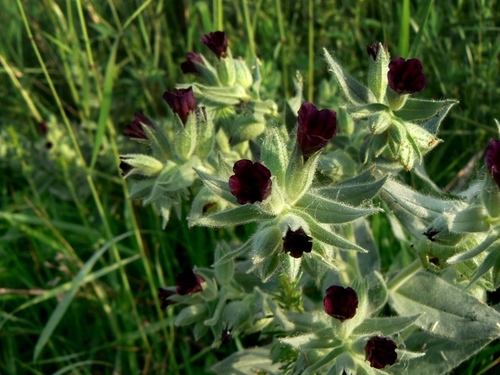
iNaturalist· cc-by
(c) Kym Nicolson, some rights reserved (CC BY), uploaded by Kym Nicolson
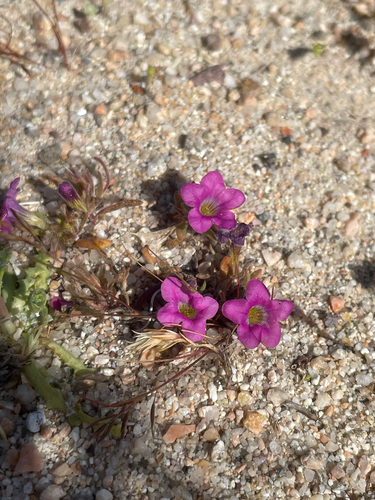
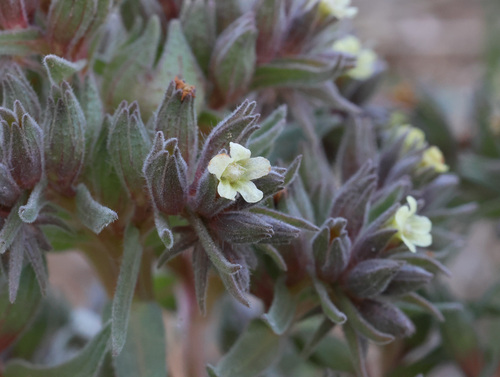
iNaturalist· cc-by-nc-sa
(c) Arthur Chapman, some rights reserved (CC BY-NC-SA), uploaded by Arthur Chapman
Summary
Source: WikipediaTrichodesma zeylanicum, commonly known as Northern bluebell, camel bush or cattle bush, is a herb or shrub native to Australia.
Description
A soft herb. It keeps growing from year to year. It is usually 50 cm high but can grow to 1 m high. The leaves are large and opposite in pairs up the stem. The leaves are thick and have distinct veins. They taper to the base with little or no stalk. The stem and leaves are hairy. The flowers are pale purple or white. They hang down in groups like small bells. Each flower has 5 petals.
Edible Uses
The young leaves are chopped and cooked as a vegetable. The seeds yield an edible oil. The leaves are also added to beer to assist with fermentation.
Traditional Uses
The young leaves are chopped and cooked and eaten. They are also added to beer to assist with fermentation. The seeds yield and edible oil.
This uses section is brief — help expand it
Medicinal Uses
It is used in medicine.
Known Hazards
The plant is densely rough hairy, irritating to handle. Pyrrolizidine alkaloids, with supinine as the principal component, have been isolated from the seeds. These alkaloids are a cumulative liver toxin and so should not be consumed in anything other than small quantities over short periods.
Distribution
A tropical plant. It grows in tropical and subtropical places. It grows in open woodlands and along creeks. It grows in low and medium rainfall areas. It can grow in very sandy soil. In Tanzania it grows up to 1,700 m above sea level.
Where It Grows
Africa, Asia, Australia, Botswana, East Africa, Eswatini, Fiji, India, Kenya, Madagascar, Malawi, Mozambique, Pacific, Rwanda, South Africa, Southern Africa, Sri Lanka, Swaziland, Tanzania, Zambia, Zimbabwe,
Cultivation
Plants can be grown from seeds.
Other Uses
The stems are used as fire sticks. A seed oil/flower essence is obtained from the plant. The report is unclear. It could be referring to an oil obtained from the seed plus an essential oil obtained from the flowers.
Production
Young leaves are collected early in the rainy season.
Other Information
It has low palatability.
Notes
It is used in medicine.
Synonyms
Also Known As
Bluecurls, Dungumwamba, Heternuria, Jalashirasi, Jalasirasa, Jhingi, Jilarga, Lumuanba, Makace, Northern bluebell, Nyiragasaambu, Rough bluebell, Sesemranda, Thilungo, Tirupsing
References (38)
- Ambasta, S.P. (Ed.), 2000, The Useful Plants of India. CSIR India. p 648
- Cooper, W. and Cooper, W., 2004, Fruits of the Australian Tropical Rainforest. Nokomis Editions, Victoria, Australia. p 95
- Cronin, L., 1989, The Concise Australian Flora. Reed. p 27
- Facciola, S., 1998, Cornucopia 2: a Source Book of Edible Plants. Kampong Publications, p 52
- Fowler, D. G., 2007, Zambian Plants: Their Vernacular Names and Uses. Kew. p 15
Show all 38 references Hide references
- Fox, F. W. & Young, M. E. N., 1982, Food from the Veld. Delta Books. p 134
- Grivetti, L. E., 1980, Agricultural development: present and potential role of edible wild plants. Part 2: Sub-Saharan Africa, Report to the Department of State Agency for International Development. p 49, 71
- Grubben, G. J. H. and Denton, O. A. (eds), 2004, Plant Resources of Tropical Africa 2. Vegetables. PROTA, Wageningen, Netherlands. p 565
- Harkonen, M. & Vainio-Mattila, K., 1998, Some examples of Natural Products in the Eastern Arc Mountains. Journal of East African Natural History 87:265-278
- Jackes, B.R., 2001, Plants of the Tropics. Rainforest to Heath. An Identification Guide. James Cook University. p 45
- Jardin, C., 1970, List of Foods Used In Africa, FAO Nutrition Information Document Series No 2.p 107 (As Trichodesma ceylanicum)
- Kenneally, K.E., Edinger, D. C., and Willing T., 1996, Broome and Beyond, Plants and People of the Dampier Peninsula, Kimberley, Western Australia. Department of Conservation and Land Management. p 73
- Lazarides, M. & Hince, B., 1993, Handbook of Economic Plants of Australia, CSIRO. p 238
- Levitt, D., 1981, Plants and people. Aboriginal uses of plants on Groote Eylandt, Australian Institute of Aboriginal Studies, Canberra. p 85
- Long, C., 2005, Swaziland's Flora - siSwati names and Uses http://www.sntc.org.sz/flora/
- Martin, F.W. & Ruberte, R.M., 1979, Edible Leaves of the Tropics. Antillian College Press, Mayaguez, Puerto Rico. p 180 (As Trichodesma ceylanicum)
- Melzer, R. & Plumb, J., 2011, Plants of Capricornia. Belgamba, Rockhampton. p 515
- Menninger, E.A., 1977, Edible Nuts of the World. Horticultural Books. Florida p 122
- Mutie, F. M., et al, 2023, Important Medicinal and Food Taxa (Orders and Families) in Kenya, Based on Three Quantitative Approaches. Plants 2023, 12, 1145
- Paczkowska, G. & Chapman, A.R., 2000, The Western Australian Flora. A Descriptive Catalogue. Western Australian Herbarium. p 184
- Peters, C. R., O'Brien, E. M., and Drummond, R.B., 1992, Edible Wild plants of Sub-saharan Africa. Kew. p 72
- Petheram, R.J. and Kok, B., 2003, Plants of the Kimberley Region of Western Australia. UWA Press p 231
- Pickering, H., & Roe, E., 2009, Wild Flowers of the Victoria Falls Area. Helen Pickering, London. p 45
- Prodr. 496. 1810
- Ruffo, C. K., Birnie, A. & Tengnas, B., 2002, Edible Wild Plants of Tanzania. RELMA p 676
- Ruiters-Welcome, A. K., 2019, Food plants of southern Africa. Ph.D. thesis. Univ. of Johannesburg p 38
- Scarth-Johnson, V., 2000, National Treasures. Flowering Plants of Cooktown and Northern Australia. Vera Scarth-Johnson Gallery Association. Cooktown, Australia. p 106
- Scudder, 1971,
- Smith, A.C., 1991, Flora Vitiensis Nova, Lawaii, Kuai, Hawaii, Volume 5 p 159
- Swaziland's Flora Database http://www.sntc.org.sz/flora
- Townsend, K., 1999, Field Guide to Plants of the Dry Tropics. Society for Growing Australian Plants, Townsville Branch Inc. p 175
- Vainio-Mattila, K., 2000, Wild vegetables used by the Sambaa in the Usumbara Mountains, NE Tanzania. Ann. Bot. Fennici 37:57-67
- Vernon, R., 1983, Field Guide to Important Arable Weeds of Zambia. Dept of Agriculture, Chilanga, Zambia. p 58
- Welcome, A. K. & Van Wyk, B.-E., 2019, An inventory and analysis of the food plants of southern Africa. South African Journal of Botany 122 (2019) 136–179
- Wheeler, J.R.(ed.), 1992, Flora of the Kimberley Region. CALM, Western Australian Herbarium, p 785
- Wild edible plants of Himachal Pradesh
- Williamson, J., 2005, Useful Plants of Malawi. 3rd. Edition. Mdadzi Book Trust. p 250
- World Checklist of Useful Plant Species 2020. Royal Botanic Gardens, Kew