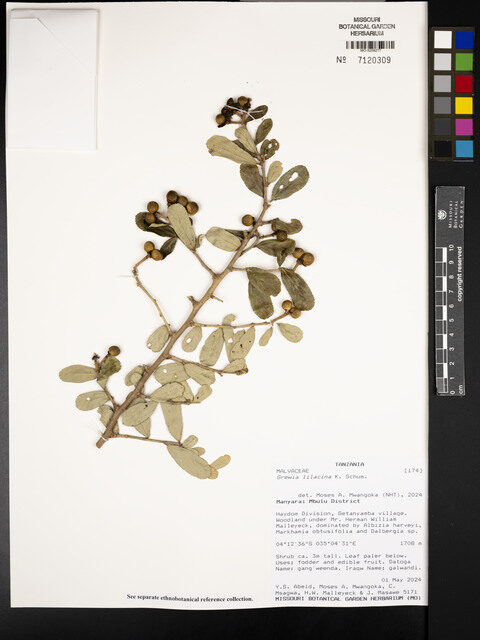
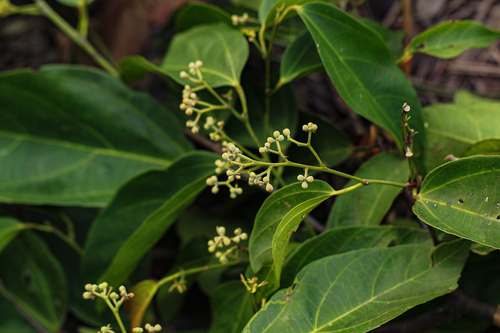
Tilia americana
L.
American Lime, Basswood, American linden
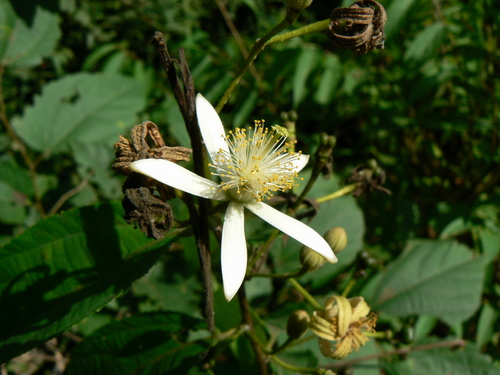
iNaturalist· cc-by-nc
(c) Anita, some rights reserved (CC BY-NC)
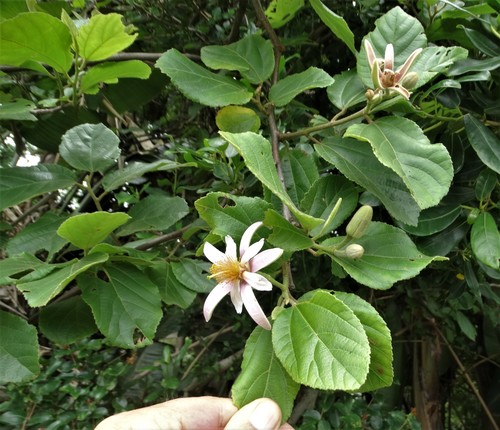
iNaturalist· cc-by-sa
(c) Douglas Goldman, some rights reserved (CC BY-SA), uploaded by Douglas Goldman
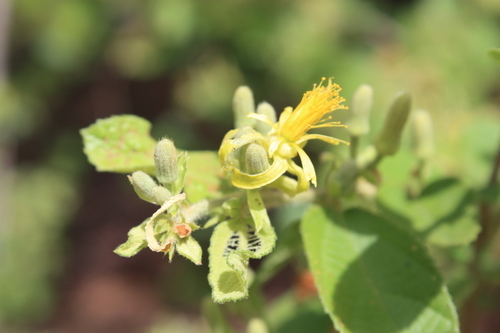
iNaturalist· cc-by-nc
(c) David McCorquodale, some rights reserved (CC BY-NC), uploaded by David McCorquodale
Summary
Source: WikipediaTilia americana is a species of tree in the family Malvaceae, native to eastern North America, from southeast Manitoba east to New Brunswick, southwest to northeast Oklahoma, southeast to South Carolina, and west along the Niobrara River to Cherry County, Nebraska. It is the sole representative of its genus in the Western Hemisphere, assuming T. caroliniana is treated as a subspecies or local ecotype of T. americana. Common names include American basswood and American linden.
Description
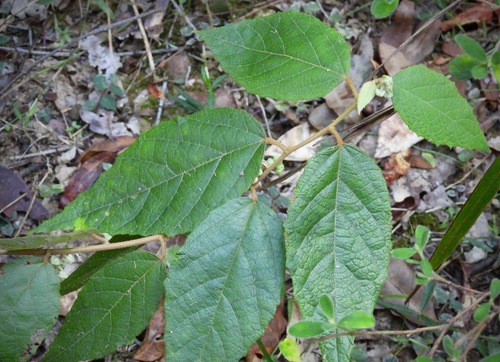
A large tree which loses its leaves. It grows to 25-35 m tall. The trunk can be 100 cm across. The crown is rounded. The leaves are alternate and simple. They are 12-20 cm long by 15 cm across. It has a longer tip. The leaf is dull green above and lighter underneath. There are tufts of hair in the axils of the veins. The flowers are creamy yellow. They have a scent. They are 11-13 mm across. The fruit are 8-12 mm across. They are covered with brown hairs.
Edible Uses
Young leaves can be eaten raw or cooked. They have a mild flavour and a tender but slightly mucilaginous texture, making them very pleasant in salads or cooked as greens. Sap, obtained from beneath the bark, can be used as a refreshing drink or concentrated into a syrup for use as a sweetener. The flowers are edible raw and can be added to salads or brewed as a sweet, fragrant tea substitute. A very good chocolate substitute can be made from a paste of the ground fruits and flowers, though attempts to market the product failed because the paste decomposes readily.
Traditional Uses
The flower is used as a salad vegetable and to make tea. CAUTION: It should only be drunk in small quantities. The sap is used for a beverage. It can be boiled down to syrup and sugar. The inner bark is eaten. The young leaves are eaten in salads of cooked as a vegetable and added to soups and stews. The red berries are eaten. They are ground into a paste.
Medicinal Uses
A tea made from the inner bark is applied externally to burns to soothe and soften the skin, and taken internally for lung complaints, dysentery, heartburn, and weak stomach. The bark is diuretic, and an infusion has been taken to promote urination. A decoction of the bark mixed with cornmeal can be applied as a poultice to draw out boils. A tea made from the fresh or dried flowers is antispasmodic, diaphoretic, and sedative, used in the treatment of hypertension, hardening of the arteries, digestive complaints associated with anxiety, feverish colds, respiratory catarrh, migraine, and related conditions. Lime flowers are said to develop narcotic properties as they age, so they should only be harvested when freshly opened. An infusion of the leaves has been used as an eyewash, and a poultice of the leaves applied to burns, scalds, broken bones, and swollen areas. A tea or tincture of the leaves, flowers, and buds has traditionally been used for nervous headaches, restlessness, and painful digestion — use with caution, see notes on toxicity. A decoction of the roots and bark has been taken for internal haemorrhaging, and a decoction of the roots alone used as a vermifuge to expel worms.
Known Hazards
Frequent consumption of the tea made from the flowers may cause heart damage.
Distribution
It is a temperate plant. It is native to E. North America. It grows on moist slopes. It can tolerate shade. It will grow in most soils. It grows naturally in forests in mountains in Canada. It suits hardiness zones 3-9. Arboretum Tasmania. Hobart Botanical Gardens.
Where It Grows
Australia, Canada, Europe, North America, Tasmania, USA,
Cultivation
Prefers a good moist loamy alkaline to neutral soil but succeeds on slightly acid soils. Grows poorly on any very dry or very wet soils. Dislikes exposed positions. Another entry in the same book says that it is fairly wind tolerant. Succeeds in full sun or semi-shade. A fast-growing and moderately long-lived tree in the wild, it starts producing seed when about 15 years old and continues for at least another 85 years. It is generally unsatisfactory in Britain, preferring a continental climate and growing more slowly and not usually producing fertile seed in areas with cool summers. Grows best in a woodland situation, young plants tolerate a reasonable level of side shade. They are highly shade-tolerant according to another report. Trees respond well to coppicing, sending up lots of suckers from the roots. Lime trees tend to hybridise freely if other members of the genus are growing nearby. If growing plants from seed it is important to ensure the seed came from a wild source or from an isolated clump of the single species. A good bee plant. Trees are usually attacked by aphids which cover the ground and the leaves with a sticky honeydew. Quite tolerant of root disturbance, semi-mature trees up to 5 metres tall have been transplanted successfully. Plants in this genus are notably resistant to honey fungus. A sprouting standard sending up shoots from the base.
Propagation
Much of the seed produced in Britain is not viable — cut a few seedcases open to check for a seed inside. Where possible, obtain fresh seed that is ripe but has not yet developed a hard seed coat and sow it immediately in a cold frame; it may germinate the following spring, though it could take 18 months. Stored seed can be very slow to germinate due to a combination of hard seed coat, embryo dormancy, and a hard coat on the pericarp, and may take up to 8 years. To shorten this, stratify the seed for 5 months at high temperatures (10°c at night, up to 30°c by day) followed by 5 months of cold stratification. Prick seedlings into individual pots when large enough and grow on in the greenhouse through the first winter. Plant out in late spring or early summer after the last expected frosts. Layering can be done in spring just before the leaves unfurl and takes 1–3 years. Suckers, when produced, can be removed with as much root as possible during the dormant season and replanted immediately.
Other Uses
A tough fibre is obtained from the inner bark by soaking it in water, boiling it, and then rubbing it on a stick to separate the fibres. These can be made into thread for sewing, fine yarn for weaving bags and clothing, and cordage for nets, shoes, twine, and mats. The tree is fairly wind-resistant and suitable for use in shelterbelt plantings. The wood is soft, straight-grained, light, weak, not durable, and easily worked; it is resistant to splitting but holds nails badly, while holding glue, paint, and lacquer well. It seasons well but shrinks considerably, weighs 28lb per cubic foot, and is odourless and bland-tasting. A commercially important timber in its native range, it is excellent for turning and carving, and used for woodenware such as spoons, cheap furniture, and pulp. The tree is also noted as a dynamic accumulator, gathering minerals and nutrients from the soil and storing them in a more bioavailable form suitable for use as fertiliser or to improve mulch.
Production
Trees can live for 200 years.
Notes
There are between 20 and 45 Tilia species. These have also been in the Tiliaceae.
References (21)
- Beckstrom-Sternberg, Stephen M., and James A. Duke. "The Foodplant Database." http://probe.nalusda.gov:8300/cgi-bin/browse/foodplantdb.(ACEDB version 4.0 - data version July 1994)
- Bremness, L., 1994, Herbs. Collins Eyewitness Handbooks. Harper Collins. p 88
- Brickell, C. (Ed.), 1999, The Royal Horticultural Society A-Z Encyclopedia of Garden Plants. Convent Garden Books. p 1013
- Crawford, M., 2012, How to grow Perennial Vegetables. Green Books. p 127
- Coombes, A.J., 2000, Trees. Dorling Kindersley Handbooks. p 302
Show all 21 references Hide references
- Cundall, P., (ed.), 2004, Gardening Australia: flora: the gardener's bible. ABC Books. p 1418
- Etkin, N.L. (Ed.), 1994, Eating on the Wild Side, Univ. of Arizona. p 73
- Facciola, S., 1998, Cornucopia 2: a Source Book of Edible Plants. Kampong Publications, p 241
- Farrar, J.L., 1995, Trees of the Northern United States and Canada. Iowa State University press/Ames p 280
- Hibbert, M., 2002, The Aussie Plant Finder 2002, Florilegium. p 300
- Jackes, D. A., 2007, Edible Forest Gardens
- Kermath, B. M., et al, 2014, Food Plants in the Americas: A survey of the domesticated, cultivated and wild plants used for Human food in North, Central and South America and the Caribbean. On line draft. p 868
- Kiple, K.F. & Ornelas, K.C., (eds), 2000, The Cambridge World History of Food. CUP p 1718
- Little, E.L., 1980, National Audubon Society Field Guide to North American Trees. Alfred A. Knopf. p 597
- MacKinnon, A., et al, 2009, Edible & Medicinal Plants of Canada. Lone Pine. p 66
- Moerman, D. F., 2010, Native American Ethnobotany. Timber Press. p 562
- Plants for a Future database, The Field, Penpol, Lostwithiel, Cornwall, PL22 0NG, UK. http://www.scs.leeds.ac.uk/pfaf/
- Ryan, S., 2008, Dicksonia. Rare Plants Manual. Hyland House. p 59
- Schuler, S., (Ed.), 1977, Simon & Schuster's Guide to Trees. Simon & Schuster. No. 176
- Sp. pl. 1:514. 1753
- Toupal, R. S. & Hollenback, K., 2009, An Ethnobotany of Indiana Dunes National Lakeshore: Plant Uses of the Ojibwa People. Bureau of Applied Research in Anthropology. University of Arizona