Aronia arbutifolia
(L.) Pers.
Red Chokeberry
iNaturalist· cc-by
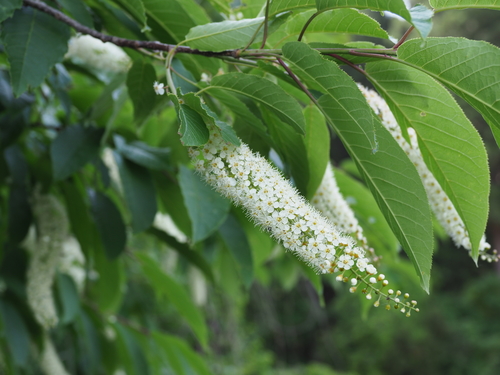
(c) Laura Clark, some rights reserved (CC BY), uploaded by Laura Clark
iNaturalist· cc-by-sa
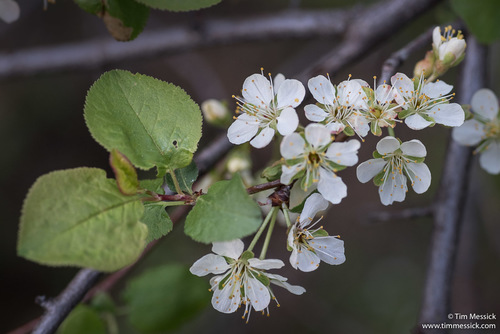
(c) Douglas Goldman, some rights reserved (CC BY-SA), uploaded by Douglas Goldman
iNaturalist· cc-by-nc
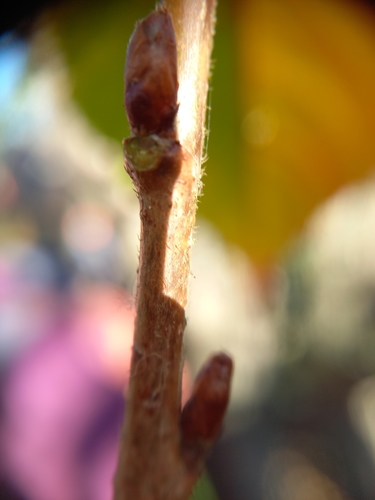
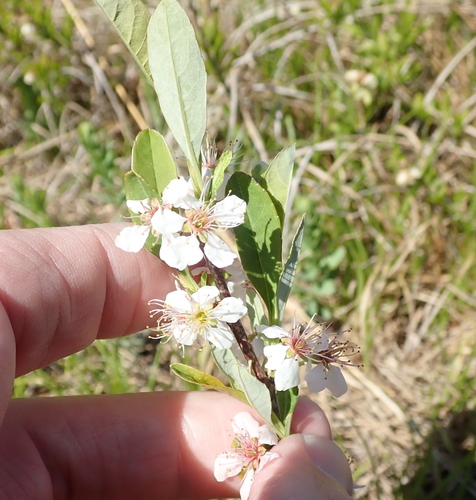
(c) Teri, some rights reserved (CC BY-NC), uploaded by Teri
Summary
Source: WikipediaAronia arbutifolia, called the red chokeberry, is a North American species of shrubs in the rose family. It is native to eastern Canada and to the eastern and central United States, from eastern Texas to Nova Scotia inland to Ontario, Ohio, Kentucky, and Oklahoma. Aronia arbutifolia is a branching shrub forming clumps by means of stems forming from the roots. It may reach a height between 1.8 and 3.6 meters (6 and 12 feet). Flowers are white or pink, producing black or bright red fruits. The fruits, whose ill taste inspired the common name, are bitterly acidic (though edible) when eaten raw, but are high in pectin and can be used to make delicious thick jams and jellies. It is a popular landscaping plant.
Description
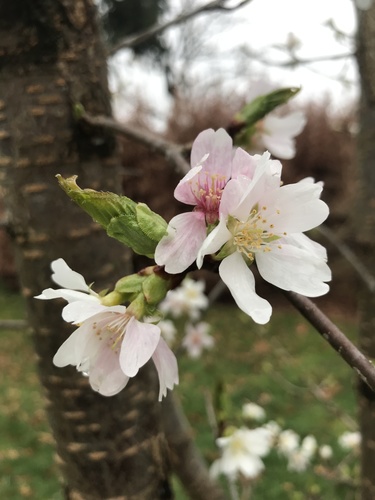
A shrub. It loses its leaves in winter. It grows to 1.8-3 m tall. It has many stems which stick upwards. It forms suckers around the base. They form spreading clumps. The leaves are narrow and oval. There are fine teeth around the leaf edge. They turn bright red in autumn. The flowers are white. The fruit are deep red berries. The fruit are 7 mm across. They are edible.
Edible Uses
Edible Parts: Fruit Edible Uses: Fruit - raw or cooked. It can also be dried and used for making pemmican. Fruit quality is rather variable, some forms are rather pleasant when fully ripe, especially if they have experienced some frost. The fruit is about 7mm in diameter, it can hang on the plant for several months.
Traditional Uses
The fruit has a sharp taste. They are used in preserves and sauces. They can be stewed or made into jelly. The fruit can be dried for later use.
This uses section is brief — help expand it
Medicinal Uses
None known
Distribution
It is a temperate plant. It is a common understorey plant in North America. They can withstand frost. It is cold hardy down to -25°C. They can grow in part shade but do well in full sunlight. It grows in wet acidic soils. It cannot tolerate alkalinity. It suits hardiness zones 4-9. Arboretum Tasmania.
Where It Grows
America, Australia, Britain, Europe, North America*, Tasmania, USA,
Cultivation
Plants can be grown from seed or cuttings. Old stems can be cut back near the ground to encourage new growth.
Propagation
Seed - best sown as soon as it is ripe in pots outdoors or in a cold frame. Pre-soak stored seed overnight and then cold stratify for 3 months at 2°c. The seed germinates in 1 - 3 months at 15°c. When large enough to handle, prick the seedlings out into individual pots and grow them on in a cold frame for their first winter. Plant out in late spring. Cuttings of half-ripe wood, July/August in a frame. Division of suckers in the dormant season. Very easy, they can be planted straight out into their permanent positions. Layering.
Other Uses
None known Special Uses Food Forest
Other Information
The fruit are eaten especially by children.
Notes
There are 3 Aronia species.
Synonyms
References (19)
- Beckstrom-Sternberg, Stephen M., and James A. Duke. "The Foodplant Database." http://probe.nalusda.gov:8300/cgi-bin/browse/foodplantdb.(ACEDB version 4.0 - data version July 1994)
- Bodkin, F., 1991, Encyclopedia Botanica. Cornstalk publishing, p 103
- Brickell, C. (Ed.), 1999, The Royal Horticultural Society A-Z Encyclopedia of Garden Plants. Convent Garden Books. p 139
- Cundall, P., (ed.), 2004, Gardening Australia: flora: the gardener's bible. ABC Books. p 188
- Etherington, K., & Imwold, D., (Eds), 2001, Botanica's Trees & Shrubs. The illustrated A-Z of over 8500 trees and shrubs. Random House, Australia. p 105
Show all 19 references Hide references
- Facciola, S., 1998, Cornucopia 2: a Source Book of Edible Plants. Kampong Publications, p 195
- Hedrick, U.P., 1919, (Ed.), Sturtevant's edible plants of the world. p 537 (As Pyrus arbutifolia)
- Hibbert, M., 2002, The Aussie Plant Finder 2002, Florilegium. p 32
- Jackes, D. A., Edible Forest Gardens
- Kermath, B. M., et al, 2014, Food Plants in the Americas: A survey of the domesticated, cultivated and wild plants used for Human food in North, Central and South America and the Caribbean. On line draft. p 643
- Kiple, K.F. & Ornelas, K.C., (eds), 2000, The Cambridge World History of Food. CUP p 1891
- Lord, E.E., & Willis, J.H., 1999, Shrubs and Trees for Australian gardens. Lothian. p 205
- Lyle, S., 2006, Discovering fruit and nuts. Land Links. p 78
- Plants for a Future database, The Field, Penpol, Lostwithiel, Cornwall, PL22 0NG, UK. http://www.scs.leeds.ac.uk/pfaf/
- Ryan, S., 2008, Dicksonia. Rare Plants Manual. Hyland House. p 8
- Syn. pl. 2(1):39. 1806
- Tozer, F., 2007, The Uses of Wild Plants. Green Man Publishing. p 36
- van Wyk, B., 2005, Food Plants of the World. An illustrated guide. Timber press. p 72
- Young, J., (Ed.), 2001, Botanica's Pocket Trees and Shrubs. Random House. p 105